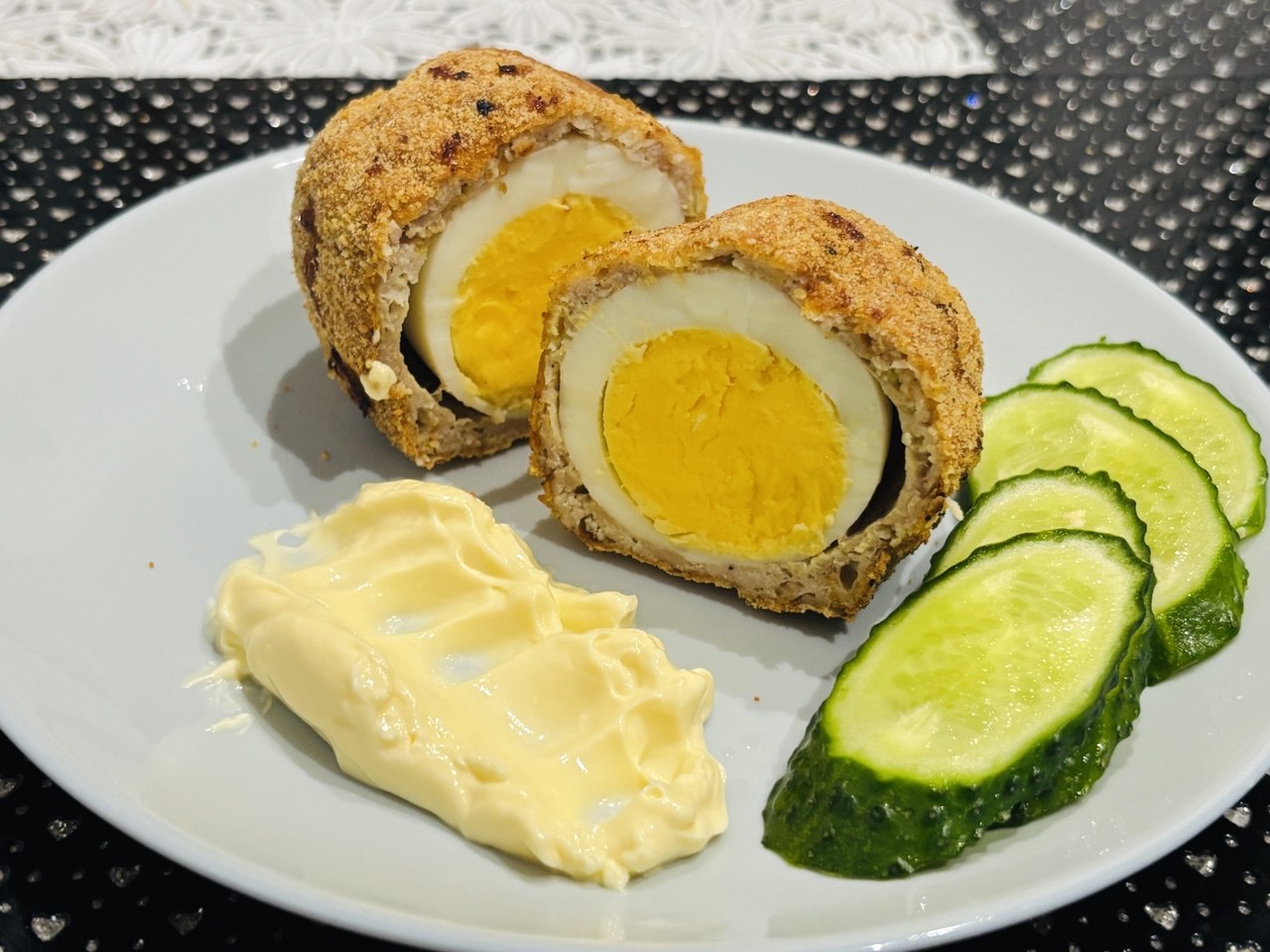
How do you make scotch eggs in an air fryer?
Wrap a boiled, peeled egg in seasoned ground chicken, coat it in flour, beaten egg and breadcrumbs, then air fry at 200°C (about 390°F) for 17 minutes, turning halfway. A light brush of oil on the bottom of the basket is enough. With this method the yolk always comes out fully set, even from a 4-minute egg.
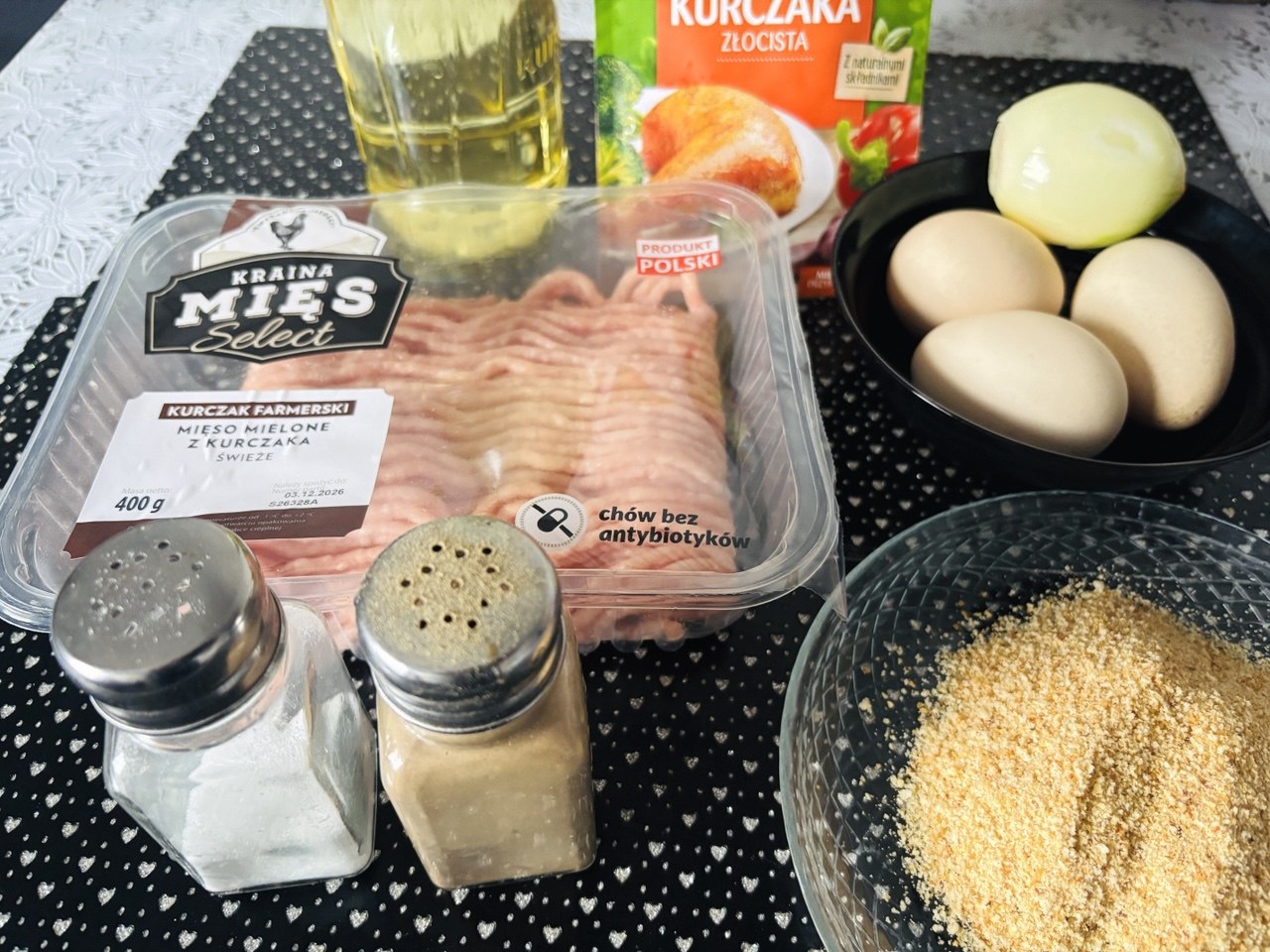

Chicken Scotch Eggs in the Air Fryer
Ingredients
Equipment
Method
- Lower the eggs into boiling water and cook for 4–6 minutes. Move them straight into cold water for 2–3 minutes, then peel very gently.
- Finely chop the onion and mix it with the chicken, chicken seasoning, pepper and a pinch of salt. Divide the mixture into 2 portions of about 100 g (3.5 oz).

- With wet hands, flatten one portion, place an egg on top and wrap the chicken around it, sealing the seams. Roll each ball in flour, then in beaten egg, then in breadcrumbs.
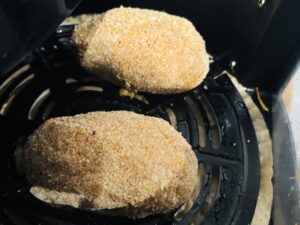
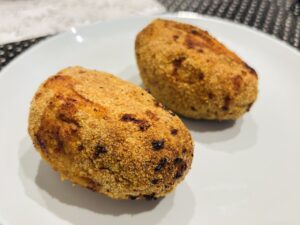
- Lightly oil the bottom of the air fryer basket and place the eggs on a paper liner. Air fry at 200°C (about 390°F) for 17 minutes, turning halfway.
- Rest for 2–3 minutes, then cut in half.
Notes
Can you make scotch eggs in an air fryer? Yes, and they come out with a crisp, golden crust and only a light brush of oil on the bottom of the basket. What the air fryer won’t give you is the pub-style runny yolk, and this recipe shows exactly why, based on a side-by-side test with two eggs boiled for different times.
Chicken scotch eggs in the air fryer: what was tested
This version swaps the usual pork sausage meat for ground chicken. Each peeled egg gets a layer of about 100 g (3.5 oz) of seasoned chicken, which ends up close to 1 cm (just under ½ inch) thick. Then comes a classic three-step coating: flour, beaten egg and breadcrumbs.
7-Day Meal Plan: Vegan and Gluten-Free
A ready-made plan in PDF with more than 20 recipes from this blog, a shopping list and a cooking plan for the whole week.
Price: $9.99. VAT or sales tax may be added at checkout.
For general information only. This is not medical or dietetic advice.
More about the plan: what is inside and who it is for
Two eggs went into the test. One was boiled for 4 minutes, the other for 6. Both were cooled in cold water, peeled, wrapped in chicken, breaded and cooked together at 200°C (about 390°F) for 17 minutes, turned halfway through. Ground chicken is soft and sticky, so wrapping it with wet hands helps a lot; the coating held perfectly and nothing cracked in the basket.
Air fryer scotch eggs and a runny yolk: why it doesn’t work
When the two eggs were cut in half, the yolks looked identical: fully set, with no soft center at all. The 4-minute egg finished exactly like the 6-minute one, so anyone hoping for air fryer scotch eggs with a runny yolk should know up front that this method won’t deliver it.
The reason is heat transfer. Hot air moves heat into food much more slowly than hot oil does, so the chicken needs well over 10 minutes to cook through safely, and poultry has to reach 74°C (165°F) inside. During that time the heat also reaches the egg and finishes cooking it. A thinner layer of meat, say 50–70 g instead of 100 g, would shorten the cooking time a little, but based on this test the yolk would most likely still set, because the chicken itself has to be fully cooked.
That runny center you see in pub photos comes from the deep fryer. Hot oil cooks a thick layer of meat in a few minutes, before the egg has time to firm up.
So, can you make scotch eggs in an air fryer without losing anything?
You lose the runny yolk, and that is the honest trade-off. In return you skip a pot of hot oil, and there are good reasons to:
- Fewer calories. A breadcrumb crust soaks up frying oil, so a deep-fried scotch egg carries noticeably more fat than one cooked with a light brush of oil.
- No reused oil. Oil that is heated again and again breaks down and forms aldehydes such as acrolein and 4-hydroxynonenal, compounds linked to cell damage and inflammation. In restaurants, fryer oil is commonly used for days before it is changed.
- Heart health. A 2021 meta-analysis of 17 studies in the journal Heart found that people who ate the most fried food had a 28% higher risk of major cardiovascular events than those who ate the least.
How long to boil eggs for scotch eggs in the air fryer
Since the yolk sets anyway, the boiling time mostly matters for peeling. Anywhere from 4 to 6 minutes works. Move the eggs into cold water right away for 2–3 minutes and peel them very gently.
A 4-minute egg is fragile: the white is soft and tears easily, and one of the eggs in the photos has a small crack at the base for exactly that reason. A 6-minute egg is firmer and much easier to handle, so it is the better choice for a first try.
Flour the egg before wrapping?
Most recipes tell you to roll the peeled egg in flour before wrapping it, because a smooth, damp white can be slippery. In this test the eggs went in without flour and the chicken stayed in place, even after cutting. A light dusting won’t hurt, especially the first time, but with the meat pressed firmly around the egg and the seams smoothed with wet hands, it isn’t essential.
Can you bake them in the oven instead?
Yes, the same recipe can go in a regular oven, it just takes longer because an oven heats the eggs more slowly than a compact air fryer basket. If the yolk already sets in the air fryer, expect a fully hard-cooked egg from the oven as well.
What to serve with them
Any sauce works. In the photos the scotch eggs are served warm, straight from the basket, with mayonnaise and slices of fresh cucumber to balance the rich, crunchy crust. Cut in half, they show off the layers nicely, so they also work well as a snack on a shared plate.