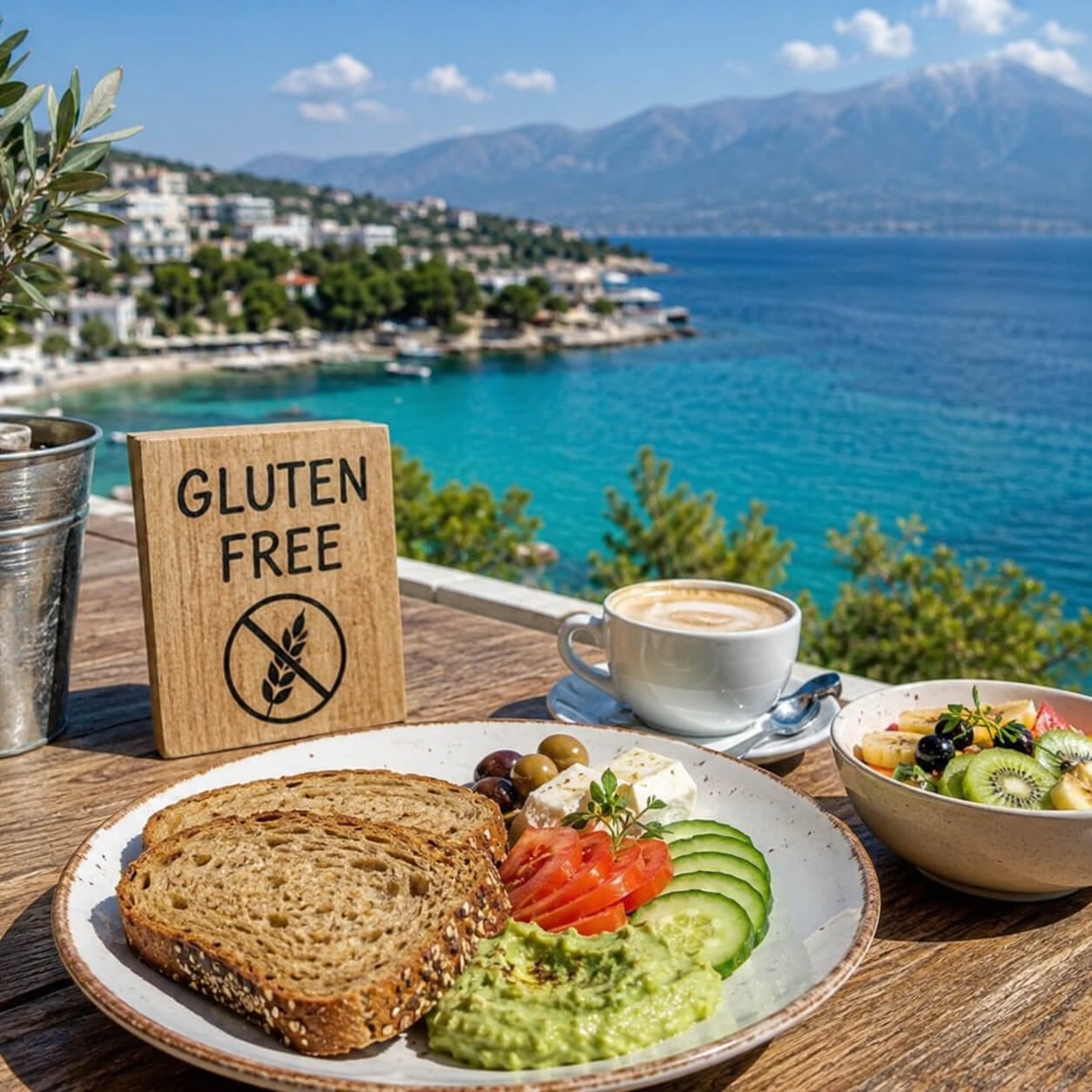
Spain’s gluten-free food scene isn’t just dense — it combines a national celiac federation, a regional restaurant program, EU-wide labelling law, and a licensing system that replaced the country’s old certification mark in 2020. That infrastructure is easy to miss if you only search for restaurant lists — and it’s what separates gluten-free Madrid from a destination where safety depends entirely on which individual restaurant you happen to walk into, the way it still does in our guide to gluten-free travel in Albania, where no equivalent national system exists yet.
How Spain’s Gluten-Free System Works
FACE (Federación de Asociaciones de Celíacos de España), the national celiac federation, was founded in 1994. For two decades its own “Controlado por FACE” mark was the main product certification consumers looked for. From 2020, FACE integrated that mark into the European Licensing System (ELS), the AOECS licensing scheme marked with the Crossed Grain Trademark (“Espiga Barrada”). Under EU rules, “gluten-free” means no more than 20 mg/kg of gluten; the ELS scheme adds certification and ongoing external controls on top of that legal labelling requirement.
At the regional level, the Madrid celiac association (Celíacos Madrid) runs a restaurant advisory program that’s been active since 2009, working directly with venues on training and ingredient guidance. It’s worth being precise here: this program isn’t a product certification in the way ELS is. A restaurant in the program has received training and support from the association; it doesn’t carry the same formal, externally-audited status as a product with the Crossed Grain Trademark.
Three Levels of Gluten-Free Dining
For a traveler, it helps to separate three practical situations that all get called “gluten-free” loosely:
- Dedicated gluten-free venues — kitchens that operate entirely without gluten-containing ingredients. These generally offer the simplest setup for avoiding cross-contact.
- Restaurants with a separate gluten-free menu or kitchen zone — the venue also serves regular food, with dedicated equipment and protocols for gluten-free dishes. Risk depends on how well the protocol is followed.
- Restaurants that mark some dishes “sin gluten” without documented cross-contact procedures — the dish itself may be gluten-free, but the kitchen handling around it isn’t necessarily controlled for.
Grosso Napoletano has both standard locations and separate Senza Glutine locations across Madrid — the two are not interchangeable. Only the ones specifically branded Grosso Napoletano Senza Glutine operate as dedicated gluten-free restaurants, using a dough made from rice, corn, and buckwheat with a 48-hour double fermentation. Always confirm you’re at a Senza Glutine address before ordering, not a standard Grosso Napoletano branch. This same-brand, different-kitchen split is exactly what makes gluten-free Madrid worth researching properly instead of trusting a restaurant name alone.
Tapas, Fryers, and Gluten-Free Beer
Fried tapas — croquetas, calamari, patatas bravas — are a common cross-contact risk, since many kitchens use one fryer for everything. This is the kind of detail the Celíacos Madrid restaurant program addresses directly, through separated fryers and equipment.
Gluten-free beer is worth checking by brand. Cruzcampo Sin Gluten, for example, is brewed from ordinary barley malt using the standard recipe, then processed so the gluten proteins are hydrolysed during production, bringing the final gluten level below 20 mg/kg — the beer isn’t made from a naturally gluten-free grain to begin with. Other Spanish gluten-free beers use different bases and methods, so it’s worth checking the specific brand’s process rather than assuming one method applies across the category — the same brand-by-brand caution is worth carrying over to our gluten-free Budapest guide, where labelling habits are less standardized than in Spain.
Dedicated Gluten-Free Places in Madrid
The density of fully dedicated kitchens is what sets gluten-free Madrid apart from much of Central and Northern Europe, including our own guide to gluten-free travel across Lithuania and Latvia, where dedicated venues are still far rarer. A few places worth knowing by name in Madrid:
- Celicioso — a long-established dedicated gluten-free bakery with several locations around Madrid, including one inside El Corte Inglés on Gran Vía.
- Grosso Napoletano Senza Glutine — the dedicated gluten-free branch of the pizza chain described above; check you’re at a Senza Glutine location specifically.
- LaLina — a fully gluten-free tapas restaurant with three locations across La Latina, Chueca, and Chamberí, known for its patatas bravas.
- 0% Gluten Madrid, on Calle de Vallehermoso in Chamberí — a dedicated gluten-free bakery, pastry shop, and small café.
- Pastelería La Oriental Sin Gluten — a dedicated gluten-free bakery operating next door to its own regular, gluten-containing sister bakery, run as two separate kitchens.
Useful Spanish Phrases
“Sin gluten” is what you’ll see printed on menus and packaging throughout the country. “Soy celíaco” or “soy celíaca. Necesito evitar el gluten” (the ending changes with gender) tells staff you’re describing a medical condition rather than a preference. To ask about kitchen practice directly: “¿Hay riesgo de contaminación cruzada?” (Is there a risk of cross-contamination?)
FAQ: Gluten-Free Travel in Madrid
Is a “gluten-free” label on packaged food in Spain reliable?
Yes. Under EU rules, anything labelled “sin gluten” contains no more than 20 mg/kg of gluten. Products carrying the Crossed Grain Trademark are certified under the AOECS European Licensing System, which involves external certification and ongoing controls beyond the basic legal requirement.
Does a restaurant working with Celíacos Madrid mean it’s certified?
Not in the same sense as product certification. It means the restaurant has received training and ingredient guidance from the association. What determines actual safety is the kitchen’s day-to-day procedure — dedicated equipment and how seriously cross-contact is handled.
Are shared kitchens automatically unsafe?
No, but they require asking specific questions about shared fryers, preparation areas, and how gluten-free food is stored and handled, rather than trusting a menu label alone.
Why does the same pizza chain have both gluten-free and regular locations?
Only the Senza Glutine-branded Grosso Napoletano locations run a fully dedicated gluten-free kitchen. The regular branches under the same name serve standard pizza.