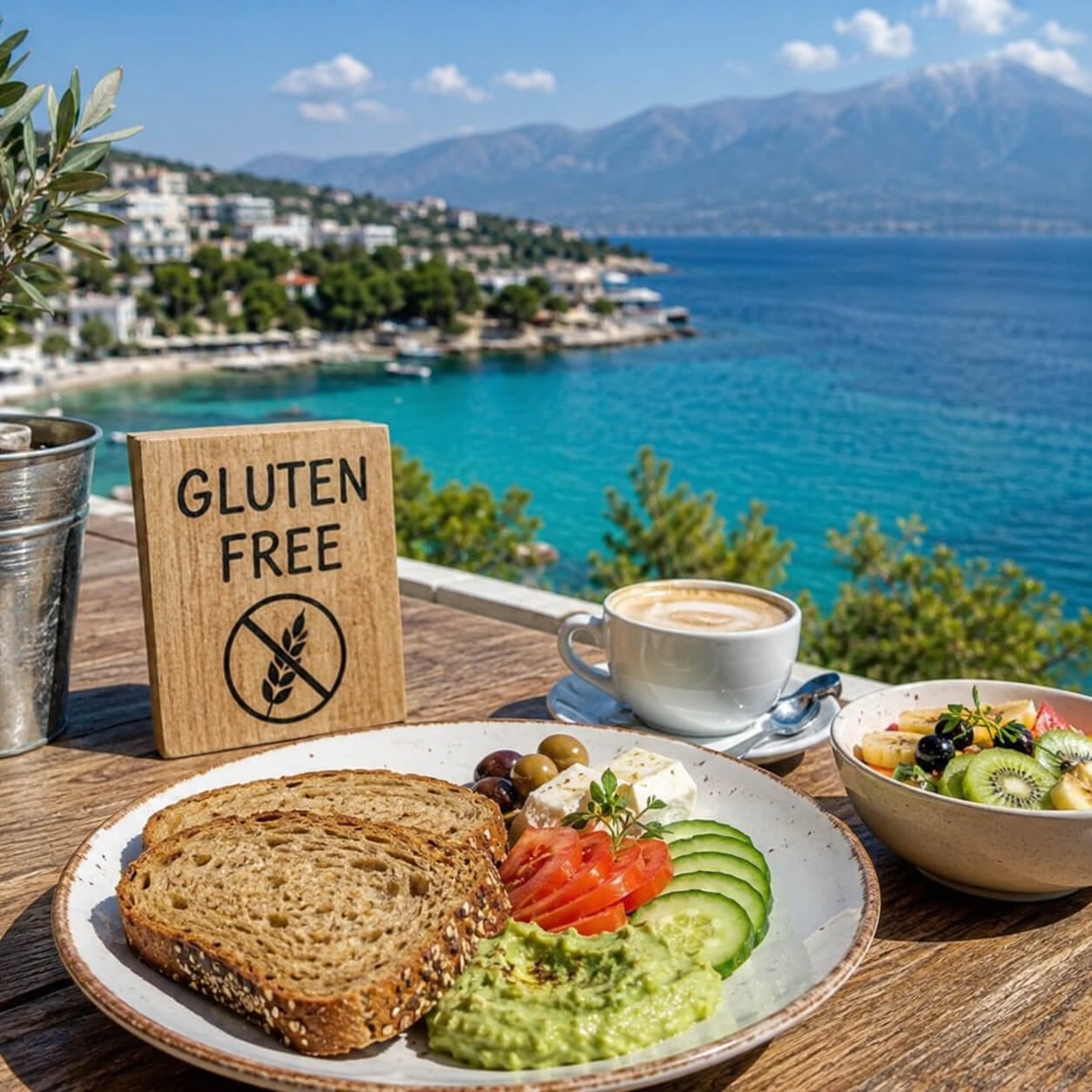
Gluten-free Albania is a topic that online tends to get either ignored, or — worse — described by someone who’s clearly never set foot in the country. The reality is challenging, but far from hopeless. The Balkans are famous for wheat-based pastries, rich meat broths, and cheese on every corner, so combining a vegan diet with gluten elimination might sound like a culinary dead end. And yet — Albanian cuisine holds plenty of resources that, with a bit of knowledge and preparation, make this trip not just doable, but in places genuinely delicious. This guide is written for people with celiac disease, gluten intolerance, and anyone who also follows a plant-based diet. You’ll find specific addresses, safe dishes, an Albanian phrasebook, and one recipe you’ll want to bring home with you.
Before we dive into the details — bookmark this page or save it to your phone. At the end of the article, you’ll find a card written in Albanian that you can hand to your waiter. In many places, this alone will save you from unnecessary stress and kitchen mishaps.
Albania’s place in a wider Balkan trip becomes clearer with some context — our gluten-free Balkans guide ranks it against six neighboring countries and names the one packaged-food brand worth checking for no matter which border comes next. Travelers heading on to Montenegro or Greece afterward will find that route mapped out there as well.
Is Albania Safe for People with Celiac Disease?
This is the question that comes up most often, and it deserves an honest answer. Gluten-free Albania is doable, but it takes more effort than a trip to Italy or Spain. The country has no certification system for gluten-free venues, doesn’t subsidize a special diet for people with celiac disease, and doesn’t track diagnosis rates for the condition. What saves the day is the structure of the cuisine itself — a large share of traditional Albanian dishes never contained wheat in the first place, simply because it wasn’t available.
In Tirana and along the Albanian Riviera, awareness is growing year by year. Waiters under forty often understand the English or Italian word “gluten” and can point to safe items on the menu. Older towns — Berat, Gjirokastër, Përmet — are a different story. There, the only reliable tool is the Albanian-language card you’ll find later in this article.
The real risks for someone with celiac disease in Albania aren’t usually the ingredients of a dish itself, but the process around it: shared fryers, pans that weren’t properly cleaned after frying byrek, kitchen staff who don’t realize a bouillon cube might contain gluten. Albania is actually safer than several other Balkan countries — ahead of Bulgaria or North Macedonia in terms of awareness — but clearly more demanding than Western Europe. With the right preparation, you can eat well here without anxiety. Without it, you can run into real trouble.
It’s also worth knowing that Albania and Kosovo are the only two Western Balkan countries without a government reimbursement program for the gluten-free diet for people with celiac disease — a fact confirmed by the Tirana-based Gluten-Free Albania community. This doesn’t directly affect tourists, but it tells you a lot about where the country stands in terms of systemic awareness of the condition.
Traditional Albanian Cuisine: A Goldmine for Vegans and Gluten-Free Travelers
To understand why Albania is both a challenging and surprisingly rewarding place for gluten-free travelers, it helps to step back and look at the history of the cuisine. For centuries, Albanians lived largely off what they grew themselves — vegetables, legumes, olives, fruit. Wheat flour was expensive and out of reach for poorer regions. The result? Many traditional dishes that have survived to this day are naturally gluten-free — not because anyone adapted them for a diet, but simply because that’s how they were made from the start.
First on the list of safe dishes is imam bajildi — baked eggplant stuffed with tomatoes, onion, garlic, and herbs in olive oil. The dish has Ottoman roots and appears across Albanian cuisine under various names. It’s vegan, gluten-free, and so satisfying it’s hard to believe it contains neither meat nor dairy. In a taverna, it’s still worth asking: “A është bërë me miell?” — “Does it contain flour?” — just in case, since some cooks experiment with the recipe.
Equally safe are speca të mbushur, stuffed peppers. In the classic version, the filling is rice with herbs and spices. But here’s the first subtle trap: in many home-style versions, cooks add meat stock — lëng mishi — to the rice, which can contain gluten (from a bouillon cube) and, of course, takes the dish out of vegan territory entirely. Always ask about the filling before you start eating.
A completely safe and naturally vegan option is patate të furrës — oven-roasted potatoes with Albanian herbs, garlic, and olive oil. In their basic form, they contain no gluten. The same goes for grilled vegetables — perime në zgarë — usually listed as a side for meat dishes, but you can order them as a standalone plate too. Zucchini, peppers, eggplant, tomatoes. Nothing else needed.
Albanian salads are another safe haven. The classic tomato, cucumber, and olive salad is exactly what it looks like — no mystery ingredients hiding inside. Just remember to ask for it without feta: pa djathë. Waiters are generally used to this request, since plenty of tourists avoid dairy. It won’t raise any eyebrows.
Worth mentioning too is jani me fasule, Albanian bean soup — one of the most classic home-cooked dishes around. White beans, tomatoes, onion, garlic, olive oil, and a generous handful of parsley. In its original, home-style form, it’s both vegan and gluten-free. In restaurants, though, it’s sometimes thickened with flour or enriched with a bouillon cube, so it’s worth asking here as well.
The Red Zone: Hidden Gluten and Culinary Traps
Gluten-free Albania has its own rules. Some dishes that look perfectly safe at first glance hide wheat-based surprises. Waiters — especially older ones, in smaller towns — often don’t know exactly what goes into the kitchen, and will cheerfully assure you that “everything’s fine,” even if the cook just stirred a spoonful of flour into the sauce.
Byrek is an absolute no-go. It’s Albania’s most popular street food — crispy phyllo pastry filled with cheese, spinach, or meat. The phyllo is made from wheat flour, full stop. Avoid it, even if someone tells you they know a gluten-free version — that’s nearly impossible in a typical Albanian bakery, where flour dust hangs in the air like snow.
Fërgesë, one of Albania’s iconic dishes, is a baked pepper-and-cheese spread cooked in a clay dish. On its own, it doesn’t contain wheat flour, but in many restaurants the sauce is thickened with a spoonful of flour, or served on wheat bread as an integral part of the dish. You can eat fërgesë, but you need to clearly ask whether it’s made without flour and served without bread.
Tavë kosi — Albania’s national dish, lamb baked with rice in a yogurt-egg sauce — could be gluten-free, if not for one detail. Some recipes call for a spoonful of flour to thicken the yogurt sauce. Beyond that, it’s a meat-and-dairy dish, so vegans face a double obstacle here. Still, it’s useful to know this nuance — if someone in your group is gluten-free but not vegan, they can ask about it directly.
Shared frying oil is another danger zone. In Albanian restaurants, especially the touristy ones along the coast, fries and fried vegetables often go into the same oil as breaded meat or fish — and sometimes even byrek dough. This is a textbook cross-contamination scenario, and for someone with celiac disease it can mean a serious reaction. Always ask whether a dish is fried in clean, separate oil: “A është skuqur në vaj të pastër, veçmas nga ushqimet me miell?”
Soups and sauces are another gray area. Albanian cooks routinely rely on bouillon cubes — both meat and vegetable — which often contain gluten as a flavor carrier. Saying a soup should be “meat-free” isn’t enough; you need to ask about every component. Your safest bet is to request dishes made only with olive oil, water, and fresh vegetables, with no ready-made mixes added.
Where to Eat: Cities and the Albanian Riviera
Tirana: the aware capital
Tirana is by far the most gluten-free-friendly city in Albania. Waiters in Blloku — the trendy district packed with restaurants and cafés — often understand the English word “gluten” and increasingly know what celiac disease means. It’s not Barcelona or London just yet, but compared to the rest of the country, the difference is huge.
Panja Bakery, at Mihal Duri 17, should be top of the list for any celiac visiting Tirana. It’s the most well-known dedicated gluten-free bakery in Albania — a place entirely devoted to gluten-free products, which removes the risk of cross-contamination altogether. You can pick up bread, rolls, cakes, and snacks here. The staff understand celiac disease and take it seriously — this isn’t a restaurant that just happens to have one gluten-free item on the menu.
Tony’s American Restaurant, at Sami Frashëri 56, is another spot frequently mentioned by celiac travelers. It serves gluten-free burgers and other dishes, and the staff understand the need for careful preparation. It’s not a vegan restaurant, but as an option for someone who’s gluten-free (without a vegan requirement), it holds up well.
Happy Belly (also operating as Eat Smart) is one of the few places in Tirana with a clearly health-focused menu — salads, quinoa-based dishes, fresh juices, and gluten-free options. For travelers combining vegan and gluten-free needs, this is probably the closest thing to an ideal spot you’ll find in the capital.
The AMI-I Gelati ice cream chain is a good option for a sweet treat during the day. Some flavors contain no gluten-based ingredients, but anyone with celiac disease should still ask about cross-contamination risk — shared scoops and counters are a real concern for someone with full-blown disease.
Grand Panevino is a modern Italian restaurant in the city center that comes up regularly in recommendations for gluten-free dining in Tirana. The staff are used to questions about allergens. As a vegan, though, make sure to be explicit about your dairy requirements, and double-check the current gluten-free offerings every time you visit.
The Albanian Riviera: Sarandë, Ksamil, Vlorë
Along the coast, things are more mixed. There are no dedicated vegan-and-gluten-free venues, but a few tried-and-tested strategies genuinely work. First — Italian pizzerias. More and more tourist-oriented restaurants now offer gluten-free options, including some pizzerias (especially in Sarandë, where Italian tourists are part of daily business for owners). Order a marinara pizza — tomato sauce and olive oil — without cheese, on a gluten-free crust. Before you order, make sure the crust is baked on a clean tray, not next to wheat-based dough.
Seaside tavernas are your second option. Order grilled vegetables and rice, and be explicit that it needs to be prepared in a clean pan, without butter and without any pre-made mixes. It sounds simple, but it’s worth saying twice. Waiters in Ksamil and Sarandë are used to demanding guests — the tourist season has trained them well.
In and around Vlorë, the food is more traditional and less “polished” for tourism. This is where you’re least likely to find staff who understand your requirements. Here, the traveler’s card with the Albanian text (at the end of this article) becomes essential.
If you’re planning a similar trip elsewhere in the region, you might also want to check our guide to eating gluten-free in Greece — a country with plenty of culinary overlap with Albania, but also some important differences.
Albanian Baked Eggplant, Imam Bajildi-Style – A Gluten-Free Recipe
Before you head to Albania — or right after you get back, when you’re already missing the taste of that summer — make this dish at home. Imam bajildi is one of those recipes that looks modest on the ingredient list and turns out surprisingly rich on the plate. Eggplant is the main character here, not a backdrop for meat. The dish is one hundred percent vegan, naturally gluten-free, and needs only ingredients you can find in any supermarket.
The name, from Turkish, literally means “the imam fainted” — supposedly out of delight at the flavor (or out of shock at how much olive oil his wife used). Albanians adopted this dish from Ottoman cuisine and made it their own, with more garlic and fresh herbs.
- 2 large eggplants
- 4 tablespoons olive oil (don’t be shy with it)
- 3 medium tomatoes, finely chopped
- 2 onions, thinly sliced
- 4 garlic cloves, minced
- a bunch of fresh parsley
- 1 teaspoon dried oregano
- salt and pepper, to taste
- a pinch of sugar (optional, to balance the tomatoes’ acidity)
Cut the eggplants in half lengthwise. Using a spoon or knife, scoop out the flesh, leaving about a centimeter of wall — like a little boat. Chop the scooped-out flesh. Heat half the olive oil in a pan and sauté the onion with the garlic until translucent. Add the chopped eggplant flesh, tomatoes, oregano, salt, and pepper. Cook over medium heat for 10–12 minutes, until the mixture reduces slightly and thickens. Stir in the parsley at the end.
Arrange the eggplant halves in a baking dish and brush the insides with the remaining olive oil. Fill each one generously with the filling — don’t skimp. Pour about half a cup of water into the dish, cover with foil, and bake at 190°C (375°F) for 35 minutes. Remove the foil and bake for another 10–15 minutes, until the eggplants are soft and the tops are lightly caramelized.
It’s best served warm or at room temperature — and on this, the Albanians are absolutely right.
Shopping in Albania for People with Celiac Disease
If you’re renting an apartment with a kitchen — and we strongly recommend this for anyone combining vegan and gluten-free needs — Albania is a rewarding country to shop in. Not because the supermarket shelves are bursting with certified GF products, but because local markets offer fruit and vegetables at a quality you may not have seen in a while.
Supermarket chains
The best-stocked stores belong to the Conad and Spar chains. In Tirana and the larger tourist towns (Sarandë, Durrës), you’ll find a dedicated gluten-free section in these stores. Look for the Schär brand — its products (crispbread, pasta, biscuits) are available in Albania too and are certified, which for someone with celiac disease means real safety, not just a label claim. The same stores stock plant-based milk — almond or soy — though the selection is smaller than in Polish supermarkets. This is where gluten-free Albania really begins: with a well-stocked shopping basket for your first few days.
Conad is especially useful, since Schär products show up there regularly rather than only in select locations. Before you travel, it’s worth checking whether there’s a Conad store in the town you’re heading to — it’ll save you stress once you arrive.
Local markets
Albanian tregu — traditional markets — are the best thing you can do for your diet here. Tomatoes are actually ripe, not just labeled as such. Eggplant, zucchini, peppers, figs, grapes, walnuts, and pistachios — all seasonal, cheap, and naturally gluten-free. At the market, you can also find locally produced olive oil (often in unlabeled bottles, which is completely normal in Albania) and fresh herbs: mint, oregano, parsley.
Rice — a staple of many gluten-free meals in Albania — is available everywhere, in shops and markets alike. The same goes for chickpeas and beans, which can form the base of a filling, satisfying meal with zero gluten risk. Schär or other certified products are a useful supplement, not the foundation — build the foundation from what’s local.
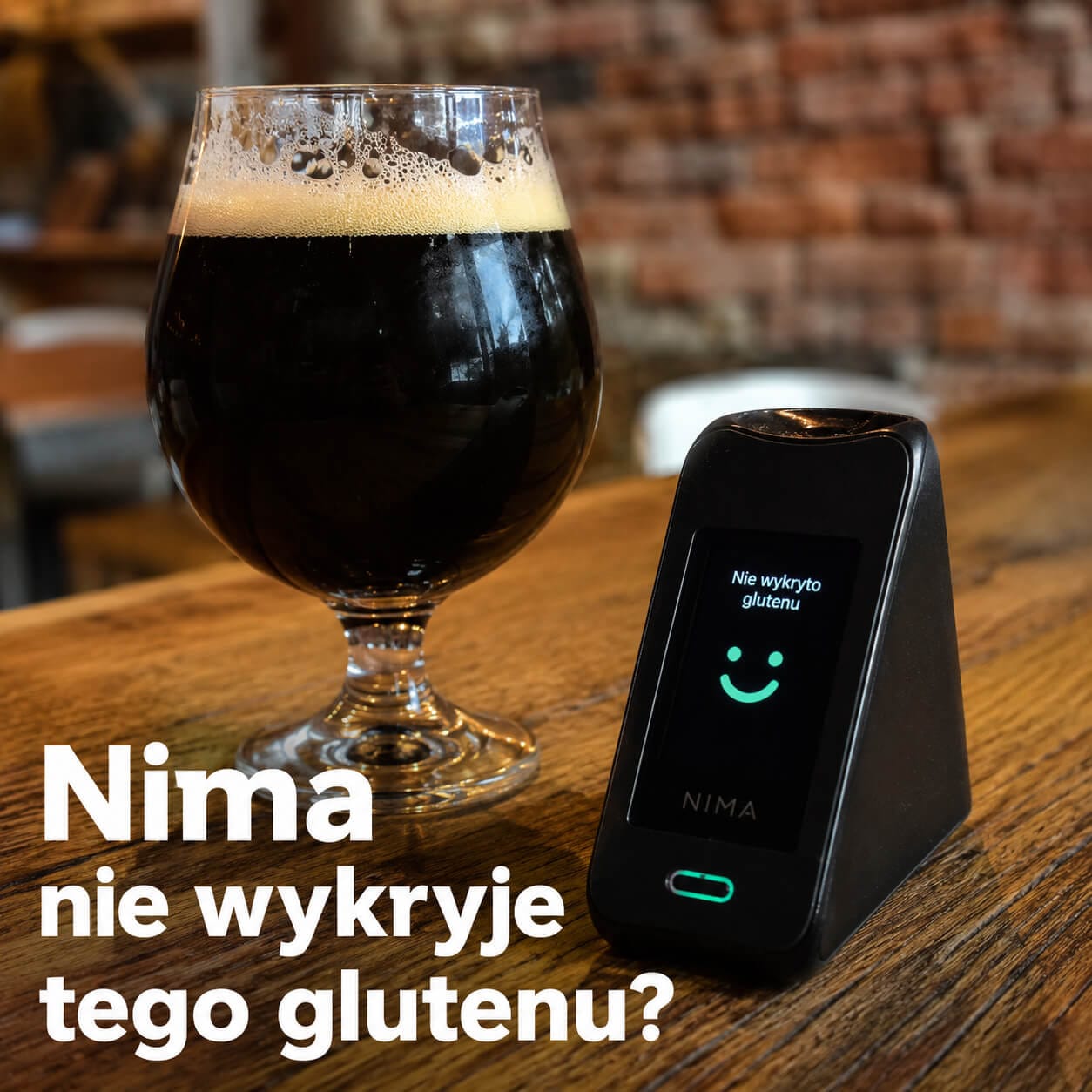
If you can’t find Schär products locally, it’s worth packing a few bags of gluten-free pasta or crispbread for your first days. And if you’re ever uncertain about an unlabeled local product — a sauce, a bouillon, or a spice mix — a portable gluten-detection device such as the next-generation NIMA Sensor can test a small sample in just a few minutes, giving you an extra layer of confidence when labels simply aren’t an option.
Traveler’s Card: Restaurant Phrases in Albanian
Here’s the moment I mentioned at the start. Below you’ll find two blocks of text: a short one for quick use at the table, and a longer, more detailed one for trickier situations or places where the staff speak little English.
Short version – show this to your waiter:
Jam vegan dhe kam celiaki. Nuk mund të haj mish, peshk, qumësht, djathë, vezë. Nuk mund të haj asgjë me miell gruri, elbi ose thekër. Pa gluten, pa mish, pa djathë. A është skuqur në vaj të pastër, veçmas nga ushqimet me miell?
(I’m vegan and I have celiac disease. I can’t eat meat, fish, milk, cheese, or eggs. I can’t eat anything made with wheat, barley, or rye flour. No gluten, no meat, no cheese. Was this fried in clean oil, separate from anything made with flour?)
Detailed version – for more complicated situations:
Mirëdita. Jam vegan dhe kam celiaki – një sëmundje e rëndë. Duhet të jem shumë i kujdesshëm me ushqimin tim. Ju lutem, ushqimi im nuk duhet të përmbajë:
- Miell gruri, elbi, thekër – as në bukë, as në salcë, as si trashës.
- Mish, peshk, vezë, qumësht, djathë ose gjalpë.
- Ushqime të skuqura në të njëjtin vaj ku janë gatuar produktet me miell.
A mund të përgatisni diçka të sigurt për mua? Faleminderit shumë.
(Good day. I’m vegan and I have celiac disease – a serious condition. I need to be very careful about what I eat. Please make sure my food doesn’t contain: wheat, barley, or rye flour – not in bread, sauce, or as a thickener. Meat, fish, eggs, milk, cheese, or butter. Anything fried in the same oil used for flour-based products. Could you prepare something safe for me? Thank you very much.)
Useful words in Albanian:
- pa gluten – gluten-free
- pa mish – without meat
- pa djathë – without cheese
- pa miell – without flour
- celiaki – celiac disease
- alergjia ushqimore – food allergy
- A ka miell? – Does it contain flour?
- vaj i pastër – clean oil
- senza glutine – gluten-free, in Italian (works surprisingly well with older Albanians)
That last tip matters more than you’d think. In the south and west of the country, many older people understand basic Italian thanks to decades of exposure to Italian media. If a young waiter just shrugs, ask to speak to an older cook or the owner and try the Italian phrase instead — the results can be surprising.
Useful Apps for Celiac Travelers in Albania
In 2026, traveling with celiac disease without a smartphone is a handicap you don’t need. A few tools genuinely make a trip to Albania easier.
Find Me Gluten Free is the largest database of celiac-friendly venues in the world. It lists over fifty restaurants in Tirana, Sarandë, and Ksamil, with reviews from travelers with celiac disease — people who ate there and didn’t get sick. That’s real-world verification, not marketing copy.
Atly (formerly Spokin) works in a similar way — maps marking places that are safe for various diets and allergies. It’s worth installing both apps before you fly and checking what’s available in the specific town you’re heading to.
Gluten Free Card is essentially a digital version of the traveler’s card — you can generate a card in Albanian, print it, or just show it on your screen. The app supports dozens of languages and is especially handy if you’d rather not copy out text by hand.
It’s also worth keeping a photo of your medication or supplement packaging for celiac disease on your phone — sometimes the sight of pills marked with a crossed-out wheat stalk communicates more than the longest verbal explanation ever could.
Practical Tips Before You Go
A few things worth packing or sorting out before your trip, to make traveling with celiac disease in Albania go smoothly.
Print the celiac card in Albanian — the one from the traveler’s card section above — and laminate it or slip it into a plastic sleeve. A waiter can take it straight to the kitchen and show the cook without any phone-based translation in between. That removes a lot of room for miscommunication.
Book an apartment with a kitchen for at least half of your trip. Albanian markets are cheap, the produce is excellent, and cooking for yourself gives you full control over what goes into your food. Eating out is a pleasure, but it shouldn’t be your only option for the entire trip.
Pack emergency snacks. Certified gluten-free rice crackers, nuts, dried figs — things that don’t need refrigeration and can save the day when a restaurant menu turns out to be useless. In Albania, especially in smaller towns, that happens more often than you’d like.
Trust your gut. If a restaurant feels chaotic and the waiter doesn’t understand any of your questions — leave. For someone with celiac disease, that’s not a matter of preference, it’s a matter of health. Albania has plenty of places that take this seriously; there’s no need to gamble on the ones that don’t understand the basics.
And finally — Albania is a country that can genuinely take your breath away. Mountains, sea, the old towns of Berat and Gjirokastër, the incredible olive-oil-driven cuisine of the south. Gluten-free Albania takes preparation, but it’s far from impossible — the diet adds some logistics, but it doesn’t take away the joy of the trip. With the right knowledge, the two fit together just fine. That’s exactly what this guide was written for.
Medical and Legal Disclaimer
The information in this article is for educational and informational purposes only. It does not constitute medical or dietary advice. People with celiac disease, gluten intolerance, or other conditions requiring gluten elimination should consult a doctor or clinical dietitian before traveling. The weganpolska.pl team has made every effort to ensure the information in this article was accurate and up to date at the time of publication; however, product availability, restaurant menus, and venue policies may change. Before visiting any of the places mentioned, we recommend verifying current menus and kitchen procedures directly with the venue. The editorial team accepts no responsibility for any allergic or health reactions resulting from dietary decisions made based on this article.