Introduction
The Dominican Republic isn’t an obvious destination for vegetarians, but its everyday cooking already leans heavily on rice, beans, root vegetables, and plantains. Once you know which dishes to order and which questions to ask, eating meat-free here is genuinely manageable. This guide covers the dishes, the phrases, and where to find them — in restaurants, on the street, and at home.
History and Cultural Influences
Dominican food history starts before Columbus. The island’s original inhabitants, the Taíno, grew cassava, sweet potatoes, corn, squash, beans, and peanuts. Cassava flatbread, casabe, comes from that period and is still eaten today. Spanish colonization brought rice, wheat, onion, garlic, olive oil, citrus, and sugar cane, along with new crops — including plantains and taro — that arrived through Spain’s broader colonial trade routes and were folded into what was already being grown locally. Enslaved Africans introduced okra and shaped much of the cuisine’s frying and stewing technique, methods that still define how many of these ingredients are cooked. Heavy coconut milk use, common on other Caribbean islands, is mostly a Samaná-region habit here, tied to that area’s African and immigrant history — the rest of the country cooks more with olive oil, lard, and vegetable oil.
Dominican Vegetarian Recipes: Classic Dishes Made Meatless
Mangú, the National Breakfast
Mangú is boiled green plantain mashed with water and salt. Traditionally it’s served with los tres golpes (“the three hits”): fried cheese, fried eggs, and salami. Order it without the salami and it’s vegetarian; skip the cheese and eggs too and it’s vegan. It’s usually topped with cebollas guisadas (onions sautéed in vinegar) and sliced avocado. One catch: mangú is often made with butter, so ask if you need it dairy-free.
La Bandera, Meatless
La bandera — white rice, stewed red beans, and meat — is the everyday Dominican plate. Swap the meat for a vegetable stew of pumpkin, eggplant, okra, and carrots cooked in sofrito, and add maduros and a cabbage-carrot slaw on the side. It’s filling enough to work as a full meal.
Sancocho, the Vegetable Version
Sancocho is a thick stew, usually made with several kinds of meat, though a vegetable version is common too. It runs on root vegetables — cassava, sweet potato, taro, potatoes, pumpkin, corn, and plantains — simmered in sofrito and cilantro. It’s made with a vegetable broth, not coconut milk; coconut milk is a feature of other islands’ cooking, not this one.
Moro, Rice Cooked with the Rest
Moro is a one-pot dish: rice cooked directly with beans or peas instead of served alongside them. The two common versions are moro de habichuelas (with red beans) and moro de guandules (with pigeon peas, sometimes with coconut — a Samaná specialty).
Tostones and Maduros
Tostones are green plantain slices, fried twice for a crispy shell and soft center, usually served with salt, garlic, or hot sauce. Maduros are ripe plantain slices fried until golden and sweet. Both are naturally vegan, and both turn up everywhere — as a side at lunch, a street snack, or part of a bigger plate.
Habichuelas Guisadas and Yuca Frita
Habichuelas guisadas — red beans stewed with sofrito and vegetables — is a near-constant side dish; worth confirming it’s not made with bacon. Yuca frita, fried cassava, is a common street snack and a good stand-in for fries.
Habichuelas con Dulce
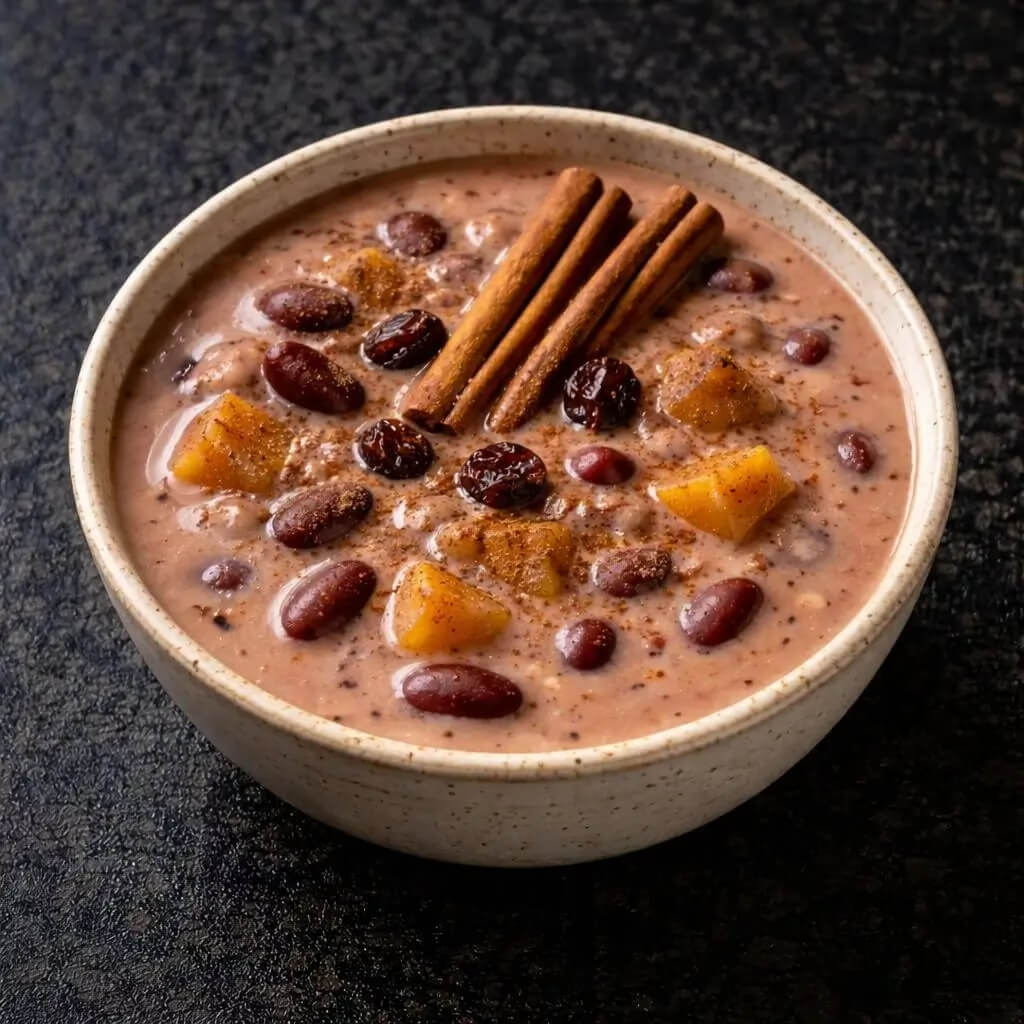
A dessert made from red beans, milk, coconut milk, sweet potato, cinnamon, cloves, and raisins — eaten mostly during Lent. For a vegan version, use coconut milk throughout and swap the condensed milk for maple syrup.
Staple Ingredients Behind Dominican Plant-Based Cooking
A few ingredients show up over and over:
- Root vegetables: cassava (yuca), sweet potato (batata), boniato, and taro (yautía) — boiled, fried, or simmered into stews and soups.
- Rice and beans: the everyday starting point for most meals, served side by side (la bandera) or cooked together (moro).
- Squash, okra, eggplant, and corn: the usual stew vegetables, alongside carrots, cabbage, and tomatoes.
- Tropical fruit: mango, papaya, pineapple, coconut, guava, passion fruit (chinola), and avocado, eaten raw or blended into juice.
- Sofrito: a base of sautéed onion, green pepper, garlic, cilantro, and oregano used in most savory dishes. Achiote (annatto) is a common add-in for color and a mild, nutty flavor.
What to Order at a Restaurant
- Habichuelas guisadas – ask if it’s made without meat; bits of bacon sometimes end up in the pot.
- Arroz blanco – plain rice, always safe.
- Moro de habichuelas / guandules – usually vegan, but confirm.
- Vegetales guisados – stewed vegetables.
- Tostones / Maduros – almost always safe.
- Ensalada verde – ask for oil and vinegar instead of a bottled dressing.
- Yuca frita – fried cassava, a good fries substitute.
- Arepitas de maíz – small corn cakes that often contain wheat flour and egg; ask.
- Batidas / Jugos naturales – ask for the water-based version (con agua) if you want it dairy-free.
Useful Spanish phrases
- “¿Este plato tiene carne?” – Does this dish have meat?
- “Soy vegetariano/a, no como carne, pollo ni pescado.” – I’m vegetarian; I don’t eat meat, chicken, or fish.
- “¿Puede prepararlo sin carne?” – Can you make this without meat?
- “Solo verduras y vegetales, por favor.” – Just vegetables, please.
Is Dominican Food Gluten-Free?
Mostly, yes — rice, corn, cassava, sweet potato, and vegetables are the backbone of the cuisine. Rice and beans, sancocho, mangú, tostones, and maduros are all naturally gluten-free. The exceptions: arepitas usually contain wheat flour, packaged spice blends and bouillon cubes sometimes have gluten, and shared fryer oil can cause cross-contamination with breaded items. Ask: “¿Este plato contiene trigo?” (Does this dish contain wheat?)
Everyday Eating: Breakfast, Lunch, and Dinner
Breakfast (Desayuno)
Mangú with los tres golpes is standard. Order it with avocado and sautéed onions instead. Arepitas (check the ingredients) and empanadas de yuca, often cheese-filled, are other common options, usually with Dominican coffee or a fresh juice.
Lunch (Almuerzo)
The biggest meal of the day, usually built around la bandera. Ask for rice, beans, stewed vegetables, slaw, and maduros. If soup is offered first, ask for sopa de vegetales — the default is often fish or beef broth.
Dinner (Cena)
Lighter than lunch: leftovers, an avocado sandwich, tostones with a dip, or vegetable soup. Yaroa is a popular takeout option — mashed potato or fries layered with cheese, sauces, and meat. Order it as yaroa de vegetales or sin carne, but know it’s a heavy, cheese-and-mayo-loaded dish either way, not a light option.
Vegetarian Street Food
- Tostones con ajo – plantain slices with garlic sauce.
- Yaroa (vege version) – ask for it without meat; still rich, with cheese, ketchup, and mayo.
- Empanadas de yuca o maíz – ask if the filling contains meat.
- Arepitas de maíz – may contain wheat and eggs.
- Fresh fruit – mango, pineapple, and coconut with salt, chili, and lime.
- Batidas and jugos naturales – ask for the water-based version.
The Vegetarian and Vegan Scene in Resorts and Cities
Santo Domingo and Santiago have the widest range of options, along with resort towns like Punta Cana, Puerto Plata, and Las Terrenas. Menus are more often labeled now, and chefs are generally willing to adapt a dish on request. Santo Domingo has a few fully vegan restaurants covering both local and international food.
Traditional Dominican Drinks
- Morir Soñando – orange juice and milk. Ask for the coconut milk version (con leche de coco) for a dairy-free take.
- Jugos naturales – fresh juice from mango, passion fruit (chinola), papaya (lechosa), pineapple (piña), guava, and more.
- Batidas – fruit milkshakes, orderable with water instead of milk.
- Piña Colada – the non-alcoholic version works for anyone; confirm there’s no condensed milk if you’re avoiding dairy.
- Mamajuana – a rum-based infusion of tree bark, herbs, and spices, steeped for weeks. It’s traditionally alcoholic; alcohol-free versions exist but are uncommon and worth asking about specifically.
- Coffee (café) – grown in the mountain regions, strong and widely available.
Cooking Dominican Dishes at Home
- Basics: red beans, rice, plantains, cassava, sweet potato, pumpkin, coconut milk, limes, cilantro — look for these at Latin American or Caribbean grocers if your regular supermarket doesn’t stock them.
- Seasonings: oregano, garlic, onion, achiote (or substitute sweet paprika with a splash of vinegar).
- Sofrito: blend onion, green pepper, garlic, cilantro, and oregano; keeps in the fridge for a week or so.
- Swaps: in sancocho and la bandera, replace the meat with pumpkin, cassava, eggplant, and okra.
- Finishing touches: fresh cilantro, avocado, lime, and hot sauce.
Where to Find Vegetarian Food While Traveling
- Local markets (mercados): fresh produce plus ready-to-eat food from vendors.
- Street stalls: tostones, arepitas, fried plantains, juice stands.
- Comedores: small family-run eateries; usually flexible about leaving out meat.
- All-inclusive resorts: increasingly have dedicated vegetarian/vegan stations.
- City restaurants: Santo Domingo, Santiago, and tourist towns have the most options. HappyCow is useful for finding them.
- Samaná: more coconut-milk-based cooking here, which tends to overlap with vegan-friendly dishes.
Key Vegetarian Dishes and Ingredients at a Glance
| Dish / Category | Main Plant-Based Ingredients | Details and Tips |
|---|---|---|
| Mangú | green plantains, water, salt, optional butter/oil | Vegan if made without butter. Serve with onions and avocado. |
| La Bandera (vege version) | white rice, red beans, vegetable stew, maduros, slaw | Filling and easy to find in most restaurants. |
| Sancocho (vege version) | cassava, sweet potato, taro, pumpkin, corn, plantains, sofrito, vegetable broth | No coconut milk in the traditional recipe. |
| Moro de habichuelas/guandules | rice, red beans or pigeon peas, sofrito, optional coconut milk | Coconut version is a Samaná specialty. |
| Tostones | green plantains, oil, salt | Naturally vegan snack. |
| Maduros | ripe plantains, oil | Sweet, fried, vegan. |
| Habichuelas con dulce | red beans, coconut milk, sweet potato, cinnamon, raisins | Can be made vegan by skipping condensed milk. |
| Yaroa (vege version) | mashed potato or fries, cheese, ketchup, mayo | Order sin carne; still a heavy, cheese-loaded dish. |
FAQ
How hard is it to eat vegetarian in the Dominican Republic outside of resorts?
It depends on where you are. In Santo Domingo, Santiago, and tourist areas, it’s straightforward. In small towns without dedicated restaurants, comedores and markets usually still let you build a plate from rice, beans, and vegetables — but the fish or beef broth default on soups and the occasional bacon in the beans means it pays to ask.
Which Dominican dishes are vegan without any changes?
Tostones, maduros, arroz blanco, and most fruit and juice are vegan as served. Mangú, moro, and habichuelas guisadas usually need a quick check — butter, bacon, or dairy sometimes sneak in.
What should I actually say to a waiter?
“Soy vegetariano/a, no como carne, pollo ni pescado” covers the basics. For anything that looks like it might have hidden meat or broth, add “¿Puede prepararlo sin carne?” — most kitchens will adjust a dish on request rather than tell you no.
Is Dominican food spicy?
Not really. Seasoning is heavy on herbs and sofrito rather than heat, and hot sauce is usually served on the side so you can add as much or as little as you want.