Gluten free travel in Spain gives celiacs two things at once: a national legal duty to disclose allergens and a patchwork of regional marks run by local celiac associations. The national certification system, from FACE to the European licensing mark, is unpacked in the FACE and ELS explainer from Madrid, so this page covers what applies across the country and then splits into five cities, each with a different priority.
Gluten free travel in Spain starts with what a bar must say
Spanish law, Real Decreto 126/2015 following EU Regulation 1169/2011, requires bars and restaurants to disclose the 14 major allergens, cereals containing gluten among them, even for food served without packaging. The information can be written, or spoken if a sign tells guests where to ask, and the written documentation must stay available to staff and inspectors. The duty covers the menú del día, tapas and dishes off the menu.
The rules concern ingredients present in a dish, and shared pans and fryers fall under a separate question. Gluten free travel in Spain therefore begins with asking about allergens in one specific dish, before it reaches the table.
What “sin gluten” means, and how it compares across borders
“Sin gluten” means less than 20 mg of gluten per kilogram across the EU, and the crossed-grain mark of the European licensing system looks the same in Spain and in Poland. France adds its own association logo next to it, and the gap between a product mark and a restaurant mark is laid out in France’s label and logo rules, which also help when comparing Spain with its neighbor.
Where wheat hides on a Spanish menu
- sauces thickened with flour,
- breading and frying batter,
- beer,
- pasta and pizza at places that treat them as side items on the menu.
Two sentences and one word for the kitchen
- “¿Me puede decir los alérgenos de este plato?” (Can you tell me the allergens in this dish?)
- “¿Tienen la información de alérgenos por escrito?” (Do you have the allergen information in writing?)
- “vegano” or “sin lácteos” for a plant-based diet without dairy.
Gluten free travel in Spain, city by city
Each city turns the law and the marks into practice in its own way, and they differ in who vouches for a venue: the city, an association or the venue itself.
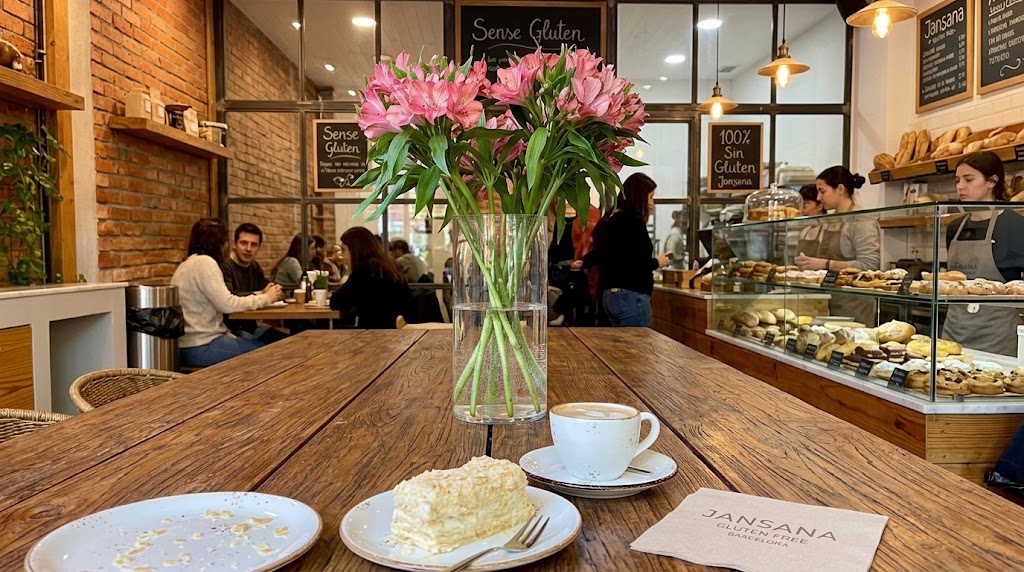
The most kitchens with an entire menu free of gluten, and the most plant-based addresses, are in Barcelona, where whole kitchens carry the load, from pizzerias to vegan restaurants.
At a pintxo counter, a conversation with the staff and the mark of the Basque association EZE decide, as San Sebastián and its pintxo counters show, along with the plant-based places in the Gros district.
Rice and horchata are naturally free of gluten and the risk sits in the wheat additions, a combination covered in Valencia and its rice and horchata, backed by an agreement between the city council and the ACECOVA association and a municipal lab that checks products.
In Andalusia the hours matter, together with a program started by the city’s health department, which shapes Seville and its siesta-sensitive network of approved venues, some of which close between lunch and dinner.
The rules and marks above follow Spanish and EU regulations and information from regional associations. Check current details before traveling, and always ask staff how a dish is prepared.