Lumps in your kissel, a sauce that won’t thicken, or a cream that turns watery after freezing – each of these problems comes from a different way this starch behaves. Potato starch is just one of four products worth knowing in gluten-free baking and thickening – see the full lineup in our guide to gluten-free flours and starches, along with tips on what to use for what.
What Is Potato Starch?
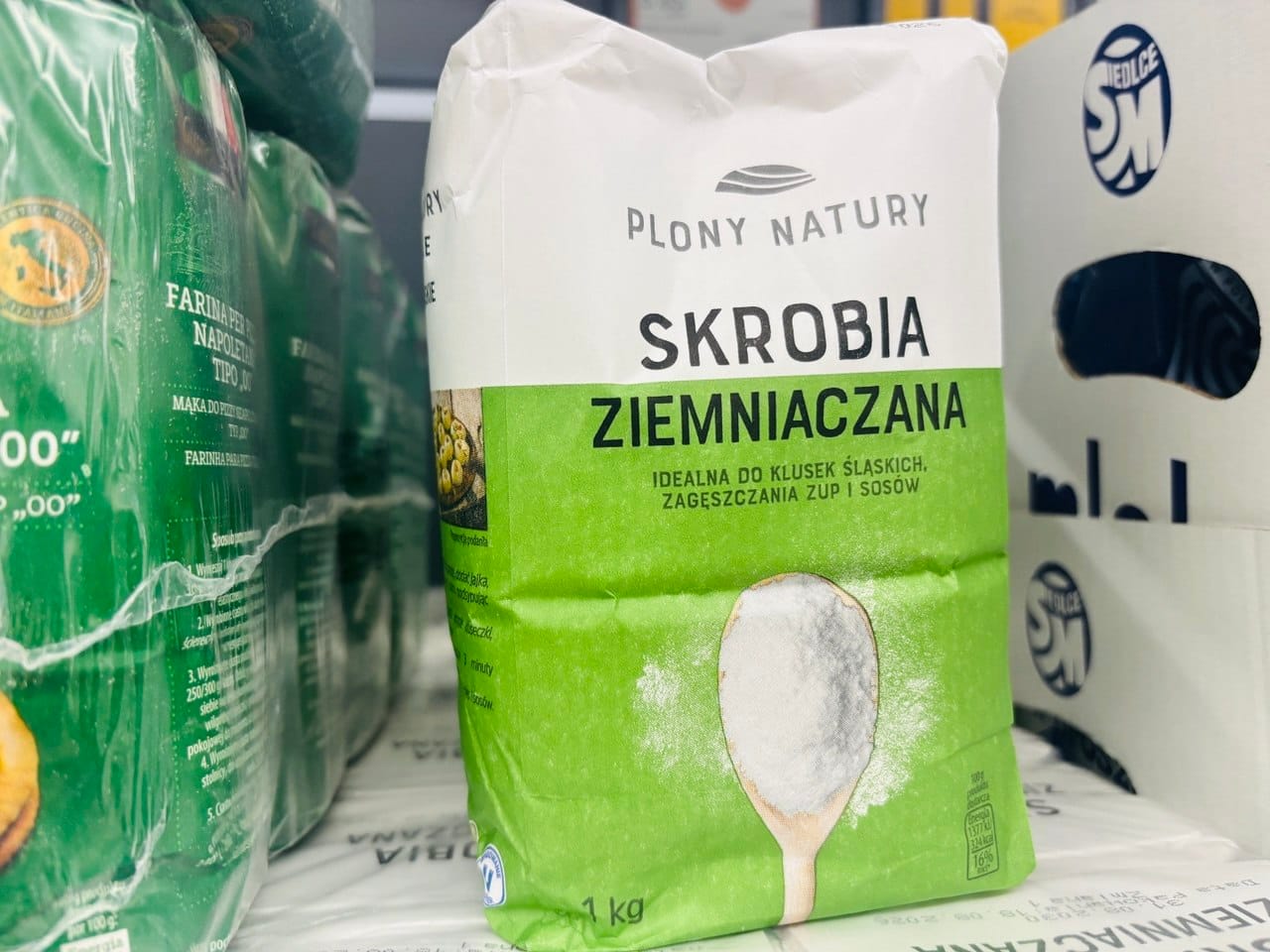
Potato starch is a white powder extracted from potatoes – an almost pure carbohydrate, with a neutral taste and smell. It’s worth knowing that potato starch and potato flour are not the same product, even though the names sound alike. Potato starch is the purified starch washed out of raw potatoes; potato flour is made from whole potatoes that are cooked, dried, and ground, so it keeps the protein and fiber that starch loses. The two aren’t interchangeable in a recipe.
Potato starch contains no gluten and won’t build dough structure the way wheat flour does. Its job in the kitchen is thickening and binding – sauces, soups, puddings, desserts.
What Potato Starch Is Used For
- Thickening sauces and soups – mixed into cold water and added near the end of cooking, it gives a clearer, less starchy result than a classic flour-based roux.
- Breading – added to a breading mix, it makes the coating crispier. It works best blended with another flour rather than on its own.
- Gluten-free baking – in gluten-free flour blends, it improves moisture and crumb softness.
- Egg replacer – a tablespoon mixed with three tablespoons of water is sometimes used as a partial egg substitute in vegan baking. It works purely as a binder – the bake won’t rise the way it would with a real egg.
How to Make Kissel with Potato Starch
Kissel is a fruit dessert from Eastern European cooking, thickened with starch into a smooth, semi-translucent gel – somewhere between a drink and a pudding, depending on how thick you make it.
How Much Starch per 2 Cups of Liquid
- thin, drinkable kissel – 1 to 1.5 tablespoons of starch;
- dessert-style kissel – 2 tablespoons of starch;
- very thick kissel – 3 tablespoons or more.
Tart fruits like currants or cranberries can behave less predictably during longer cooking. Fruits high in pectin, like apples or plums, affect the texture on their own, so it’s worth adjusting the starch amount to the specific recipe.
Why Kissel Gets Lumpy
Dry starch dropped straight into hot liquid clumps up fast. The fix: mix the starch into a small amount of cold water first, until it’s a smooth slurry with no lumps, then pour it into the hot liquid in a thin stream while stirring.
Why Kissel Thins Out After Cooking
Once it’s thickened, there’s no need to keep cooking kissel. Extended heat and vigorous stirring can weaken the thickening. Take it off the heat as soon as it visibly thickens.
Kissel Step by Step
- Simmer the fruit with water and sweetener until soft and juicy.
- In a separate bowl, mix the starch into 3–4 tablespoons of cold water until smooth.
- Once the fruit base is hot, pour in the slurry in a thin stream, stirring constantly.
- Take it off the heat as soon as it starts to bubble and visibly thickens.
- Pour into serving dishes and press plastic wrap directly onto the surface to prevent a dry skin from forming.
- Cool to room temperature, then chill in the fridge – kissel thickens a bit further as it cools.
Vegan Pudding (Made with Plant Milk)
The same technique works with plant milk instead of a fruit base – that makes it a pudding rather than a kissel. Thicken plant milk with starch mixed into a little cold milk beforehand, adding vanilla or cinnamon. Plant milks, oat milk especially, can stick to the pot, so keep the heat medium and keep stirring.
A chocolate version works the same way, with cocoa or melted vegan chocolate added. Mix the cocoa in with the starch slurry in cold liquid first to avoid lumps.
Substituting Potato Starch for Wheat Flour
For thickening sauces, about half the amount of flour called for in the recipe is usually enough. Flour gives a slightly cloudy, starchy-tasting result; potato starch gives a clear, neutral one, which is why it works noticeably better in light sauces like lemon or vanilla.
If you’re after a wheat-flour alternative for baking rather than just thickening, corn flour is worth a look too, since it actually builds dough structure.
Potato Starch vs. Cornstarch
Both thicken, but they behave differently. Potato starch gives a more transparent gel, which works well in kissel and glazes. Cornstarch can be more stable during long cooking and in acidic sauces, depending on conditions and the type of starch. We cover this in more detail in our article on whether cornstarch is gluten-free.
Is Potato Starch Gluten-Free?
Potatoes naturally contain no gluten, so this starch, in its pure form, doesn’t either. For celiac disease specifically, it’s worth choosing products labeled gluten-free, since cross-contamination can happen during processing or packaging.
Is Potato Starch Vegan?
Yes, in its pure form it’s a plant-based product. In plant-based cooking it thickens dishes that would traditionally rely on animal products – vegan cream sauces, puddings made without egg yolk, or cashew-based cheese sauces that tend to separate as they cool without it.
Freezing Dishes Thickened with Potato Starch
Dishes thickened this way can separate and turn watery after freezing and thawing.
- if you’re planning to freeze a dish, freeze it before thickening, and thicken it after reheating instead;
- if it’s already been frozen, reheat it briefly and thicken it again with a small amount of freshly mixed starch;
- freezing kissel or pudding can noticeably ruin their texture;
- for dishes meant to be frozen, tapioca starch may hold up better after thawing in some cases.
How to Store It
- keep it in a tightly sealed container – starch absorbs moisture and odors easily;
- store it somewhere dry and cool, away from steam and heat sources;
- starch that’s picked up moisture clumps before you even use it.
Nutrition Facts
Potato starch is nearly pure carbohydrate – it’s not a good source of protein, fat, or vitamins.
- Calories: about 340–360 kcal per 100 g
- Carbs: about 80–85 g
- Protein, fat, fiber: negligible
Common Mistakes
- Dropping dry starch straight into hot liquid. It clumps into lumps that stirring won’t break up.
- Cooking too long after thickening. Cooking breaks down the starch bonds and the dish thins out again.
- Freezing finished dishes thickened with starch. They tend to separate after thawing.
- Treating starch and wheat flour as a 1:1 swap. Starch thickens more strongly – about half as much is usually enough.
- Storing starch somewhere humid. It clumps before it’s even used.
FAQ
1. Why does kissel turn watery the next day?
Often it’s from saliva – if a spoon went from your mouth back into the pot, the amylase enzyme in saliva slowly breaks down the starch gel. Kissel left overnight like that can thin out noticeably.
2. Are potato starch and potato flour interchangeable in a recipe?
No – they behave very differently. Potato starch thickens and stays neutral in flavor; potato flour absorbs far more liquid and carries a distinct potato taste.
3. Can dishes thickened with potato starch be frozen?
It’s not recommended – they tend to separate after thawing. It’s better to thicken after reheating instead.
4. How much potato starch replaces a tablespoon of wheat flour?
About half the amount is usually enough.
Bottom Line
- Always mix starch into cold liquid first before adding it to something hot.
- Don’t overcook it once it’s thickened.
- Avoid freezing finished dishes thickened with starch – thicken after reheating instead.
- For kissel, potato starch is the right call; for long-cooked, acidic sauces, consider cornstarch instead.