Colombia has an advantage that most gluten-free travel destinations don’t: its entire culinary identity is built on corn. That’s not a minor detail. It means gluten-free Colombia isn’t a country where you’re constantly hunting for substitutes—the default option is already safe, and the wheat-based dishes are a short, learnable list of exceptions. This guide works differently from most because it starts with a single dish, the arepa, and uses it to explain almost everything else about eating safely here—the same dish-first thinking that makes our gluten-free Greece guide useful once you’re back on the other side of the Atlantic.
The Arepa Rule
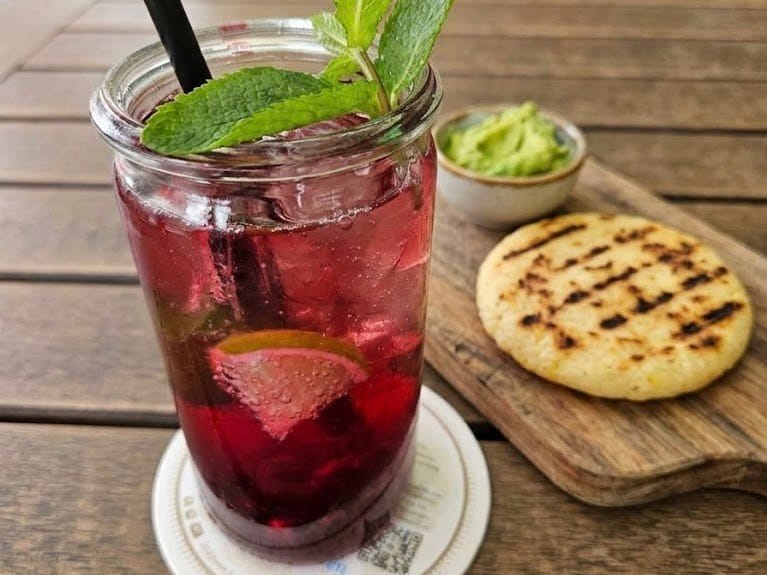
An arepa, in its most common form, is masarepa—pre-cooked corn flour—mixed with water and salt, then grilled or fried. Nothing else. No wheat, no gluten, no hidden binder. This is the version you’ll find on nearly every breakfast table in the country, and it’s the reason Colombia is genuinely easier for celiac travelers than its Andean neighbors. Order an arepa in Medellín, on the Caribbean coast, or in a roadside stall on the way to Cali, and you’re almost certainly getting corn and nothing more.
The complication starts in Boyacá, the mountainous region north of Bogotá. Arepa boyacense, the local specialty, blends corn flour with wheat flour to get a softer, more elastic crumb, then stuffs it with cuajada cheese and a touch of panela for sweetness. It’s a completely different dish from the coastal arepa, and it looks similar enough that a rushed traveler could easily order one by mistake. In Tunja specifically, you’ll also find arepa de trigo, made almost entirely from wheat flour with no corn at all. The rule that keeps you safe here is simple: if you’re in Boyacá, ask “¿Es de maíz o de trigo?” (corn or wheat?) before you order, every single time, even if the arepa in front of you looks identical to the one you had yesterday in Medellín.
One more variation is worth flagging for a different reason: arepa de huevo, the deep-fried, egg-stuffed arepa popular on the Caribbean coast, isn’t a vegan option regardless of its gluten status, so it’s off the table here on both counts. It also raises a separate, more general risk. Street stalls that fry arepa de huevo typically use one shared fryer for everything on the menu, including breaded meats and other wheat-coated items. If you have celiac disease, any food from a shared fryer is not safe to eat, full stop—cross-contact from breading residue in the oil is not something you can order around. Save fried street food for stalls where you can see a dedicated pot used only for plain corn and plantain items.
Other Naturally Safe Staples
Once you understand the arepa split, the rest of Colombian home cooking follows the same corn-and-rice logic that makes gluten-free Colombia easier than its reputation abroad suggests. Patacones—smashed and twice-fried green plantains—show up as a side dish almost everywhere. Ask specifically whether the frying oil is dedicated to plantains and potatoes; a shared fryer with breaded meat carries the same cross-contact risk described above. Arroz con coco, the coconut rice standard on the Caribbean coast, is just rice, coconut milk, and sugar. Frijoles (beans, usually cooked with plantain and rice as bandeja paisa’s backbone) and boiled or fried yuca round out a plate you can order with confidence, with no special requests needed.
Sancocho, the long-simmered stew found in nearly every regional variation of Colombian cooking, deserves a specific mention because it looks like the kind of dish that might hide a wheat-based thickener the way Balkan soups do. Traditional sancocho gets its rich, thick texture entirely from slow-cooked yuca, plantain, and potato—there’s no roux, no flour, and no bread added at any stage. It’s one of the few full, hearty stews in Latin America you can order with real confidence, and it pairs naturally with a side of white rice and avocado.
The Maggi Cube Problem
Here’s the trap that undoes travelers who’ve done everything else right, and it’s the one most worth flagging for a plant-based reader specifically. Caldo de gallina—chicken bouillon cubes, Maggi’s version above all—gets stirred into Colombian home cooking constantly, and the dishes it seasons most often are exactly the ones a vegan traveler would otherwise trust without a second thought: a pot of beans, a plate of plain rice, a simple vegetable soup. One cube breaks both rules at once. It’s animal-derived, and according to the ingredient listing on Éxito’s own retail site, Maggi’s Caldo de Gallina also contains harina de trigo fortificada—fortified wheat flour. The packaging states outright: contiene gluten. A soup that looks 100% plant-based and gluten-free on the plate can fail on both counts before it’s even served, and there’s no visual clue once the cube has dissolved.
In restaurants, you generally can’t control this the way you can at home. Ask directly whether the kitchen uses caldo de cubitos (bouillon cubes) in their rice, beans, or soups, and treat “yes” or “probably” as a reason to order something else—grilled vegetables, a plain arepa, or fresh fruit are safer defaults when the answer is uncertain. Self-catering removes the problem entirely: build your own stock from vegetables and salt, or season with fresh herbs, and you never have to interrogate a menu you can’t fully see into.
Bogotá vs. Medellín: Which City Is Easier?
Bogotá has the deeper infrastructure. Nutcracker Bakery in Zona Rosa, Pastelería Marvelous in Santa Bárbara, and Penny Lane in Chapinero all bake fresh gluten-free bread daily using certified ingredients, which gives you a reliable fallback almost anywhere in the city’s northern half. On the restaurant side, Vegano Oculto runs a fully vegan menu made without gluten or soy, while Herbívoro Cocina Vegana pairs a full vegan breakfast and lunch service with a solid rotation of gluten-free baked goods. Casa Lélytè, a vegetarian and vegan restaurant known for its gyoza and creative small plates, comes up repeatedly in reviews from travelers who need both restrictions covered at once—a combination that’s harder to satisfy than either one alone.
Medellín’s scene is smaller, and it leans hard into naturally gluten-free Colombian classics. Las Veganas serves a fully plant-based bandeja paisa, rebuilding the traditional platter with tofu and vegan chorizo instead of leaving gaps where the meat used to be. Ask for it without the small wheat-based extras and you’re eating a dish that’s both gluten-free and true to the original. Naturalia Cafe offers gluten-free bread as a swap on its daily menu, and Kaime, tucked into El Poblado, is worth visiting specifically for its hummus served with gluten-free bread. The same discipline that works in gluten-free Bosnia and Herzegovina—learning which two or three dishes to avoid instead of overhauling your whole diet—applies here almost exactly, if a longer trip has you weighing both destinations.
If you’re strictly celiac, Bogotá’s dedicated bakeries make it the safer base for a longer stay. If you’re avoiding gluten by preference and want to eat Colombian food as it’s traditionally made, Medellín’s vegan spots that rebuild classic dishes might actually serve you better.
Éxito & Carulla Shopping Guide
Self-catering in Colombia is easier than in most of Latin America, because the biggest supermarket chains have already built out dedicated sections. You don’t need fluent Spanish to shop confidently at any of these:
- Carulla — the more upscale chain runs a program called GreenMarket in its larger FreshMarket-format stores, stocking close to 1,750 gluten-free and low-sugar references alongside organic produce. Carulla’s own gluten-free product page lists everything from packaged bread to snack items, searchable by name before you even land.
- Éxito — the larger, more widespread chain carries a comparable range, including imported brands like Gullón’s gluten-free cookies, with shelves labeled clearly enough to shop by sight alone.
- Jumbo — also maintains a gluten-free aisle, though stock is less consistent outside Bogotá and Medellín.
- Cruz Verde and Colsubsidio — these pharmacy chains run dietary sections that include certified gluten-free products, useful if you’re staying somewhere without a large supermarket nearby.
Between these four, restocking a two- or three-day supply of safe bread, pasta, and snacks rarely takes more than one stop, and none of them require hunting through an unmarked international aisle the way smaller markets elsewhere in the region sometimes do.
This guide reflects restaurant and product information current as of 2026, drawn from HappyCow, official retailer product pages, and Colombian celiac community resources. Menus, kitchen practices, and product formulations change; always confirm current ingredients and preparation methods directly with restaurants and check packaging before purchase, especially if you have celiac disease. The active online communities searchable as “Celíacos Colombia” and “Sin Gluten Colombia” are a reliable way to check for the latest reports before you travel.