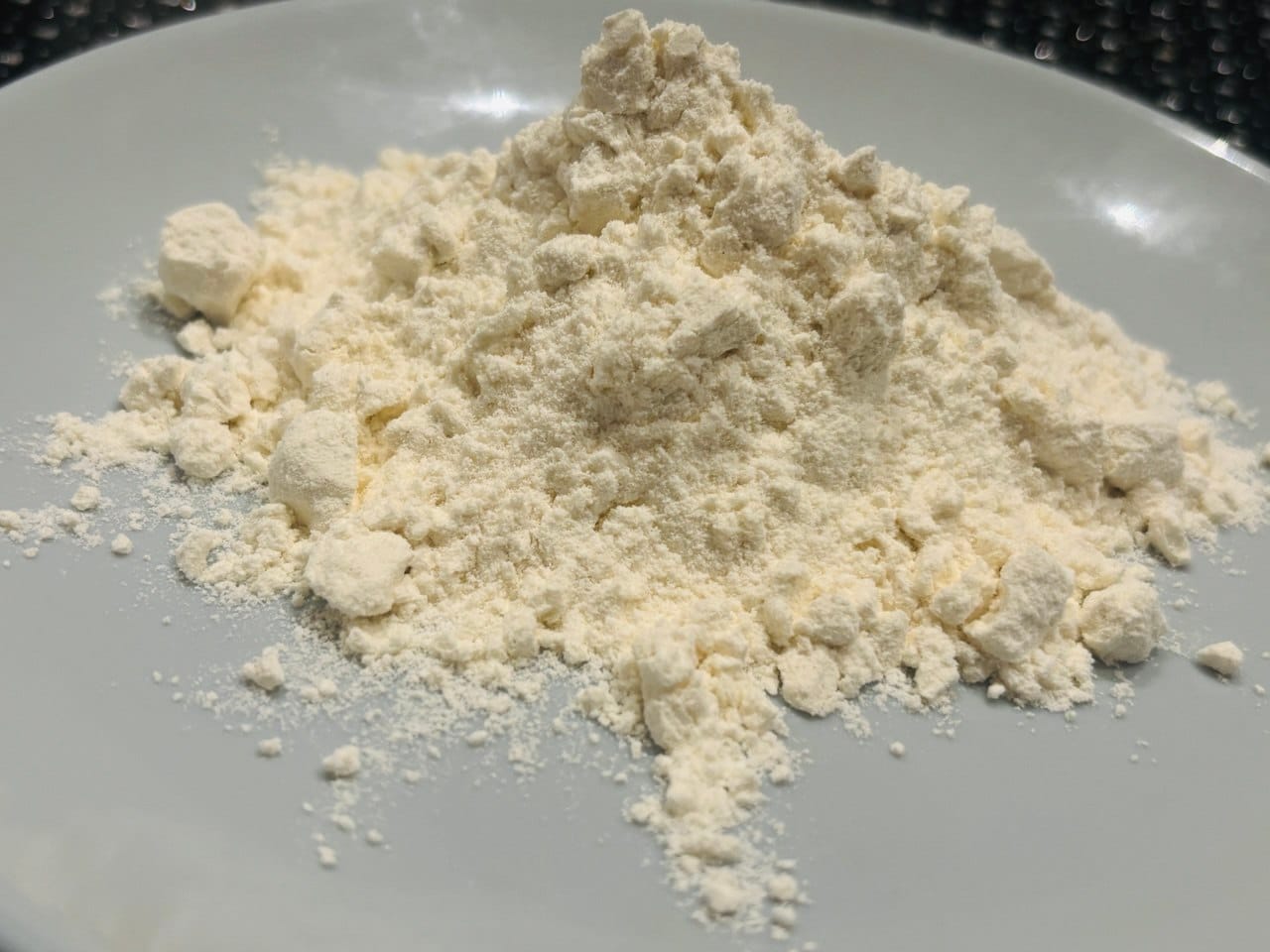
Pancakes that fall apart, a loaf that comes out dense and gummy in the middle, a batter with a distinctly bitter edge – these are the usual results of treating buckwheat flour like a plain wheat substitute. It’s a different product altogether: a unique gluten-free flour that provides a meaningful amount of protein. Buckwheat flour is just one option if you’re picking a gluten-free flour or starch for a specific job – take a look at our comparison of all four gluten-free flours and starches to see how they stack up against each other.
What Is Buckwheat Flour?
Buckwheat flour is milled from the seeds of the buckwheat plant (Fagopyrum esculentum) – not botanically a grain at all, despite being cooked and used like one. It’s actually more closely related to rhubarb and sorrel than to wheat or oats.
Two versions show up on shelves, and they behave differently:
- Light buckwheat flour – milled from hulled groats, pale tan in color, with a milder flavor;
- Dark buckwheat flour – milled from unhulled groats, with visible dark specks from the hull, and a stronger, earthier flavor and more fiber.
Some recipes also call for flour ground from roasted groats (kasha) rather than raw ones – that’s a separate distinction from light versus dark, and it pushes the flavor even further toward nutty and toasted.
Is Buckwheat a Grain?
No, even though it’s used like one in the kitchen. Buckwheat belongs to the same plant family as rhubarb and sorrel, not to grasses like wheat, rice, or oats. Buckwheat is naturally gluten-free from the start.
Protein and Amino Acids
This is the main thing that sets buckwheat apart from other gluten-free flours: rice flour and corn flour are both fairly low in protein, while buckwheat flour delivers a meaningful amount – usually 10 to 14 grams per 100 grams, depending on the brand and how finely it’s milled.
Buckwheat protein contains all nine essential amino acids, including lysine, which many grains like wheat and rice fall short on. This makes buckwheat an invaluable protein source for vegetarian diets, filling in the amino acid gaps left by other plant foods – it perfectly complements the amino acid profile of legumes. A meal that pairs buckwheat with legumes (buckwheat pancakes with a lentil filling, for instance) covers a broader spread of amino acids than either one alone.
Rutin and Other Plant Compounds
Buckwheat has the highest rutin content of any commonly eaten plant – a flavonoid with antioxidant properties that supports blood vessel health and helps the body absorb vitamin C. Research also points to a possible role in lowering LDL cholesterol and easing inflammation, though this is still an active area of study.
Buckwheat flour also contains fiber and resistant starch, which together with its low glycemic index explain why buckwheat products often get recommended for people managing blood sugar. Specific dietary choices are still worth discussing with a doctor or dietitian.
What Buckwheat Flour Is Used For
Pancakes
This is the most common use. Buckwheat gives pancakes a distinct, nutty flavor and a slightly more delicate structure than a wheat-based batter. To keep them from falling apart:
- blend buckwheat flour with another flour (rice flour or potato starch) roughly 1:1 if you want more elasticity in the batter;
- add a bit more liquid than a wheat-flour recipe calls for – buckwheat absorbs more water;
- let the batter rest for 15–20 minutes before cooking so the flour fully hydrates;
- if pancakes still fall apart, a tablespoon of ground flaxseed mixed with water works as an extra binder.
Bread – Why 100% Buckwheat Behaves Differently
Without gluten, bread dough doesn’t hold onto rising gas as well, so a loaf made entirely from buckwheat flour comes out denser, lower, and gummier in the crumb. To improve the texture:
- add psyllium husk – it binds water and partly stands in for what gluten would otherwise do;
- blend buckwheat with a lighter gluten-free flour, like rice flour;
- increase the liquid to avoid a dry crumb.
Noodles, Dumplings, and Crepes
A safety note first: most soba noodles, even ones labeled as buckwheat noodles, contain wheat flour and are not gluten-free. If you have celiac disease or need to avoid gluten, look specifically for “100% buckwheat” or “juwari” soba, and check the label carefully – don’t assume any soba is safe by default. For a gluten-free noodle dough at home, xanthan gum or tapioca starch works as a binder in place of wheat.
Buckwheat also shows up in Eastern European dumplings and in savory crepes, where it’s often mixed with rice flour or a little potato starch to make the dough easier to roll out.
Cookies and Sourdough Starters
The crumbly texture that comes from having no gluten actually works in buckwheat’s favor for cookies – they don’t need as much extra binder as bread does, since elasticity isn’t the goal. The nutty flavor comes through strongly, though, so buckwheat cookies pair better with bold flavors (cocoa, cinnamon, nuts) than delicate ones (vanilla).
Buckwheat flour can also be used to keep a sourdough starter going, similar to rye or wheat. It tends to ferment a bit faster and gives a more pronounced sour tang – though bread made from it still needs a binder, since fermentation alone doesn’t replace what gluten does structurally.
Where the Bitter Taste Comes From
A bitter edge, mentioned at the start of this article, usually points to one of a few specific causes:
- rancid fat – buckwheat flour contains more fat than pure starches and loses freshness over time, developing a bitter taste (more on storage below);
- too much dark flour in a delicate recipe – the strong, earthy flavor of dark buckwheat flour can read as bitterness if it makes up the entire flour amount in something meant to be mild;
- hull fragments in lower-quality flour – cheaper flour can contain bits of unground hull, which taste distinctly bitter on their own.
If the taste is an issue, start with light buckwheat flour, buy smaller bags, and blend it with milder flours instead of using it at 100%.
Buckwheat Flour vs. Wheat Flour
Wheat flour owes its elasticity to gluten, which buckwheat doesn’t have at all – so it can’t be swapped in 1:1 without adjusting the whole recipe. In practice, it works best as 20 to 30 percent of the total flour in a blend, or as the main flour in recipes built around its properties from the start, like pancakes or a buckwheat sourdough.
If you need a more neutral-tasting structure, gluten-free corn flour plays a very different but equally important role in a recipe.
Compared to Other Gluten-Free Flours
- Buckwheat flour – bold, nutty flavor, the most protein of this group, plus fiber and rutin.
- Rice flour – neutral flavor, dry texture, low protein; works mainly as a neutral base in blends.
- Corn flour – distinctly sweet flavor, moderate protein; good in flatbreads and baked goods.
- Cornstarch – a neutral, gel-forming thickener with virtually no protein (read more about cornstarch in gluten-free baking).
- Potato starch – almost no protein, purely a technical ingredient for thickening and moisture, not nutrition.
Is Buckwheat Flour Gluten-Free?
Yes – buckwheat isn’t botanically a grain and naturally contains no gluten. For celiac disease specifically, it’s worth choosing a certified gluten-free product, since cross-contamination can happen if buckwheat is milled on equipment shared with wheat or rye.
Nutrition Facts
Values vary significantly between brands, depending on the mill and whether the flour is light or dark. Roughly, per 100 g:
- Calories: about 290–350 kcal
- Protein: about 10–14 g
- Carbs: about 62–78 g
- Fat: about 1–3 g
- Fiber: distinctly higher than wheat flour, more so in the dark version
How Much Buckwheat Flour Is Okay to Eat Daily?
There’s no single official number – buckwheat works well as part of a varied diet rather than the only carb or protein source on the plate. A portion of roughly 50–80 g of flour (about what’s in a few pancakes or slices of bread) is a reasonable daily amount for someone with average activity levels, more if calorie needs are higher. People with kidney conditions should check with a doctor about oxalate-containing foods, buckwheat included.
How to Store It
Buckwheat flour, unlike pure starches, contains fat and fiber, which makes it more prone to going rancid than potato or corn starch.
- keep it in a tightly sealed container, somewhere cool – during hot months, the fridge is a good call;
- buy amounts you’ll actually use up soon – it loses freshness faster than wheat flour;
- a rancid, bitter taste means it’s time to throw it away.
Is Buckwheat Flour Vegan?
Yes, 100% – it’s a plant product with nothing animal-derived in its pure form. The one thing to watch is pre-made blends, where manufacturers sometimes add milk powder or other non-vegan ingredients – check the label.
Common Mistakes
- Swapping in buckwheat flour 1:1 for wheat. The batter or dough loses elasticity and falls apart.
- Baking 100% buckwheat bread with no binder. Without psyllium or another flour, the crumb comes out dense and gummy.
- Not enough liquid. Buckwheat absorbs more water than wheat flour.
- Using dark flour where a neutral flavor matters. Its strong, earthy taste can dominate delicate baked goods.
- Treating it as a stand-in for legumes in a protein-focused diet. It’s a valuable complement to their amino acid profile, best paired with them rather than swapped in for them.
FAQ
1. What’s the difference between light and dark buckwheat flour?
Light flour is milled from hulled groats and has a milder flavor; dark flour includes the hull, giving it more fiber and a stronger, earthier taste.
2. Can you make bread from buckwheat flour alone?
Technically yes, but it comes out dense and gummy. Adding psyllium husk or blending with another gluten-free flour gives a better result.
3. Is buckwheat flour good for people with diabetes?
It has a low glycemic index and contains fiber and resistant starch, which can be helpful, but specific dietary decisions are worth discussing with a doctor or dietitian.
4. Does buckwheat flour taste like wheat flour?
No – it has a distinct, earthy, nutty flavor that’s much stronger than wheat flour’s mild taste, especially in the dark version.
Final Tips for Baking with Buckwheat
If you remember just one thing: buckwheat flour is the protein-rich option in the gluten-free flour lineup, not the neutral, easy 1:1 swap. Reach for the light version in delicate bakes, the dark version when you want the flavor to show, and pair it with a binder like psyllium whenever gluten’s structural role needs replacing.