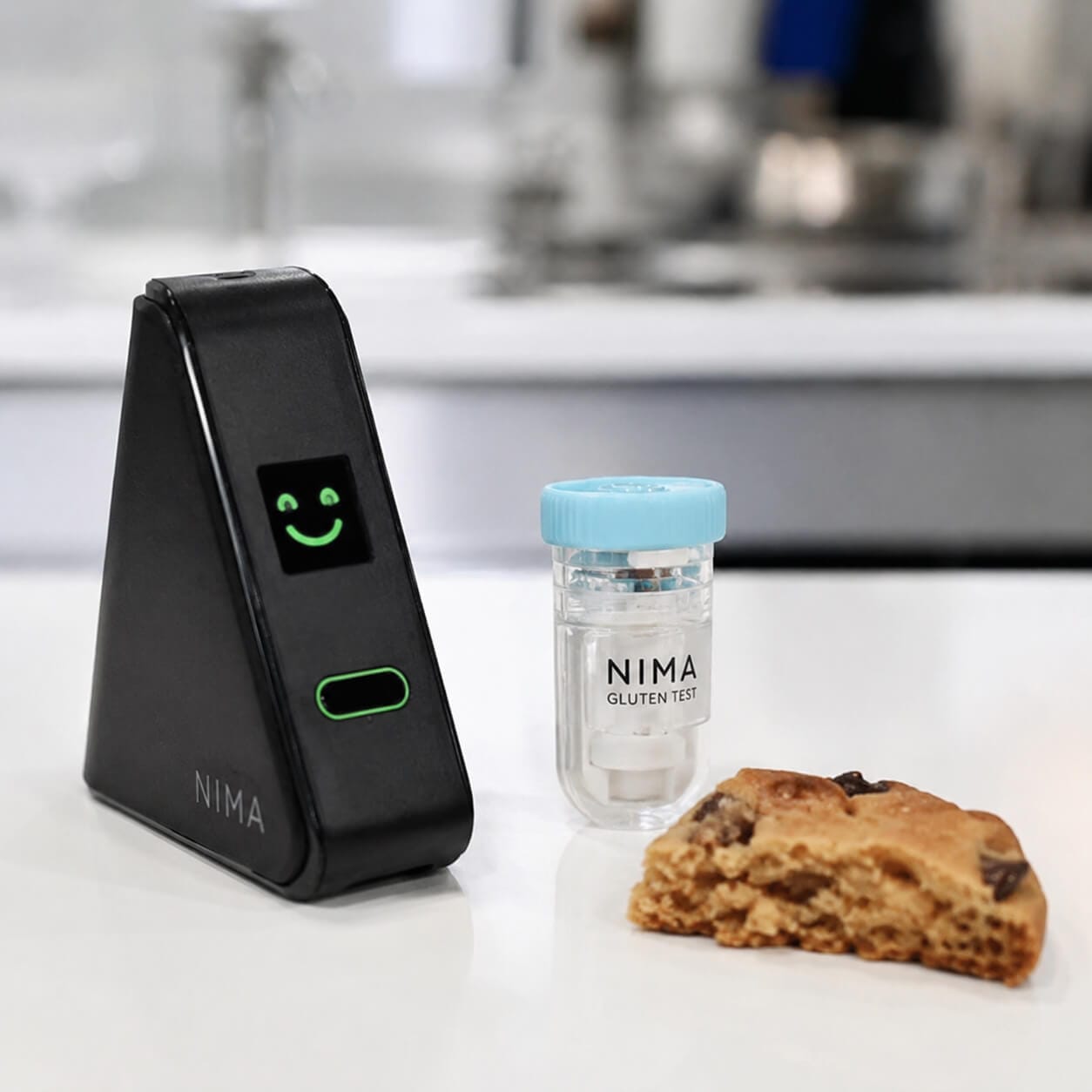
What is the best alternative to the Nima Sensor? The short answer is that there isn’t just one. There are several different approaches to the same problem, each with its own trade-off between cost, convenience, availability, and what it can realistically detect.
This is not another “Top 10 Gluten Test Kits” article. Instead, it is a practical comparison of three real-world options: the Nima Sensor, EZ Gluten, and GlutenTox. If you’re wondering how to test food for gluten without Nima—or whether another gluten detection device might be a better fit for your lifestyle—you’ll find clear answers here, including the limitations that none of these tests can completely overcome.
For a detailed overview of how the device works, its strengths, and its current availability, see our guide to the New Generation Nima Sensor.
Why Are People Looking for Nima Alternatives?
Most people start searching for alternatives to the Nima Sensor for the same three reasons.
The first is the upfront cost. Buying a Nima reader requires a significant initial investment before you can perform even a single test. Unlike disposable test kits, the system depends on purchasing both the reader and a continuing supply of capsules.
The second reason is the cost per test. Every Nima capsule is single-use. While the exact price varies depending on location, shipping costs, and promotions, testing every meal quickly becomes expensive. For many people with celiac disease, the cost makes routine testing difficult to justify.
The third issue is availability. Although the Nima brand returned to the market as Nima Now in 2026, purchasing the system outside its primary shipping regions can still involve international shipping, forwarding services, import duties, and longer delivery times. For someone who only wants occasional gluten testing, that can be a considerable inconvenience.
As a result, the same questions continue to appear in celiac communities and gluten-free forums:
- What is the best alternative to the Nima Sensor?
- Can food be tested for gluten without an electronic reader?
- Are there gluten testing kits that are easier to obtain?
- Is there a more affordable gluten detector for food?
The most commonly discussed alternatives are EZ Gluten and GlutenTox, but they are not direct replacements. They use different formats, offer different advantages, and come with their own limitations.
EZ Gluten: The Most Popular Alternative to Nima
EZ Gluten is produced by ELISA Technologies, a U.S.-based company specializing in food allergen detection systems. Unlike the Nima Sensor, EZ Gluten is not an electronic device. Instead, it is a self-contained disposable testing kit that includes everything needed to perform a single test.
How it works: a small food sample—roughly the size of a pea—is placed into an extraction solution. A test strip is then inserted into the prepared sample. After approximately 10–15 minutes, visible lines appear on the strip, similar to a home pregnancy test. Instead of detecting hormones, however, the test is designed to identify gluten proteins.
Sensitivity: EZ Gluten can detect gluten at levels as low as 10 ppm, matching the sensitivity commonly associated with the Nima Sensor. According to the manufacturer, the test is designed to detect both major gluten protein fractions, including gliadins/prolamins and glutenins/glutelins, providing broader protein coverage than tests focused on a single gluten component.
Testing time: approximately 10–15 minutes. This is slower than Nima’s typical reading time, but it eliminates the need for a dedicated reader, mobile app, or device maintenance.
Many people ask whether EZ Gluten is accurate. The answer depends on what is being evaluated. The underlying immunochromatographic technology is well-established and is widely used throughout the food industry for quality control and allergen monitoring.
However, concerns remain regarding home gluten testing as a category. In 2026, the National Celiac Association reiterated that consumer lateral-flow tests—including products such as Nima, EZ Gluten, and similar systems—should not be treated as definitive proof of safety because false-negative results can occur. This criticism is not aimed at a single brand but at the limitations of the technology itself.
Advantages:
- No separate electronic reader is required.
- Lower entry cost compared with purchasing a dedicated testing device.
- Available in multi-test packs for people who test food regularly.
- Can be used for environmental testing, including kitchen surfaces and food preparation areas.
- Detects multiple gluten protein fractions rather than focusing on a single target.
Disadvantages:
- Availability can be limited outside North America.
- The fixed 10 ppm sensitivity may identify trace gluten in products that legally qualify as gluten-free under many regulations.
- Reading faint lines on a test strip can sometimes be subjective.
- Shares many of the same technological limitations as the Nima Sensor.
Who should consider EZ Gluten?
EZ Gluten may be a practical option for people who want occasional gluten testing without investing in a dedicated electronic device. It is not necessarily a more accurate alternative to Nima, but it offers a different balance between cost, convenience, and portability.
GlutenTox: A More Laboratory-Oriented Approach
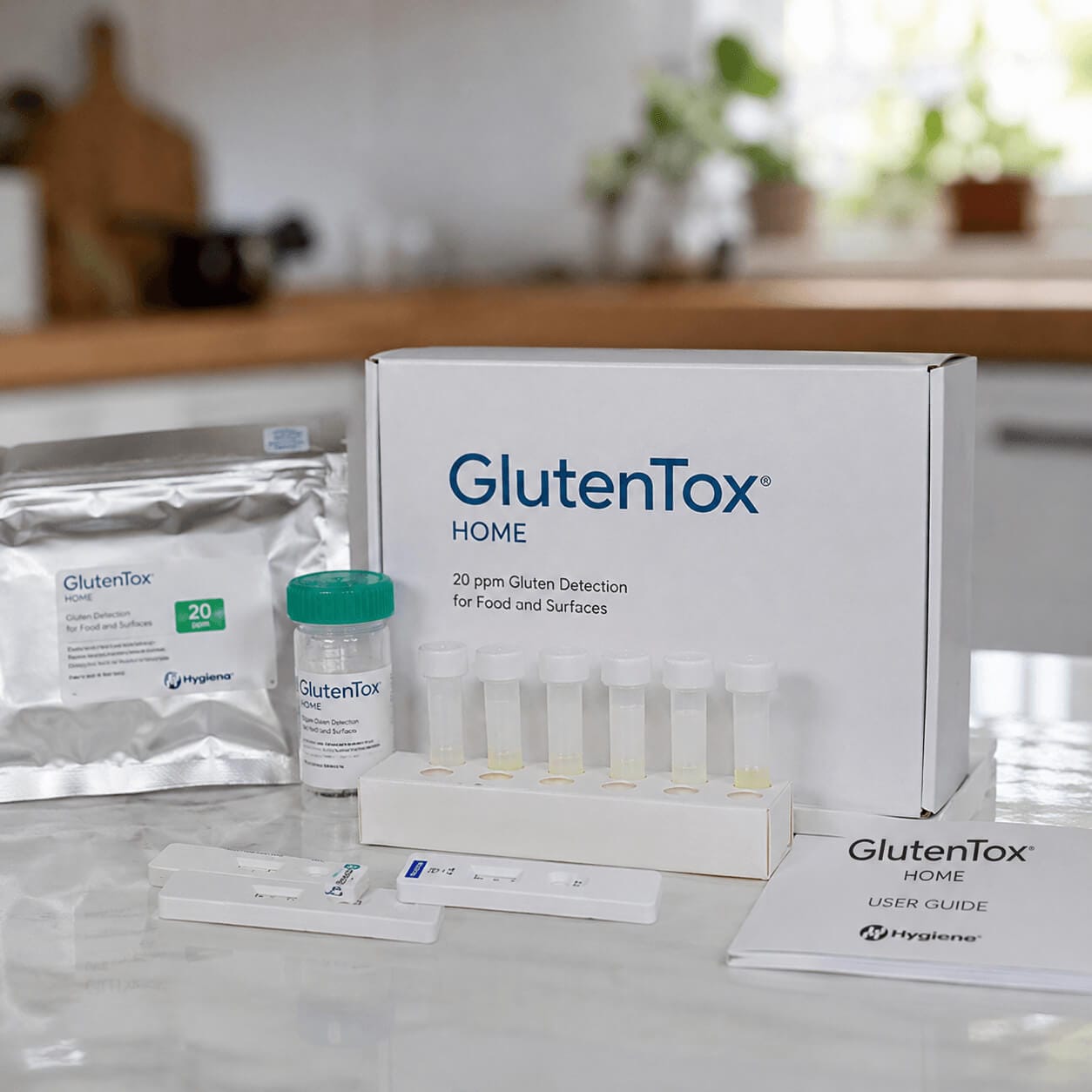
GlutenTox Home, developed by Hygiena, stands apart from both Nima and EZ Gluten for two practical reasons.
G12 Technology: GlutenTox uses the monoclonal G12 antibody, which targets the 33-mer peptide of gliadin—widely considered one of the most immunotoxic gluten fragments for people with celiac disease. Rather than focusing on broad gluten detection alone, the test is designed to identify a peptide strongly associated with the autoimmune response that characterizes celiac disease.
Validation and Documentation: GlutenTox ELISA Rapid G12 has received AOAC Performance Tested Methods certification and has been evaluated in peer-reviewed validation studies. This does not make the test perfect, but it does provide a stronger body of independent documentation than many consumer-oriented gluten testing products.
Sensitivity: this is where GlutenTox differs most significantly from both Nima and EZ Gluten. Users can choose between a 5 ppm sensitivity setting and a 20 ppm threshold. The 20 ppm option corresponds directly to the gluten-free standard used in many international regulations, allowing users to test food against the same benchmark used for gluten-free labeling.
In practical terms, this means you can choose whether you want maximum sensitivity or whether you want to know whether a product exceeds the legal gluten-free threshold. This flexibility is one of the strongest arguments in favor of GlutenTox.
Testing process: similar to EZ Gluten, a food sample is mixed with an extraction solution before being analyzed with a test cassette. Results typically appear within 10–20 minutes, depending on the selected sensitivity level.
Advantages:
- Adjustable sensitivity settings of 5 ppm or 20 ppm.
- Uses G12 antibodies targeting a highly immunotoxic gluten peptide.
- Supported by independent validation studies and AOAC certification.
- Does not require an electronic reader, batteries, or mobile applications.
- Provides testing aligned with regulatory gluten-free standards.
Disadvantages:
- Higher per-test cost compared with some competing options.
- Less widely available through mainstream consumer retailers.
- Like all antibody-based tests, it faces limitations when evaluating fermented or hydrolyzed foods.
- Results require more time than the Nima Sensor.
Who should consider GlutenTox?
GlutenTox may appeal to users who prioritize testing flexibility, regulatory relevance, and stronger validation data. It is particularly attractive for people who perform routine testing at home and want greater control over sensitivity thresholds.
Nima vs EZ Gluten vs GlutenTox: The Key Differences
Rather than focusing on specifications alone, it is more useful to compare these products based on real-world use.
- Speed: Nima delivers results in approximately three minutes. EZ Gluten typically requires 10–15 minutes, while GlutenTox usually takes between 10 and 20 minutes.
- Convenience: Nima provides a digital result through a dedicated reader. EZ Gluten and GlutenTox rely on visual interpretation of test lines, which can occasionally be less straightforward.
- Portability: EZ Gluten and GlutenTox are lightweight disposable kits with no electronics. Nima requires a reader, charging, and a supply of capsules.
- Sensitivity Options: Nima and EZ Gluten generally operate at a fixed sensitivity level around 10 ppm. GlutenTox allows users to choose between 5 ppm and 20 ppm testing thresholds.
- Ongoing Costs: All three systems require ongoing purchases. Nima uses proprietary capsules, while EZ Gluten and GlutenTox rely on disposable testing kits.
- Restaurant Use: Nima’s speed provides a significant advantage when testing food before eating. Waiting 10–20 minutes for a strip-based test can be impractical in many dining situations.
- Home Testing: All three options can work effectively, although GlutenTox’s adjustable sensitivity may be particularly useful for routine household testing.
- Travel: Disposable test kits eliminate concerns about batteries, charging, and device failures, making EZ Gluten and GlutenTox attractive travel companions.
Which Test Works Best in Restaurants?
Restaurant testing is where the Nima Sensor has its strongest advantage.
When food arrives at the table, most people want an answer immediately. A three-minute test is much easier to incorporate into a restaurant meal than a process requiring 10–20 minutes of waiting.
EZ Gluten and GlutenTox can still be used in restaurants, but they are generally less convenient. The longer testing process may mean waiting while food cools or attempting to collect a sample before the full meal is served.
Lighting can also become an issue. Reading faint lines on a test strip under restaurant lighting is not always straightforward, whereas Nima provides a simple digital result.
For people who frequently dine out, Nima remains the most practical option despite its higher cost and ongoing capsule expenses.
Which Test Works Best for Travel?
Travel creates a completely different set of priorities.
Reliability, portability, and simplicity often become more important than testing speed. Disposable kits have clear advantages in this environment because they require no charging, no electronic maintenance, and no additional equipment.
Nima users must travel with the reader, ensure that it remains charged, and protect both the device and capsules from unfavorable storage conditions. While many travelers successfully use the system, it introduces additional complexity.
EZ Gluten and GlutenTox are easier to pack and generally less vulnerable to travel-related issues. If a single test kit becomes damaged, the remaining tests are unaffected. A malfunctioning electronic reader, by contrast, can disable an entire testing system.
For travel-focused users, disposable testing kits may therefore offer the most practical solution.
Is There a Perfect Gluten Detector?
No—and that is not a limitation of any particular brand. It is a limitation of the technology itself.
Nima, EZ Gluten, and GlutenTox all rely on antibodies to detect gluten proteins or specific gluten fragments. While this approach can be extremely useful in many situations, it also comes with inherent limitations that no currently available consumer test can completely eliminate.
The first challenge is fermented food. Fermentation breaks gluten proteins into smaller fragments that may no longer be recognized by the antibodies used in a given test. Some of these fragments may still trigger reactions in people with celiac disease, even when a test reports a negative result.
This is why products such as soy sauce, beer, malt-based ingredients, and certain fermented seasonings are notoriously difficult to evaluate reliably with any home gluten-testing system.
The second challenge is hydrolyzed gluten. During hydrolysis, gluten proteins are broken into smaller peptide fragments that may escape detection despite still being biologically relevant to people with celiac disease.
We discuss this limitation in greater detail in our guide to Hydrolyzed Gluten and the Nima Sensor.
These limitations are one of the reasons why independent celiac organizations continue to caution against treating any home gluten test as a definitive safety guarantee. A negative result should never be viewed as proof that a food is completely safe.
The most effective approach is to combine testing with ingredient awareness, gluten-free certification, food preparation knowledge, and direct communication with restaurants and manufacturers whenever possible.
Final Verdict: Which Nima Alternative Should You Choose?
The best gluten testing solution depends entirely on how you plan to use it.
- For frequent restaurant dining: Nima remains the most convenient option because of its speed. Receiving a result in a few minutes can make a meaningful difference when testing a meal before eating.
- For travelers: EZ Gluten and GlutenTox offer advantages because they eliminate the need for charging, electronic maintenance, and carrying a dedicated reader.
- For home testing: GlutenTox stands out thanks to its adjustable sensitivity settings and stronger validation documentation.
- For users seeking a lower-cost entry point: EZ Gluten provides access to gluten testing without requiring an expensive electronic device.
Ultimately, none of these products should be viewed as a perfect gluten detector. They are tools that provide additional information—not guarantees.
Nima, EZ Gluten, and GlutenTox all share the same fundamental challenge: fermented and hydrolyzed foods remain difficult to evaluate reliably using antibody-based testing technology. No matter which product you choose, understanding these limitations is just as important as understanding the result itself.
If your primary goal is reducing risk rather than eliminating uncertainty, any of these tools can provide useful information when combined with careful label reading, gluten-free certification programs, and informed decision-making.
Important: Home gluten testing devices are supplementary tools and cannot guarantee gluten detection in every situation. Test results should be treated as one source of information rather than a replacement for reading ingredient labels, verifying gluten-free certification, communicating with restaurant staff, or following established gluten-free dietary practices. Particular caution should be exercised when evaluating fermented foods, hydrolyzed products, and foods with a high risk of cross-contact contamination.