Introduction |
The Classics of Turkish Vegetarianism |
Vegetarian Street-Food Treasures |
Flavours of the Regions |
How to Make İmam Bayıldı at Home |
A Practical Survival Guide |
Istanbul’s Vegetarian Havens |
Final Bites |
FAQ |
Important Disclaimer
Let’s Bust the Stereotypes – A Plant‑Based Turkey Really Exists
Let’s be honest – the phrase “vegetarian cuisine of Turkey” sounds to many people like an invitation to a rather disappointing dinner. The first associations are usually mountains of kebab, succulent chunks of lamb and skewers twisting in thick smoke over glowing embers. After all, this country is famous as one of the world’s greatest meat paradises. Wrong. Completely wrong. Hidden behind that curtain of meat lies a very different Turkey, where plant‑based Turkish cuisine forms the backbone – and not only during fasting periods, but in the daily lives of millions of people.
Let’s face it. It only seems difficult to be a vegetarian here. For those who instinctively see nothing more in Anatolia than huge platters of adana or urfa kebab, I’ve prepared a solid dose of knowledge that will turn your understanding of this cuisine upside down. All you have to do is walk into any esnaf lokantası – a traditional workers’ canteen – to see with your own eyes that Turkish vegetarian cuisine is as delicious as it is completely natural. And the key to understanding this philosophy is a single word: zeytinyağlı. This is the reason I fell so deeply in love with this kitchen.
Zeytinyağlı – vegetables braised exclusively in olive oil, served cold or at room temperature. It’s not just a technique; it’s practically a separate chapter in the Turkish culinary arts. The name itself, in its classic form, acts as a promise that the dish contains no meat, and as a rule that’s exactly the case. You need to know, though, that in cheaper joints a splash of meat stock or a knob of butter sometimes finds its way into the pot, so if you want absolute certainty, it’s worth asking. For many Turks, a plate filled with zeytinyağlı taze fasulye (green beans in olive oil) or zeytinyağlı enginar (artichokes) is what they miss most when they leave home. In Istanbul and Izmir, a generation of young people is emerging who deliberately choose this food, treating it not as a passing fad but as a return to their roots – because these are exactly the dishes their grandmothers used to cook. The traditional vegetarian cuisine of Turkey is in better shape today than ever before.
What Zeytinyağlı and Meze Mean in Practice
Zeytinyağlı – the Soul of Meatless Turkish Cooking
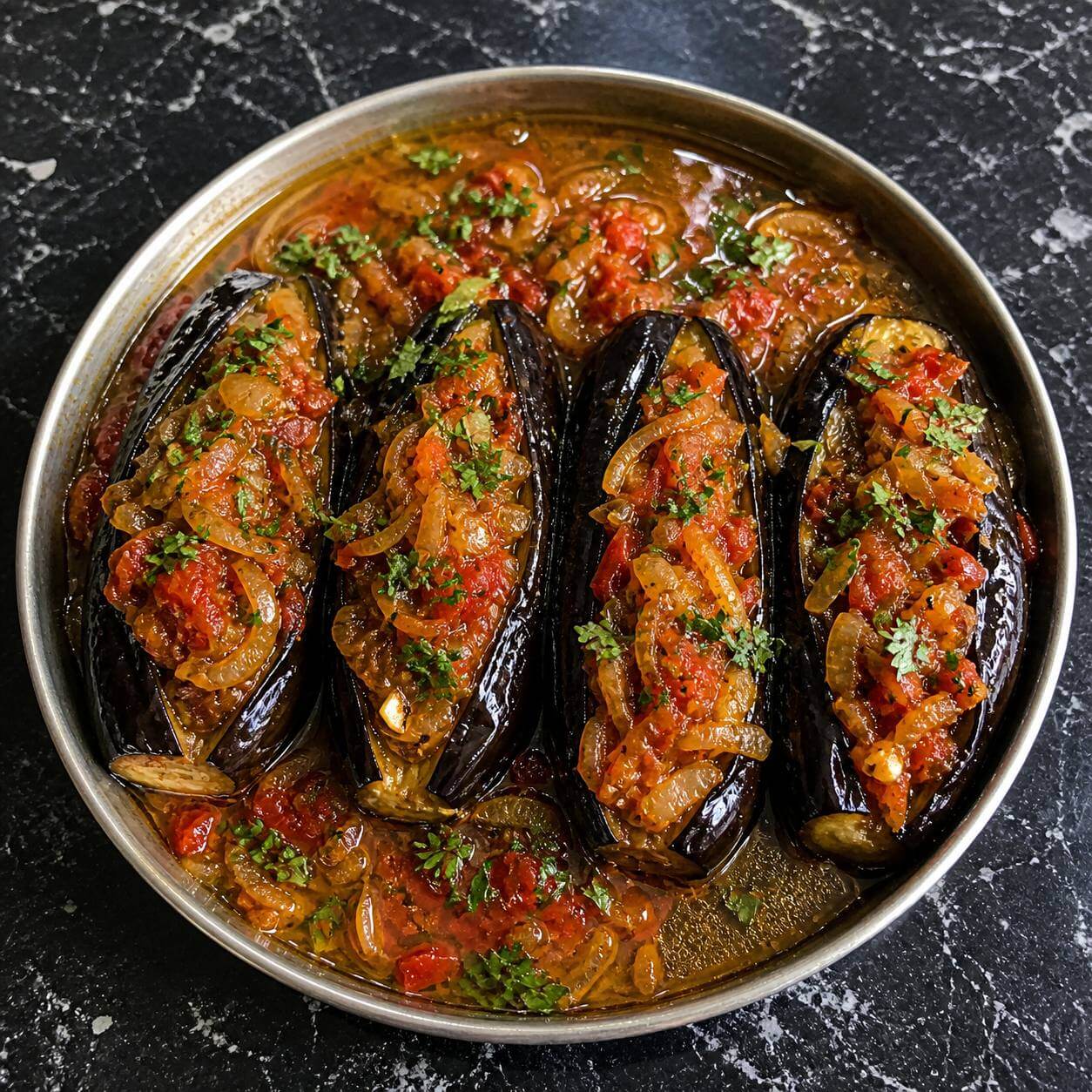
Let me paint you a picture. Imagine a plate bearing an aubergine glistening with olive oil. It has been slowly braised with a mountain of onions, garlic, ripe tomatoes and green peppers. It smells so good that you’d instantly want to dip a piece of fresh, fluffy bread into it. This is İmam bayıldı – literally, “the imam fainted”. Why? Because, so the story goes, a long time ago a certain holy man, having learned the cost of the olive oil used to prepare this dish and then having tasted its divine flavour, slid gently to the floor. I completely understand that emotion. For me, this is the absolute essence of vegetarian Turkish cuisine, where the flavour of the vegetables is celebrated without any pretence of replacing meat. The vegetables are simply the star of the show.
Another such dish is zeytinyağlı enginar. Cleaned artichoke bottoms are stuffed with a mixture of young carrots, potatoes and green peas, then braised in good olive oil with fresh dill and lemon. The flavour is incredibly spring‑like, delicate and almost refreshing.
These dishes are mostly eaten cold, and it’s even recommended that they sit for an hour or two before reaching the table. That way the flavours meld into a velvety, harmonious whole.
Before we move on, it’s worth answering the question of what really dominates the tables. The most popular Turkish vegetarian dishes spring from this very tradition – not only the aubergines and artichokes already mentioned, but also white beans braised in olive oil (kuru fasulye in its zeytinyağlı form), celeriac with quince, or broad beans in olive oil. Wherever good oil and patient braising form the foundation, a flavour is born that makes meat utterly superfluous. The secret also lies in the tomato base, often enriched with a pinch of sugar, which adds depth without overpowering the delicacy of the vegetables.
Perfect Meze – a Vegetarian Kingdom of Small Plates
You have no idea how many times in Turkey I ordered only a selection of meze and that became my entire meal. The table would fill with little plates, and I’d try a bit of everything. When it comes to vegetables in olive oil, the queen of the table can be a simple borlotti bean salad – zeytinyağlı barbunya – in which the beans, thanks to long, slow cooking, become buttery. Next to it appears deniz börülcesi, or sea beans, about which I can say simply: if you find them at the bazaar in Bodrum or on the Çeşme peninsula, eat them while they’re in season. They are delicately salty, crunchy, and dressed with nothing but olive oil and lemon they taste like pure Aegean summer.
A true hymn to good taste, however, are yaprak sarma – vine leaves stuffed with aromatic rice, onions, pine nuts, currants and dill. The process of rolling them is a family ritual in Turkey – women sit together, talking and gossiping, and the pile of finished “sarma” grows. You absolutely must remember the name yalancı dolma – it means “fake stuffing”, a guarantee that there isn’t a single gram of meat inside. Then there are mücver, little fritters made from grated courgette with white cheese and dill, so delicious they could probably solve international conflicts. Rounding everything off is kısır – a punchy salad of fine bulgur, tomato paste, fresh mint and pomegranate molasses. Every mouthful is an explosion.
After such a vibrant symphony of savory meze, your palate deserves a grand finale that is just as exquisite. To satisfy your sweet cravings, nothing beats a decadent chocolate sponge cake with cream and a luscious cherry confiture. This dessert perfectly mirrors the richness of Turkish hospitality, offering a moist, velvety texture that melts in your mouth
A Spoonful of Comfort – the Legendary Soups
I can’t not mention the soup that saved me on rainy mornings in Istanbul. Mercimek çorbası – red lentil soup – appears absolutely everywhere. In a humble roadside eatery, in a fancy restaurant, even on the Bosphorus ferry. It’s smooth, deeply savoury, lifted by a little cumin and flakes of dried chilli, pul biber. Just before serving it’s always given a generous squeeze of lemon. If you ask Turks what they eat on a daily basis, a bowl of this soup will be one of the most common answers. It’s the simplest vegetarian food in Turkey, and at the same time one of the very best.
Vegetarian Street‑Food Treasures They Didn’t Tell You About
Çiğ Köfte – the Culinary Camouflage of the Century
I have one small favour to ask – if you’re in Turkey, don’t be guided by the old meaning of the word çiğ köfte. Historically, it referred to raw patties made from very lean, minced beef. Fortunately, health regulations long ago banned the sale of raw meat on the street, and what followed was the most spectacular transformation in the history of Turkish street food. Today’s street‑style çiğ köfte is almost always 100% vegan – fiery little balls made from very fine bulgur, tomato paste, hot pepper (isot biber), onion and refreshing pomegranate syrup. The vendors knead this mixture into long, thin rolls and serve them to you wrapped in a lettuce leaf with a huge squeeze of lemon. The taste? Smoky, hot, citrusy. Absolutely addictive. This is, without a doubt, the number one among meatless street foods, though in traditional restaurants you might still stumble upon a meat version – so caution is needed there.
Gözleme – Falling in Love with a Rustic Flatbread
The sight of a woman sitting on a low stool, rolling out thin dough and throwing it onto a convex griddle, a saç, is one of the images of Turkey that stays with me most vividly. Gözleme is something like a thin, wheat‑flour pancake, filled and fried without fat, just until golden. In its vegetarian version – and this is the staple version here – you can choose spinach with white cheese (ıspanaklı), mashed potato with parsley and black pepper (patatesli), or simply cheese. Sometimes you’ll come across a version with mint added, which gives a beautiful, fresh contrast. It’s the simplest Turkish food without meat or fish, costs next to nothing, and can easily replace a full meal. It’s worth asking, though, whether the dough is fried in oil or butter – the latter happens very frequently.
Kumpir – the King in Aluminium Foil
If you ever find yourself in the Ortaköy district of Istanbul, right on the Bosphorus, a remarkable spectacle awaits you. In a row of stalls, gigantic, oblong potatoes are piled high. They’re baked until the skin becomes as crisp as parchment and the inside turns into silky mash, which the vendor energetically mixes with butter and yellow, melted kaşar cheese. And then the moment arrives: a row of plastic containers is set out before you, and you decide on absolutely everything. Sweetcorn, peas, olives, pickles, red cabbage slaw, kısır, even Olivier salad – it all lands on top of that mountain of potato. Turkish vegetarian street food at its most joyful, though very filling. After a kumpir like that, moving is genuinely difficult. You should be aware, however, that some of the toppings – mayonnaise, ready‑made sauces or industrial salads – can contain animal‑derived ingredients, something that vegans and those on a clean‑eating diet must be particularly mindful of.
Once you’re done with that heavy potato bomb, you’ll definitely need something light and chilled to balance it out. A perfect choice is a no-bake jelly and fruit delight, better known as a “Broken Glass” sour cream dessert. It’s the kind of refreshing, wobbly treat that hits the spot when you’re too full for anything heavy but still want a sweet finish.
Where to Find Plant‑Based Treasures – a Regional Map
The Aegean Coast – the Uncontested Paradise
If you truly care about understanding why Turkey is a paradise for vegetarians, you have to go to the Aegean coast. In Izmir, Bodrum, Ayvalık or on the Çeşme Peninsula, the cuisine almost floats on pure olive oil. People here eat vast quantities of wild, seasonal greens. Take, for instance, a simple weed called cibes – something between spinach and wild cabbage, sautéed in olive oil with garlic. Or zeytinyağlı pırasa – leeks braised with carrots and rice. It sounds ordinary, but believe me, after eating a plate of those cold, olive‑oil‑slicked leeks, you’ll look at that vegetable with completely new eyes. The best regions in Turkey for vegetarians are precisely those where the tradition of Ege Mutfağı – Aegean cuisine based on whatever grows around the house – is still alive.
Istanbul – the Modern Stronghold of Veganism
Istanbul knows perfectly well what vegetarian food is. In districts such as Cihangir, Kadıköy or Beşiktaş, it’s hard to take three steps without bumping into a trendy, fully plant‑based café. Turkey’s young generation is turning away en masse from industrial meat and searching for the flavours of their childhood in a vegan guise. Here, traditional Turkish cuisine for vegetarians and vegans merges with modern culinary thinking. The menus are dominated by vegan interpretations of lahmacun made with lentils, beetroot burgers, and even plant‑based “kebabs” made from seitan. Istanbul is a place that proves you can be not just a vegetarian here, but a demanding plant‑based foodie.
Deep Anatolia – Surviving in the Kingdom of Meat
The further east you go, the harder it gets, but not hopelessly so. In Central and Eastern Anatolia, the basis of the diet becomes wheat, lentils and chickpeas. If you ever get stuck in a small town and all you can see within range is döner, look for the sign kuru fasulye – that’s white beans in a thick tomato sauce, served with heavenly rice pilaf. And here’s the crucial note. In Turkey, pilaf is sacred.
In its basic version, called sade pilav, the rice most often contains no meat, but it can be prepared with vegetable stock, and sometimes even meat stock. So you must always check about et suyu – meat broth – which, unfortunately, sometimes sneaks into the rice in cheaper places. From here it’s only one step to our practical guide.
How to Make İmam Bayıldı at Home without Disappointment
After fifteen years of testing Turkish recipes, I can tell you one thing: a good imam bayıldı is not a dish for the impatient. It’s a dish that rewards those who give it time. The secret lies in two things – a truly generous amount of olive oil and long, slow braising. Don’t be afraid of the oil, because it’s what makes the aubergine velvety and the onions melt into a sweet‑savoury confit. I remember the first time I made this dish at home and I skimped on the oil – it came out a dry, sad puddle. The second time I followed the advice of a certain grandmother in Kadıköy and didn’t begrudge a single spoonful. The result? I outdid myself.
To start, you need four small, firm aubergines – ones with thin skins. I peel them in stripes, creating their characteristic zebra pattern, and rub them with salt. I set them aside for half an hour to lose their bitterness, then dry them and fry them on all sides until golden in good olive oil. Meanwhile, I slice three large onions into thin half‑moons, add five cloves of garlic, and sauté everything in the same pan until the onions are glossy and soft. Then I add two grated tomatoes, a teaspoon of tomato paste, a pinch of sugar and some pepper. No water – the sauce needs to be concentrated. I arrange the aubergines in a wide, shallow pot, make a slit in each one and stuff the filling inside. I pour over another generous glug of olive oil and a glass of hot water, then braise covered for a good forty minutes. I leave it to cool and serve it cold, scattered with fresh parsley. And do you know what? This is a taste that can genuinely make you dizzy.
How Not to Accidentally Eat Meat – the Art of Survival
A Dictionary That Saves Lives
I reckon the first thing you should save in your phone even before flying out are a few basic phrases. Good intentions alone aren’t enough, because in a traditional restaurant a waiter who doesn’t understand the concept of vegetarianism, seeing your hesitation, will simply add a ladle of meat stock to your rice, acting in good faith, thinking “it’s not meat, it’s just sauce”. So say it clearly: Et yemiyorum (I don’t eat meat). Or Etsiz (meatless). Ask actively too: Et var mı? (Is there meat in it?). When the situation gets really desperate, use: Hiç et yemem (I never eat meat). These five words can save your meal.
Where to Find Refuge
I always tell the same thing to friends heading to Turkey for the first time – forget the trendy restaurants in tourist alleys, and go where the locals eat. A traditional esnaf lokantası is a kind of canteen for workers and clerks. The food is pre‑cooked, displayed in bain‑maries behind a glass counter. You stand with a tray and simply point at what you want. And the choice of zeytinyağlılar is always enormous there: from aubergines to celeriac with quince. It’s a safe haven of Turkish vegetarian cuisine, where the food is home‑style, cheap and by definition based on vegetables. And, as I promised, a few words about specific addresses you absolutely have to know in Istanbul, because these places are writing a new chapter in the history of vegetarian Turkish cuisine right now:
Istanbul’s Vegetarian Havens – Where the City’s Plant‑Based Heart Beats
In Istanbul today, tradition and culinary avant‑garde exist side by side. The city has long ceased to be merely a place where a vegetarian “somehow survives” and has become an arena for chefs who passionately create refined, contemporary Turkish cuisine without meat.
When I’m hit by a longing for creative plant‑based food that respects local produce but isn’t afraid to experiment, I head to two places that I consider the absolute cream of the crop:
Vegan Dükkan Lokanta (Cihangir, Beyoğlu). This pioneering vegan restaurant lies in the very heart of the Cihangir district and combines the intimate atmosphere of an old neighbourhood lokanta with an ultra‑modern approach to plant‑based cooking. For years the place has championed sustainability, basing its menu solely on organic and seasonal produce. The daily‑changing menu is dominated by dishes so creative that you have to concentrate hard not to order everything – I’ll mention only the fantastic tofu katsu curry or the braised aubergines served with vegan meatballs. Importantly, you’ll also find extensive gluten‑free options here, and the knowledge and commitment of the staff make this an obligatory stop on the culinary map of Beyoğlu.
Bi Nevi Deli. A place from a completely different story, but just as important. Operating continuously since 2014 in the prestigious Etiler district, Bi Nevi Deli has a reputation as a pioneer of vegan gastronomy in Istanbul and offers one of the most extensive plant‑based menus in the city. From early, rich breakfasts, through complex macrobiotic bowls, to sweets – every dish is composed with enormous care and uses top‑quality ingredients. Getting there is ridiculously easy via the M6 metro line, and the place is famous for attracting both the local elite and conscious travellers in search of healthy, ethical food without a gram of meat. It’s a model example of how plant‑based Turkish cuisine in a modern guise can be elegant, filling and simply delicious.
Final Bites – What to Do with All This Knowledge
I could go on like this for hours. About Turkish breakfasts – those brimming with olives, sheep’s cheeses, honey and kaymak (just remember that this last one, while divine for vegetarians, is not a vegan product), which in themselves are a vegetarian feast capable of feeding an army. About the simit sold on every street corner, which was my first Turkish breakfast and which I still eat today with the same pleasure. It’s not about persuading you that Turkey is vegan. It’s about you knowing that if you travel there with an open mind, you can have one of the best plant‑based adventures of your life.
The vegetarian cuisine of Turkey is deeply rooted in tradition, in respect for the ingredient and in that special Mediterranean philosophy where olive oil, a vegetable and sunshine do all the work. It tastes of home, of travel, of history. And I promise – after you get back from your holiday, you’ll find yourself searching at home for a recipe for imam bayıldı, kısır, or at least a really good lentil soup. Afiyet olsun!
If you’re hungry for more global flavors, Thai vegetarian cuisine is another world worth exploring. From the chaotic energy of street stalls to home-cooked curries, it’s a perfect guide for anyone looking for bold, plant-based spice.
Frequently Asked Questions About Turkish Vegetarian Cuisine
- Is Turkish cuisine vegetarian‑friendly?
- Yes, and it has been for centuries. The basis of the diet in Turkey is legumes (lentils, chickpeas, beans), aubergines, fresh herbs and grains. The category of dishes called zeytinyağlı, in its classic form, guarantees the absence of meat, although it’s always worth staying vigilant in cheaper establishments.
- What does it mean when a dish is zeytinyağlı?
- It describes vegetables braised or cooked exclusively in olive oil, usually served cold. The name itself, in most cases, signals a meatless dish, but in cheaper places a splash of stock can creep in – it’s safer to ask.
- What do you eat in Turkey on a vegetarian diet?
- The choice is gigantic: from mercimek çorbası (lentil soup), through imam bayıldı (braised aubergine), yaprak sarma (stuffed vine leaves), to mücver (courgette fritters), kısır (bulgur salad) and many kinds of zeytinyağlı.
- Is çiğ köfte safe for vegetarians?
- In its street version – almost always yes. Today’s street‑style çiğ köfte is a 100% vegan, spicy snack based on bulgur and tomato paste.
In traditional restaurants, however, a meat version may still appear, so it doesn’t hurt to ask. - Is it easy to be a vegetarian in Turkey?
- In Istanbul, Izmir and along the Aegean Coast it’s incredibly easy and enjoyable. In deep Anatolia you need to be more watchful and know how to ask about et suyu (meat stock), but thanks to the ubiquity of dishes like kuru fasulye and pilav you’ll always find a tasty option.
- Is Turkish cuisine gluten‑free?
- Not entirely, because wheat and bulgur are very popular. However, many traditional dishes, such as lentil soups, rice pilaf, most zeytinyağlılar (vegetables in olive oil) and chickpea dishes, are naturally gluten‑free.
- Is Istanbul vegan‑friendly?
- Definitely. In districts like Cihangir, Kadıköy or Beşiktaş you’ll find plenty of specialised vegan restaurants offering both traditional flavours and modern interpretations of Turkish cuisine without animal‑derived ingredients.
- What should I order as a vegetarian in an ordinary Turkish restaurant?
- Go for the zeytinyağlılar (vegetables in olive oil), meze (yaprak sarma, kısır, mücver), soups (mercimek çorbası) and pilav. If there’s no menu, say “etsiz” and the names of these dishes, and there’s a very good chance you’ll be served a delicious, meat‑free meal.
Important Disclaimer
This article is intended for informational and cultural‑culinary purposes only. The descriptions of dishes are based on classic, widely accepted recipes; however, in practice individual restaurants and chefs may apply their own modifications (including adding butter, meat stock or cream). People suffering from food allergies, coeliac disease, gluten intolerance or other conditions that require a strict medical diet should always inform the staff directly of their health requirements and not rely solely on general descriptions of dishes. The author and publisher accept no responsibility for any discrepancies between a standard recipe and the actual composition of a meal served in a specific venue.
Sources: Turkish cuisine, including the zeytinyağlı category, is extensively documented in publications such as the cookbooks of Özlem Warren (Ozlem’s Turkish Table), materials from the Turkish Tourism Promotion Agency (GoTürkiye) and renowned culinary portals (Cooking Gorgeous, Give Recipe, Property Turkey, Vogue Türkiye). Information on Istanbul restaurants comes from the venues’ own descriptions and independent rankings (Museum Pass Istanbul, Oggusto).