Table of contents
Cultural foundation: the difference between “vegetarian” and “jay” (齋)
When I first came across Thai vegetarian cuisine, I was convinced that simply saying “vegetarian” would be enough. It quickly turned out that this mental shortcut leads to misunderstandings that can drive any plant-based traveller up the wall. Because Thai vegetarian cuisine is not a single, uniform thing – several levels of exclusion function here side by side, and understanding them determines whether you end up with a clean, plant-based dish or something that the locals consider “meat-free” but which is swimming in fish sauce.
On the one hand, there is the familiar Western concept of “vegetarian” (มังสวิรัติ, mang-sà-wí-rát), which means roughly the same as in Europe: no meat, poultry or seafood. The problem is that for many Thais, eggs, milk and even a little fish sauce do not break this rule. Fish sauce is treated like salt – a seasoning, not an animal product. On the other hand, deeply rooted in the culture of the Chinese diaspora is the practice of jay (เจ), which can be a lifesaver for those on a plant-based diet. It is not just vegetarianism but even a ritual purification system, originating from syncretic Taoist-Buddhist beliefs. The jay diet excludes all animal-derived ingredients – no eggs, honey, milk – and also a list of five pungent vegetables: garlic, onion, spring onion, chives and leek. Interestingly, chilli peppers are not covered by this ban, so spiciness in the jay style is perfectly acceptable.
The best moment to see just how rich the vegetarian cuisine of Thailand can be is the annual Vegetarian Festival – Tesagan Gin Je. For nine days, usually around late September and early October, the streets of cities, especially Bangkok and Phuket, are flooded with yellow flags bearing the red symbol 齋. This sign is practically a guarantee that the food meets the strict rules of jay. Without it, it is easy to slip up – tiny dried shrimps on top of a green papaya salad can catch you off guard when you are expecting a 100% plant-based dish. Understanding this dual identity is absolutely fundamental if you want to make the most of what Thai vegetarian cuisine has to offer.
Replacing fish sauce and shrimp paste: how to create the “Thai taste”
The dominant flavour profile of traditional Thai cooking is a deep marine umami. Fish sauce (nam pla) and shrimp paste (kapi) are for Thais what Parmesan is for Italians – a ubiquitous flavour enhancer without which many dishes seem flat. So when you decide to go for meatless Thai cuisine, you face a technical challenge: how to convey that salty-fermented depth without animal products. Fortunately, Asian creativity handles this brilliantly.
The simplest line of defence is soy sauce, but not every type works the same way. Light soy sauce (si-io khao) provides saltiness, while dark soy (si-io dam) gives colour and a caramel note.
However, the real find is a thick, sweetish fermented soybean paste sauce (tao jiao), which ends up in vegetarian versions of pad thai and braised noodles. Its complexity comes much closer to what we lose when we give up nam pla. Another trick I picked up from street vendors during the jay festival is using finely ground dried shiitake mushrooms or soaked kombu seaweed – their natural glutamate delivers that powerful, meaty punch we desperately seek. In home cooking, I also recommend a simple stock: a handful of nutritional yeast, a pinch of sea salt, lime juice and a pinch of coconut sugar, poured over hot water and blended. It works wonders in a hot tom yum.
And let’s not forget salt with lime – an old trick that effectively fools the taste buds in a green curry. When you cook Thai dishes without meat, this combination of citrus and salt can make sure nobody notices the missing fishy accent. Of course, in restaurants it is essential to clearly ask for fish sauce to be omitted – more on that in the practical guide. Once you master the proportions, a world of clean aromas opens up, unclouded by a greasy aftertaste.
Tofu and proteins: working with textures
In Western vegetarianism, tofu often falls flat – treated as a bland filler, fried until golden because on its own it contributes little. In Thailand, the approach to this ingredient is fundamentally different, and it is precisely this that makes plant-based Thai cuisine able to surprise even sceptics. Here, tofu is not a single product – it is a whole family of textures, and each has its role. Use the wrong type and the dish loses its point.
Let’s start with the hero of soups: silken tofu (tao huai). As delicate as panna cotta, served sweet with ginger syrup or savoury, floating in a vegetable broth with a little soy sauce. Then there is firm, pressed tofu (tao hu khaeng), the workhorse of fried rice and curries – its spongy structure soaks up sauces like crazy, so it must be well drained and marinated for at least a quarter of an hour before hitting the wok. There is yet another type I adore: deep-fried tofu puffs (tao hu thot). Golden, crunchy on the outside and airy inside, bought directly from a stall. Tossed into Thai dishes without meat at the last moment, they keep their structure and absorb only as much sauce as necessary. In addition, there is yellow turmeric-tinted tofu, with a springy texture, which is cut into strips and fried as an egg substitute in jay pad thai – the visual effect is striking, although this is more of a home interpretation than a classic street-food practice.
Other protein sources cannot be overlooked either. Thick, meaty king oyster mushrooms, torn along the fibres by hand and fried over a high heat, structurally resemble chicken. Then there are peanuts, steamed young soybean pods and fried tofu skins (yuba), which in stews behave like delicate sheets of noodle. When you combine these textures, no one at the table will ask where the meat is.
Spices and the base: making curry paste from scratch
Freshly pounded curry paste is the beating heart of Thai cuisine. The problem with ready-made pastes from the shop is that the overwhelming majority contain kapi, i.e. shrimp paste. For manufacturers, it is an essential ingredient, which automatically rules these products out of a vegetarian diet. If you want full control and to experience real depth of flavour, making your own version is almost a necessity, particularly in the context of Thai cuisine for vegetarians and vegans.
The key lies in a few ingredients without which the vegetarian cuisine of Thailand would taste like an imported imitation. The absolute base is galangal (kha) – a rhizome with a citrusy, resinous, penetrating note. The second pillar is lemongrass (takhrai), the pale lower part of which is sliced thinly so as not to spoil the texture.
To this are added kaffir lime leaves (bai makrut) with their unique, soapy fragrance, and coriander root (rak phak chi) – earthy, deep and irreplaceable. Of course, there are dried chillies (bird’s eye for heat, large dried chillies for colour), shallots (unless you are cooking strictly according to jay rules) and a pinch of sea salt, which acts as an abrasive during pounding.
The art of pounding in a stone mortar is meditative and physically demanding – a good twenty minutes of continuous wrist work. But it is this grinding that releases the essential oils in a way no electric blender, which cuts rather than crushes, can achieve. Once you have your base, you fry it in a little coconut oil until it starts to separate and fills half the neighbourhood with its aroma. Such a paste is the foundation for a vegetarian Thai curry that needs neither shrimp nor fish sauce. Stored in a jar under a layer of oil, it will delight you with its intensity for a week.
Regional differences: North versus South
Thailand is a country of enormous culinary contrasts – talking about a single, coherent tradition misses the reality. The differences between the north and the south are so great that without understanding them it is hard to navigate a menu, especially when you are looking for dishes in line with the vegetarian cuisine of Thailand. Each region has its own products, techniques and taste obsessions that influence what vegetarians eat in Thailand in any given place.
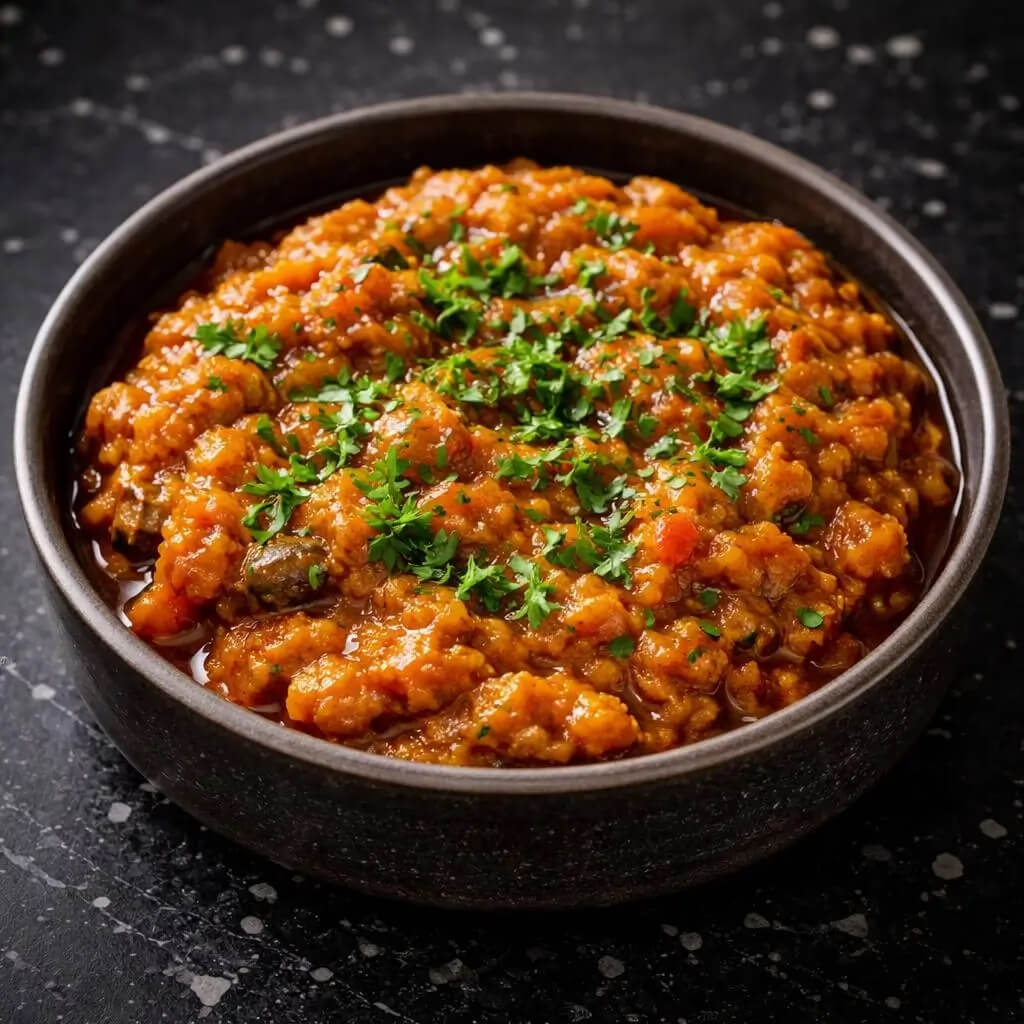
Let’s start with the North, with Chiang Mai as the capital of the Lanna region. It is here that you will find the greatest abundance of vegetables and mushrooms in the entire country. The climate is cooler and mountainous, which favours the cultivation of brassicas, cucurbits and dozens of varieties of local herbs. Northern cuisine relies heavily on sticky rice (khao niao), which is eaten with the fingers. One of the best experiences is nam phrik ong – traditionally a tomato and pork dip, which in its vegetarian version is made with minced tofu and mushrooms; this is an adaptation rather than a classic, and local cooks approach it with openness. You will also find plenty of delicate soups with pumpkin and coconut milk, while green papaya salads are often served without fermented crab – just salt and lime is enough, which is a salvation for vegetarians.
The South is a completely different world. Hot, humid and surrounded by the sea – it is famous for unimaginable spiciness and the ubiquitous use of coconut milk. This is where the most pitfalls lie, because practically every curry paste contains kapi, and fish sauce flows in streams. Yet it is in the South that the magnificent massaman curry is made – a dish with Muslim roots, milder and fragrant with cardamom and star anise. It lends itself beautifully to vegetarian modifications: potatoes, pearl onions and chunks of firm tofu braised in coconut milk with peanuts become a dish so rich that meat is unnecessary. Similarly, gaeng som, a sour curry, can be cleaned up – fermented soy replaces shrimp paste, and shrimp are swapped for slices of green papaya and banana blossoms. You just have to watch the level of heat, because southern dishes can squeeze tears even from seasoned chilli enthusiasts.
Top 5 dishes that are easy to make vegetarian
We will focus on specifics: what to do, whether ordering or cooking, so that these icons become fully plant-based without losing their soul. Each of the five dishes has enormous potential for adaptation – you just need to know where the catch lies.
Pad Thai – the king of the street on a jay diet
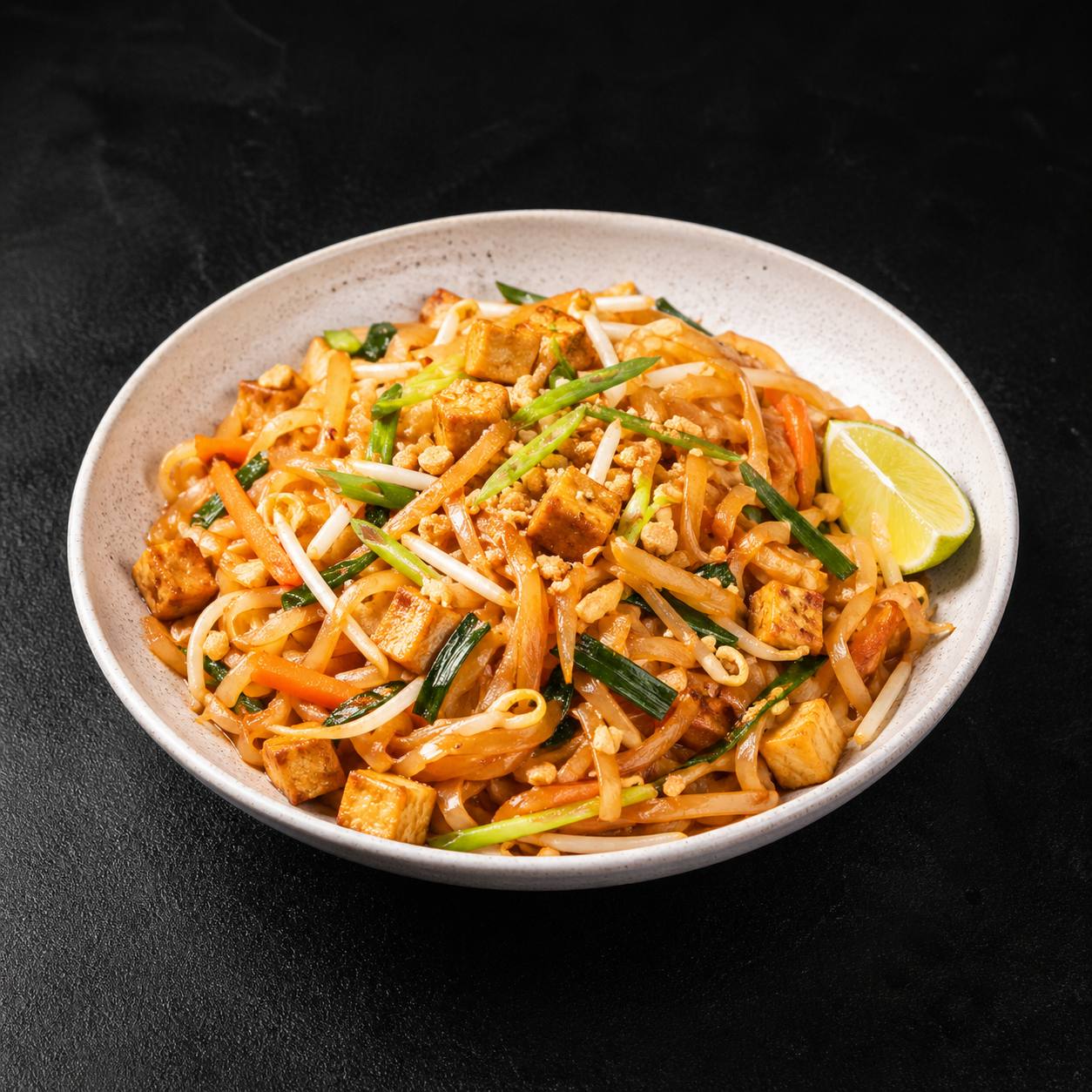
The secret of a good jay Pad Thai is not only giving up shrimp, but above all building the right sauce. Instead of fish sauce, we use a mixture of dark soy sauce with a little rice vinegar and coconut flower syrup.
If you are on a jay diet and avoid eggs, an interesting home interpretation is to use mashed silken tofu with a pinch of black kala namak salt – it smells of sulphur and mimics an eggy aroma, but this is not a standard Thai practice, rather a Western adaptation. On top, instead of dried shrimp, we sprinkle roasted peanuts and fresh mung bean sprouts – they provide the crucial crunchy counterpoint to the soft rice noodles.
Som Tam – papaya salad with a secret
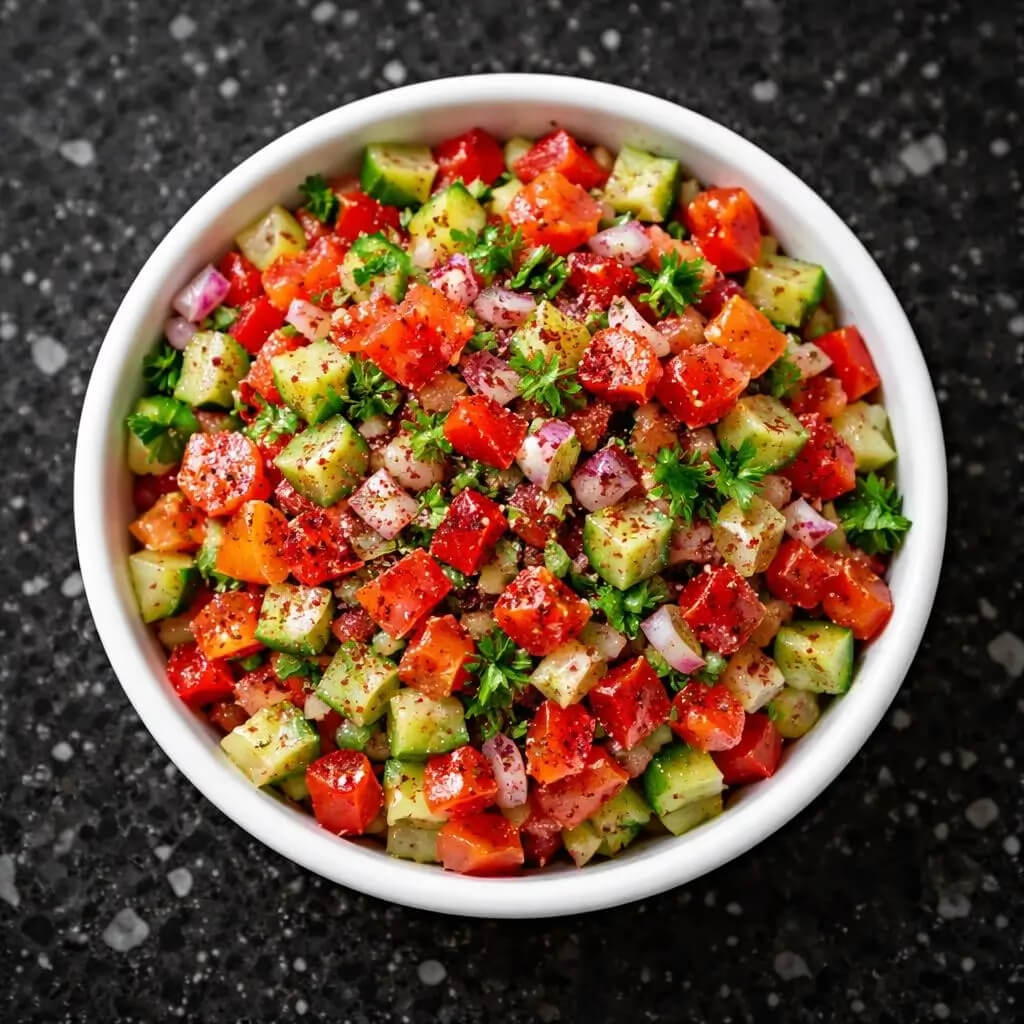
This is the most dangerous trap and at the same time the most rewarding dish after conversion. The problem in classic Som Tam Thai is the fermented field crab (pu dong) and the fish sauce in the dressing. It is enough to say “mai sai pu, mai sai nam pla” and ask for an extra portion of peanuts and cherry tomatoes. In the home version, a dressing of lime juice, unrefined cane sugar and chillies pounded with pieces of green papaya tastes so fresh that the lack of fishy accents becomes its greatest asset. A few roasted peanuts crushed in the mortar naturally thicken the dressing.
Green curry – creamy depth
Green curry in a vegetarian version is a gratifying candidate for reworking. Coconut milk is in itself so rich that it takes on the weight of the dish. Instead of chicken we add drained, pre-fried firm tofu, followed by Thai aubergines, snow peas and Thai basil leaves. At the end of cooking, you can add a spoonful of peanut butter or soybean paste – it is these unobvious additions that give the dish depth, and nobody misses the fish sauce. In a restaurant, always make sure the paste was made without kapi.
Pad Kra Pao – basil to the rescue
Thai basil (kaphrao) has an anise-peppery aroma that makes everything taste bold and vivid. In a meatless version, finely chopped, drained tofu works brilliantly – or even better, portobello mushrooms chopped to a mince and fried in a wok until the water evaporates. Then garlic, chillies, soy sauce instead of fish sauce, a pinch of sugar and plenty of basil leaves tossed in just ten seconds before the end. It is served with jasmine rice and, if the diet allows, a crispy fried egg on top.
Mango Sticky Rice – the perfect dairy-free dessert
Mango sticky rice is a naturally vegan dessert: sticky rice steamed, topped with warm, sweet coconut milk and served with ripe nam dok mai mangoes. No dairy, no gelatine – just rice, coconut, palm sugar and salt. The secret lies in soaking the rice before steaming it in a bamboo basket – thanks to this, the grains are separate and springy. Drizzling salty coconut milk over the top creates a contrast that prevents the dessert from becoming cloying. Gluten-free, plant-based, without any modifications whatsoever – it is proof that sometimes the best things are perfect from the start.
Practical guide: how not to make a mistake in a restaurant
The greatest anxiety while travelling is the moment you sit down at a plastic table and the vendor waits for your order. You know what you want, but you do not know how to say it so that you do not end up with a plate full of hidden surprises a moment later. Knowing a few phrases in Thai is often the only effective method of getting genuinely meatless and fish-free Thai food, rather than just a promise.
The absolute essential is the phrase “gin jay” (กินเจ), which tells them you are on a vegan diet in the Buddhist-Taoist sense – no meat, eggs, milk, honey, garlic or onion. It triggers a specific cultural context. If, however, you mainly want to skip animal ingredients in a standard dish, say “mai sai nam pla” (ไม่ใส่น้ำปลา – without fish sauce) and “mai sai kapi” (ไม่ใส่กะปิ – without shrimp paste). “Mai sai khai” (ไม่ใส่ไข่ – without egg) will also come in very handy. Remember that oyster sauce is not vegetarian either – and you must explicitly ask for it to be omitted or replaced with soy sauce; this does not happen automatically.
Many soups and stews are based on chicken or pork stock, even if only vegetables are floating in them. That is why when ordering tom yum or tom kha, it is worth adding “nam sup phak” (น้ำซุปผัก – vegetable stock). The more general “mai sai sat” (ไม่ใส่สัตว์ – no animals) acts as a broad declaration. Finally, the golden rule of the street: look for yellow flags with the symbol 齋 – this is a sign that the food is prepared according to jay principles. Do not be afraid to ask and smile – Thailand is one of the most vegetarian-friendly countries, if you just know these few magic words.
Conclusions and recommendations for travellers
Having travelled the road from the philosophical foundations of the jay diet to the home mortar, it is clear that Thai vegetarian cuisine lives, develops and pulses to the rhythm of street life. In its pure, plant-based form it often tastes better, because it has to make up with aroma and technique for what it loses in animal fat and protein. For a travelling vegetarian, the most important things are awareness of local nuances and the courage to experiment beyond the main menu.
In the North, an explosion of mushrooms, fresh herbs and steamed vegetables with sticky rice awaits. This is where it is easiest to find naturally gluten-free dishes – rice cakes, soups based on soybean pastes. In the South, coconut milk rules – thick curries become your ally, provided you clearly give up shrimp and fish. In both regions, night markets are invaluable – that is where food is prepared from scratch, so there is a chance to ask for modifications before anyone reaches for the bottle of nam pla. Also remember that Thai vegetarian cuisine is to a large degree often naturally gluten-free, but it requires attention. Rice noodles, sticky rice and tapioca dominate over wheat flour, yet sauces (especially soy sauce, oyster sauce and ready-made pastes) may contain gluten. It is always worth asking about ingredients if avoiding gluten is crucial for you. This is a huge advantage that places gluten-free Thai dishes among the most friendly culinary destinations in the world.
Understanding the nuances of Southeast Asian spices becomes even more interesting when compared to neighboring traditions. For instance, much like the ‘jay’ tradition in Thailand, the vegetarian cuisine of Singapore showcases a masterful use of soy products and tropical aromatics.
FAQ – frequently asked questions
Is Thai cuisine vegetarian?
Classic Thai cuisine makes abundant use of fish sauce, shrimp paste and meat stocks, so in its traditional form it is not vegetarian. At the same time, there is a strong jay strand within it and many dishes that are easily modified, which means Thai vegetarian cuisine is widely available – you just need to know how to order.
What do vegetarians eat in Thailand on a daily basis?
The daily menu is dominated by fried rice with vegetables and tofu, curries with coconut milk (if the paste is shrimp-free), papaya salads without crab, rice noodles with soy sauce and plenty of steamed vegetables with soy-based dips. During the jay festival, the range expands to include dozens of special snacks.
What are the most popular vegetarian dishes in Thailand?
The most popular include: Pad Thai jay, green curry with tofu, Som Tam without shrimp, Pad Kra Pao with mushrooms and Mango Sticky Rice. All of them can be found at street stalls marked with the symbol 齋 or ordered in restaurants after conveying the right requests.
Is Thai cuisine gluten-free?
Many dishes are based on gluten-free ingredients – jasmine rice, sticky rice and rice noodles. However, soy sauce often contains wheat, and ready-made curry pastes may have hidden gluten. People on a gluten-free diet should always check the composition, especially with dishes that include sauces.
Is it easy to be a vegetarian in Thailand?
Yes, especially in larger cities and tourist spots, where jay restaurants are common. In smaller villages it can be harder, but basic dishes such as fried rice with vegetables can be ordered using phrases like “mai sai nam pla” and “gin jay”.
How is Thai tofu different from Western tofu?
Thai tofu comes in many forms – from silken through firm, to deep-fried golden puffs, yellow turmeric-tinted tofu and dried yuba sheets. Each variety has its use: silken for soups, firm for curries and frying, and fried puffs as a crunchy addition.
Bibliography
- Thompson, David. “Thai Food”. Ten Speed Press, 2002.
- Molloy, Nancie. “The Thai Vegetarian Cookbook”. Tuttle Publishing, 2020.
- Punyaratabandhu, Leela. “Bangkok: Recipes and Stories from the Heart of Thailand”. Ten Speed Press, 2017.
- Anderson, Sally. “Food Culture in Southeast Asia”. Greenwood Press, 2005.
- Hawkins, Rachel. “Vegetarian Asia: A Travel Guide”. Vegetarian Guides Ltd, 2015.
- TAT Newsroom (Tourism Authority of Thailand). Official guides and articles concerning the Vegetarian Festival and culinary traditions.
- Authors’ own materials from culinary journeys through Thailand between 2015 and 2025.
Legal and medical disclaimer
This publication is for informational and educational purposes only. The content does not constitute medical, dietary or nutritional advice. Any decision regarding diet, particularly in the context of food allergies, intolerances (including coeliac disease and gluten sensitivity) or the choice of eating style while travelling, should be consulted with a doctor or qualified dietitian. The authors and publisher assume no responsibility for potential misunderstandings resulting from language differences when ordering meals, nor for individual bodily reactions to consumed products. Descriptions of local customs and ingredients refer to commonly accepted culinary practices and do not guarantee an identical composition of dishes in every gastronomic establishment. Particular caution is advised, and the composition of ordered dishes should be checked each time directly with the person preparing the meal.