Imagine this: after months (or sometimes years) of giving up bread, pizza, and pasta, you finally sit down to a plate of something “normal.” Potatoes. Simple, Polish, home-cooked. And suddenly, a question pops into your head: What if they betray me too? Are Potatoes Gluten-Free?
Relax. I’ll answer immediately, no beating around the bush.
1. The Short and Clear Answer
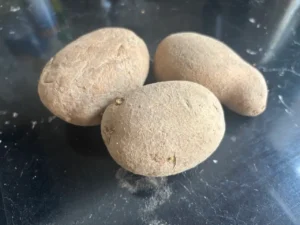
No. Natural potatoes do not contain gluten.
Gluten is a protein found exclusively in wheat, rye, barley, and their derivatives. A potato is a tuber—a root vegetable. It has absolutely nothing to do with gluten. It is just as safe as a carrot, a tomato, or an apple.
One-Line Summary:
Raw potato ✓
Boiled potato ✓
Baked potato ✓
Potato with butter and dill ✓
Fast-food potato or one from a packet ✗ – Here’s where it gets tricky.
2. Where Does All This Confusion Come From? Are Potatoes Gluten-Free?
People don’t ask “do potatoes have gluten” because they’ve suddenly developed a mania for biochemistry. They ask because they fear stomach pain, diarrhea, fatigue, and the return of celiac symptoms. It’s a fear we all know too well—those of us who’ve had to read labels like detectives.
And they are right to ask. Because while the potato itself is gluten-free, in today’s world, it’s incredibly easy for it to become “contaminated.”
3. Where Does Gluten Really Lurk in Potatoes?
a) French Fries – The Biggest Culprit
In 9 out of 10 bars and restaurants, fries are cooked in the same oil as nuggets, breaded pork chops, or calamari. On top of that, they are often dusted with wheat flour before frying to make them crispier. The result? Even “plain” fries can contain trace amounts of gluten.
b) Mashed Potatoes and Ready-Made Potato Products
Instant mashed potato flakes, croquettes, and supermarket potato pancakes very often contain added wheat flour, modified starch, or gluten-based flavorings.
c) Processed “Potato” Products. Are Potatoes Gluten-Free?
Chips, pancakes, casseroles, potato cutlets—gluten appears here in seasonings, breading, or as a thickener.
| Product | Is it Safe? | Why? |
|---|---|---|
| Fresh potatoes (raw/boiled/baked) | YES | 100% naturally gluten-free |
| Homemade fries | YES | If fried in clean oil |
| Bar/Fast Food fries | NO (or proceed with extreme caution) | Shared oil + flour dusting |
| Instant mashed potato flakes | Often NO | Contains wheat flour additives |
| Potato chips | Depends on the brand | Check the label for “may contain gluten” |
4. Cross-Contamination – The Real Enemy No. 1
This is not paranoia. It’s physics. Flour floats in the air. Knives, cutting boards, pans, fryers—everything can transfer microscopic amounts of gluten. The risk is highest in restaurants. At home, it’s almost zero if you follow basic rules.
5. Are Potatoes Safe for Celiac Disease?
Yes—provided they are clean.
The Polish Celiac Society and Dietitians Association state clearly: potatoes belong to the group of naturally gluten-free products and are a staple of the celiac diet. The only key is avoiding contamination.
6. Practical Tips – How to Eat Potatoes Without Fear
- At home: boil, bake, fry—whatever you like. You have full control.
- Buy whole potatoes, not semi-prepared products.
- At a restaurant, ask directly: “Are the fries cooked in a separate fryer and without flour coating?”
- At a fast-food joint—better to skip them or choose spots with certified gluten-free options.
- Always read labels on ready-made products—look for the “may contain gluten” warning.
7. Frequently Asked Questions
Do potatoes contain gluten?
No. Natural potatoes are completely gluten-free.
Do French fries have gluten?
Homemade—no. Restaurant/fast-food—almost always yes (due to shared oil and flour).
Is mashed potato gluten-free?
Homemade yes. Instant flakes or restaurant versions—often no.
Can I eat potatoes with celiac disease?
Yes, and you should—they are one of the safest and healthiest foods on a gluten-free diet.
Remember: Fear of gluten is understandable, but don’t let it rob you of the joy of eating. Potatoes can be your ally—as long as you know where the danger hides.
Article written with people with celiac disease and gluten intolerance in mind. Data based on current recommendations of dietitians and the Polish Celiac Society (2025/2026).