A Georgian supra is a long table full of small dishes, and it’s the best and worst thing that can happen to a gluten-free vegan traveler. Half the table is naturally plant-based. The other half is built on wheat dough, and it all sits close enough together that gluten-free Georgia needs a plan before the toasts even start. This guide walks through a supra the way it actually happens, course by course, so you know what to reach for and what to quietly skip.
Cold Starters Course
The first dishes on the table are usually the safest ones. Badrijani nigvzit — thin eggplant slices rolled around a walnut-garlic paste — is naturally vegan and gluten-free, and it’s one of the easiest wins on the whole table. Pkhali, the leafy green or vegetable pâté made with ground walnuts, vinegar, and spices, works the same way; spinach, beet, and cabbage versions all show up regularly and none of them need flour to hold together. Ajika, the spicy red pepper paste, is safe too, though it’s worth asking whether a particular batch had walnuts added, since recipes vary by household.
Lobio, the bean stew that shows up at almost every meal, is usually vegan, but not always — some versions are cooked in meat stock or finished with a spoon of butter, so it’s worth a quick question before you dig in. Mchadi, a simple corn bread eaten alongside these starters, is the one bread on the table you don’t have to worry about, since it’s made from corn flour with no wheat involved.
The Bread Course: Where It Goes Wrong
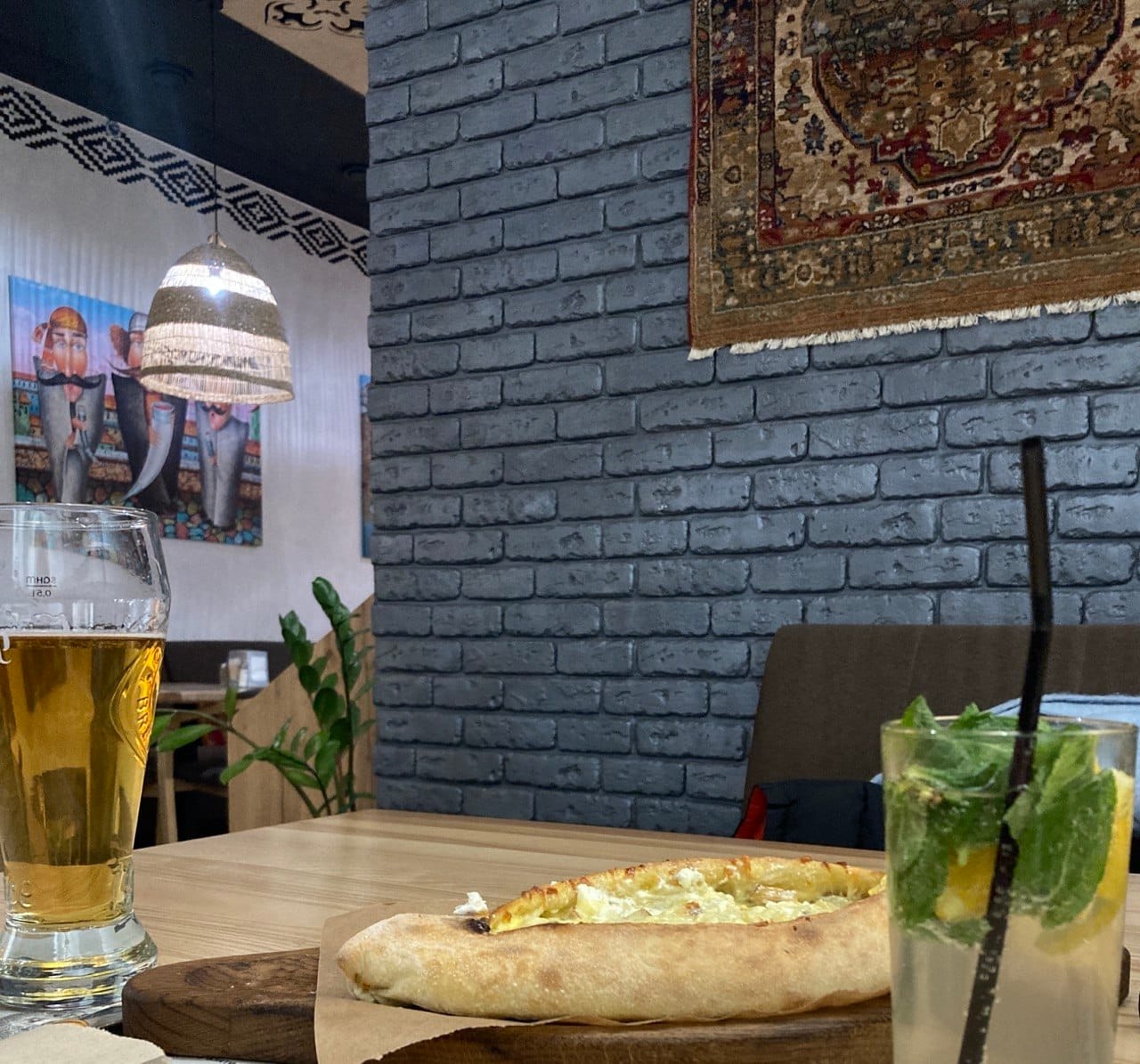
This is where the table turns. Khachapuri, the cheese-filled bread that shows up in some form at nearly every meal, is wheat dough through and through — there’s no version of it that skips the flour. Khinkali, the twisted meat or mushroom dumplings, are wrapped in a thick wheat dough too, and the wrapper is usually the biggest part of the dumpling by weight. Lavash and puri, the everyday flatbreads served in a basket at the start of the meal, are wheat-based as well, and they tend to sit right in the middle of the table where it’s easy to grab one without thinking.
The one real exception, beyond the corn-based mchadi already on the starter course, is a restaurant that makes gluten-free versions on purpose. Gluten Free Zone, a dedicated gluten-free kitchen in Tbilisi, makes its own gluten-free khinkali — genuinely rare, since most Georgians consider the wheat wrapper part of the dish’s identity. It shares a building with a regular bakery called Novella, so the pastries on display up front aren’t part of the gluten-free menu; you have to ask for the separate gluten-free menu specifically. It’s worth the detour if khinkali is high on your list, since finding a gluten-free version anywhere else in the country is close to impossible.
The Meat and Stew Course
Most of the stews at this stage of the meal are meat-based by design, so a vegan traveler is mainly steering around them. Kharcho, the walnut and rice soup often translated as “beef soup” on English menus, usually is beef-based, so don’t assume the walnut base makes it automatically plant-friendly. Satsivi, the cold walnut sauce, is traditionally poured over chicken, though the sauce itself — walnuts, garlic, vinegar, spices — is naturally vegan and gluten-free if you can get a kitchen to serve it without the meat. Ghomi, the cornmeal porridge that looks like a safe, simple side, is often finished with butter, which catches vegan travelers off guard since nothing about the dish looks dairy-based.
Ordering a plate of roasted or grilled vegetables (often just called “grilled vegetables” or occasionally mtsvadi-style if vegetables are done on the same skewers as meat) is usually your most reliable move here — just confirm the grill hasn’t also been used for bread that day, the same shared-surface risk that shows up in gluten-free Bosnia and Herzegovina with ćevapi.
Wine and Dessert
Georgian wine itself is naturally gluten-free — it’s made from grapes, full stop, no barley or wheat involved in the fermentation. This is one part of gluten-free Georgia that needs zero extra thought. Dessert is where things get complicated again. Churchkhela, the candle-shaped nut candy strung on thread and dipped in thickened grape juice, splits along a regional line that almost nobody outside Georgia knows about: in the east, around Tbilisi and Kakheti, the grape juice is thickened with wheat flour. In the west, around Kutaisi and the Imereti region, the same candy is traditionally thickened with corn flour instead. That means a churchkhela bought in Kutaisi has a real shot at being gluten-free, while the same-looking candy from a Tbilisi market stall almost certainly isn’t — and there’s no way to tell just by looking at it, so always ask which flour was used.
Tbilisi vs. Kutaisi: Restaurant Reality Check
Tbilisi has the only real gluten-free-specific infrastructure in the country, and it’s where the trip stops feeling like a gamble. Kiwi Vegan Cafe, Georgia’s first fully vegan restaurant on Ivane Machabeli Street, marks gluten-free items on its menu and keeps a wide enough spread — soups, bowls, pasta — that a full meal without negotiation is realistic. Namu, a raw vegan café on Shalva Dadiani Street, goes further: it’s gluten-free, sugar-free, and even table-salt-free by default, which makes it one of the few places in the country where you don’t have to ask a single question. Between the two of them and Gluten Free Zone’s dedicated kitchen, Tbilisi covers most situations a careful vegan traveler runs into.
Kutaisi is a different story. Palaty, on Pushkini Street, serves corn bread, pkhali, and stuffed mushrooms with an English menu and staff who understand vegan requests, and it’s consistently the top recommendation among travelers passing through. Bakery Sanimusho keeps a small buffet of traditional Georgian salads and cold dishes alongside soy milk coffee, with some vegan pastries mixed in among the regular ones — worth checking item by item, since the case itself isn’t sorted for you. Outside these two spots, options thin out fast, and the corn-flour churchkhela is honestly one of the more reliable snacks the city has to offer a gluten-free vegan.
Where to Buy Safe Snacks
Self-catering fills the gap between restaurant meals, and a handful of Tbilisi shops make it manageable:
- Goodwill supermarket — the most consistently mentioned chain for a real gluten-free section, not just a shelf
- Agrohub Vake — carries gluten-free pasta and bread alongside fresh produce
- Carrefour — international chain, imported gluten-free products in the bigger locations
- Local markets — fresh walnuts, dried fruit, and corn flour, all naturally safe if you’re cooking for yourself
None of this requires fluent Georgian; most packaging in the bigger chains includes English labeling, and staff in Tbilisi’s larger supermarkets are used to the question by now. The same layered caution that keeps a trip through gluten-free Vietnam safe — knowing exactly which hidden ingredient to ask about — works here too, just swapping soy sauce and seitan for a wheat-dough dumpling and a flour-thickened candy.
If Georgia is one stop on a longer trip through countries where a single starchy ingredient decides most of your meal, the roux hiding in gluten-free Serbia’s soups and the rántás doing the same job across much of gluten-free Budapest will both feel familiar by the time you land in Tbilisi.
This guide reflects restaurant and product information current as of 2026, drawn from HappyCow, Find Me Gluten Free, and the Coeliac Youth of Europe’s Georgia travel notes. Menus, kitchen practices, and product formulations change; always confirm current ingredients and preparation methods directly with restaurants and vendors before ordering, especially if you have celiac disease.