Jamaica is not just reggae, beaches, and scenic resorts. It is also a country with an incredibly rich culinary tradition that, for nearly a hundred years, has had a deeply plant-based side. Jamaican vegetarian cuisine is primarily ital – a food philosophy originating from the Rastafari movement, which emphasizes natural, unprocessed ingredients. In this guide, we will take you on a journey through the meat‑free flavors of Jamaica – from the roots of ital, through iconic dishes, to practical tips for travelers. This article is also available in Polish.
- Jamaican Plant‑Based Cuisine – History and Spiritual Roots
- What is ital? The Rastafari Food Philosophy
- Key Ingredients of Jamaican Vegetarian Cuisine
- Traditional Jamaican Dishes in a Plant‑Based Version
- 5 Vegetarian Recipes from Jamaica – From Ital Stew to Sweet Pudding
- Jamaican Desserts – A Sweet Ending to the Meal
- What Do Jamaicans Eat Every Day? The Popularity of Plant‑Based Cooking
- Table: Jamaican Vegetarian Dishes – Gluten, Alternatives, and Notes
- Tips for Tourists – How to Eat Vegetarian in Jamaica
- FAQ – Frequently Asked Questions About Jamaican Vegetarian Cuisine
- Bibliography
Jamaican Plant‑Based Cuisine – History and Spiritual Roots
The roots of Jamaican vegetarian cuisine run deep into the island’s history. Before the arrival of Europeans, the indigenous inhabitants, the Arawaks, cultivated cassava, sweet potatoes, corn, and beans. In the centuries that followed, descendants of African slaves, European colonizers, and immigrants from India and China came together on the island. Each of these groups contributed to Jamaica’s culinary melting pot. The tradition of curry cooking came from Indian indentured laborers who arrived in the 19th century, and today it forms the basis of many plant-based dishes.
The real breakthrough for plant‑based cooking in Jamaica came in the 1930s with the birth of the Rastafari movement. It emerged as a spiritual and political response to colonialism, social exclusion, and injustice. Rastafarians developed a lifestyle built on a close relationship with the land, African roots, and spirituality. Their diet became a key element of this new philosophy – they called it ital, from the English word “vital.” Remarkably, Rastafarians practiced a fully plant‑based diet almost 15 years before the term “vegan” was coined in Britain. Today, it is believed that a significant portion of Jamaican society limits meat consumption, particularly under the influence of the Rastafari movement, although precise statistics are lacking.
What is ital? The Rastafari Food Philosophy
Ital is much more than just a diet – it is a holistic life philosophy that treats food as a gift from the earth and a tool for spiritual cleansing. For adherents of Rastafari, ital is a way to distance themselves from what they call “Babylon” – the colonial, capitalist, and industrial system they believe pollutes the body and soul. In practice, this means consuming only natural, unprocessed foods, preferably locally grown and organic, ideally from one’s own garden. In its strictest form, ital forbids the use of salt, which is seen as artificially modified. Some Rastafarians replace it with sea or Himalayan salt, but many omit it entirely. Also prohibited are all preservatives, artificial colorings, alcohol, tobacco, and in some branches, eggs and dairy. Meat is completely excluded.
In practice, ital is almost always fully plant‑based, though in looser interpretations fish sometimes appears – this is not considered traditional ital.
In the kitchen, ital means cooking with love and mindfulness. Dishes are prepared slowly, with respect for the ingredients, often in clay pots. The food should be colorful, varied, and satisfying. It was in this tradition that ital stew was born – a thick, warming stew with coconut milk that remains a symbol of Jamaican vegetarian cuisine today. Importantly, ital is not just for Rastafarians – this philosophy has influenced mainstream Jamaican culture, and ital dishes can now be found in restaurants across the island.
Key Ingredients of Jamaican Vegetarian Cuisine
Jamaican plant‑based cooking relies on a wealth of local products that have shaped the island’s flavor over centuries. At the heart of many dishes is coconut milk – creamy, thick, with a delicately sweet aroma. It gives stews, soups, and desserts their characteristic depth. Coconut is also used in the form of flakes, oil, and water. Equally important are plantains – depending on their ripeness, they can be prepared either savory or sweet. Green plantains, firm and starchy, are added to stews or fried as plátanos fritos. Ripe, yellow plantains are fried into sweet, caramelized slices – in Jamaica, simply called fried ripe plantains.
Root vegetables and tubers are absolutely essential. Cassava (yuca), sweet potatoes, taro, potatoes, yams – all find their way into soups, stews, and as standalone sides. Cassava is also used to make characteristic bammies – crispy on the outside, soft on the inside, and perfect as a base for stews. In ital stew, butternut squash, okra, corn, cauliflower, and green bananas are key ingredients. Legumes – chickpeas, lentils, black beans – provide the main source of protein, especially in dishes influenced by Indian cuisine. The most important spice is pimento (allspice) – it gives Jamaican dishes their characteristic warm, clove‑like aroma. Add to that thyme, garlic, onion, ginger, cinnamon, nutmeg, and of course, hot Scotch bonnet peppers, which bring both heat and depth.
Another notable ingredient is ackee – Jamaica’s national fruit, which forms the base of the country’s iconic dish. When cooked, it has a texture similar to scrambled eggs. In ital cooking, ackee is often prepared with coconut milk, garlic, thyme, and a whole Scotch bonnet pepper. Important: ackee must be fully ripe; unripe ackee is toxic and can cause severe food poisoning.
Traditional Jamaican Dishes in a Plant‑Based Version
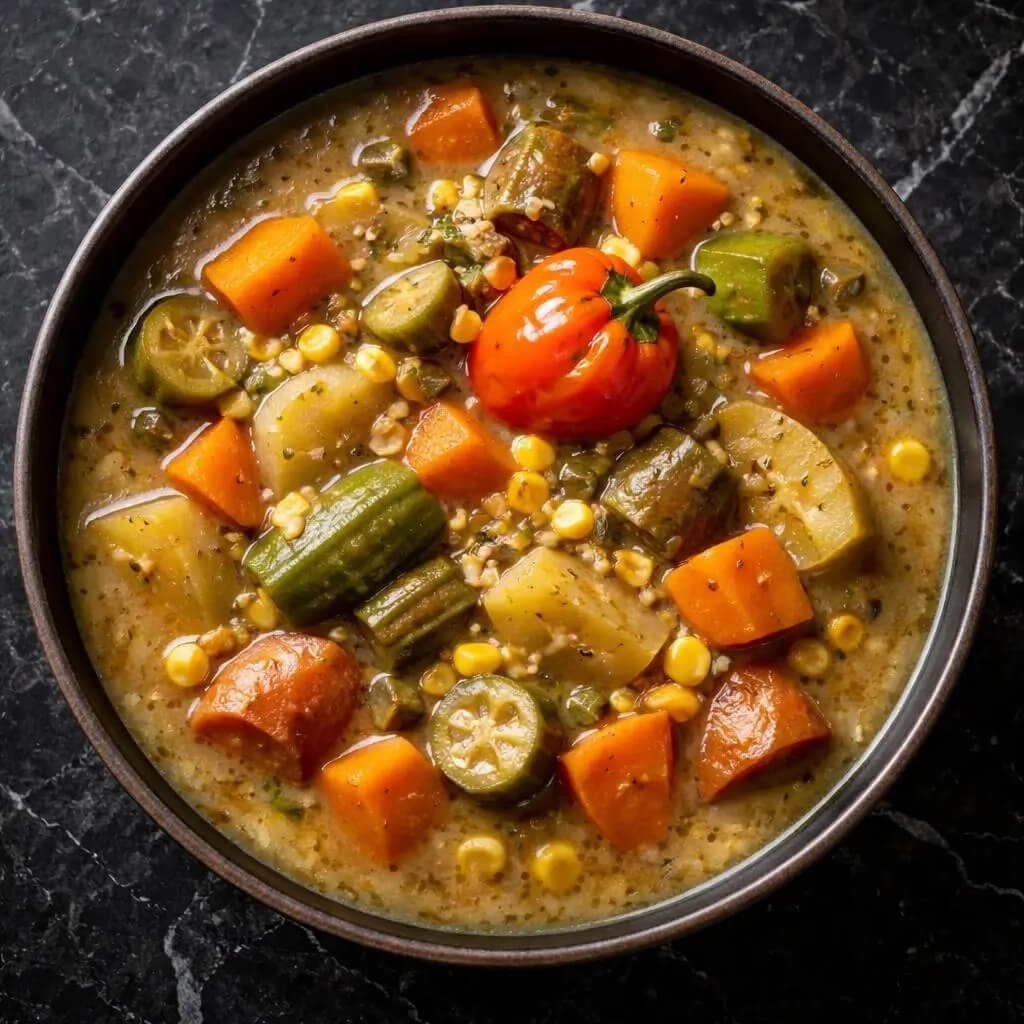
Many classic Jamaican dishes have plant‑based versions that are just as flavorful as the originals. Ital stew is an absolute highlight of Jamaican vegetarian cuisine – a thick, warming stew made with coconut milk and a variety of vegetables and herbs. It typically includes squash, sweet potatoes, green bananas, carrots, okra, corn, and beans, all seasoned with thyme, garlic, onion, and a whole Scotch bonnet pepper that adds depth without overwhelming heat. Ital stew is hearty, nourishing, and perfectly captures the spirit of plant‑based cooking.
Another popular dish is ackee, which in its meat‑free version is cooked with onions, garlic, tomatoes, thyme, coconut milk, and a whole Scotch bonnet pepper. Traditionally, ackee is paired with salted codfish (ackee and saltfish) – widely considered the national dish. In the vegetarian version, the fish is omitted. It is served with boiled bananas, yams, sweet potatoes, and fried dumplings. Vegetable curry is another favorite – Jamaican curry differs from Indian curry in its generous use of allspice and thyme. It is often made with chickpeas, potatoes, cauliflower, or tofu, simmered in a thick coconut milk sauce with aromatic spices.
Essential sides include boiled dumplings – traditionally made with wheat flour, though cornmeal or cassava flour versions (gluten‑free) are also popular.
They are ideal alongside stews and soups. Fried dumplings (festival) are slightly sweet – sugar and baking powder are added to the dough – and are often served as a street food snack or side dish. Bammies are cassava cakes that can be fried or baked – crispy on the outside, soft within, and perfect for soaking up stews. Callaloo with tomatoes and onions is simple yet incredibly tasty – in Jamaica, callaloo is made from amaranth leaves (Amaranthus viridis or dubius), stewed with onions, garlic, tomatoes, and a Scotch bonnet pepper. The leaves resemble spinach but are botanically different.
5 Vegetarian Recipes from Jamaica – From Ital Stew to Sweet Pudding
Here are five recipes that will let you bring the taste of Jamaica into your own kitchen. All are 100% plant‑based and easy to make.
1. Ital stew (Vegetable Stew with Coconut Milk)
Ingredients: 1 onion, 3 garlic cloves, 2 tbsp coconut oil, 1 cup butternut squash, cubed, 1 sweet potato, peeled and chopped, 1 green plantain, peeled and chopped, 1 carrot, 1 cup frozen corn, 1/2 cup okra (fresh or frozen), 1 can coconut milk, 1 cup vegetable broth, 2 sprigs thyme, 2 bay leaves, 1 whole Scotch bonnet pepper, salt (optional, for non‑ital version), juice of 1/2 lime.
Preparation: In a large pot, heat the oil, sauté the onion and garlic. Add the squash, sweet potato, green plantain, and carrot, and sauté for 5 minutes. Pour in the broth and coconut milk, add the thyme, bay leaves, and whole pepper. Cook over low heat for 20 minutes. Add the corn and okra, cook for another 10‑15 minutes until the vegetables are tender. Squeeze in the lime juice, then remove the whole pepper and bay leaves before serving. Serve with boiled dumplings or rice.
2. Chickpea and Potato Curry
Ingredients: 2 tbsp coconut oil, 1 onion, 3 garlic cloves, 1 tbsp grated ginger, 2 tbsp curry powder, 1 tsp ground allspice, 1/2 tsp thyme, 1 can coconut milk, 1 cup vegetable broth, 2 potatoes, diced, 1 carrot, 1 can chickpeas, juice of 1/2 lime.
Preparation: In oil, sauté the onion, garlic, and ginger. Add the spices and sauté for a minute. Pour in the coconut milk and broth, add the potatoes and carrot. Cook for 15‑20 minutes until the vegetables are soft. Add the chickpeas, cook for another 5 minutes. Season with salt, squeeze in the lime juice. Serve with basmati rice.
3. Vegetarian Callaloo with Tomatoes
Ingredients: 1 bunch callaloo (amaranth leaves), 1 onion, 2 garlic cloves, 1 tomato, 1 whole Scotch bonnet pepper, 2 tbsp coconut oil, salt, pepper.
Preparation: Rinse the callaloo and chop it. Heat the oil in a pan, sauté the onion and garlic. Add the callaloo and sauté for 2‑3 minutes. Add the chopped tomato and the whole pepper (do not cut – it is meant to add aroma, not spiciness). Simmer for 5‑7 minutes until the callaloo is tender. Season with salt and pepper. Serve with boiled dumplings or as a side.
4. Gluten‑free Boiled Dumplings
Ingredients: 2 cups cornmeal (or gluten‑free flour blend), 1 tsp salt, about 1 cup warm water.
Preparation: Mix the flour with salt. Gradually add water, kneading into a pliable dough. Divide into 6‑8 parts, form into balls, then flatten them slightly or shape into logs (spinners). Drop into boiling salted water and cook for 20‑25 minutes until they float to the surface. Remove with a slotted spoon. Note: traditional boiled dumplings are made with wheat flour – the gluten‑free version is a modification.
5. Jamaican Sweet Potato Pudding
Ingredients: 2 sweet potatoes (about 700 g), 1/2 cup cornmeal, 1/2 cup sugar, 1 can coconut milk, 1 tsp cinnamon, 1/2 tsp nutmeg, 1 tsp vanilla extract, pinch of salt.
Preparation: Peel the sweet potatoes and grate them finely. Mix with cornmeal, sugar, spices, and salt. Add the coconut milk and vanilla, mix thoroughly. Pour into a greased baking dish. Bake at 180°C (350°F) for about 45‑60 minutes until the pudding is set and the top is browned.
Serve warm or cold.
Jamaican Desserts – A Sweet Ending to the Meal
Jamaican cuisine is known for its exceptional plant‑based desserts. Sweet potato pudding is an absolute classic – a dense, moist cake made from grated sweet potatoes, coconut milk, and aromatic spices. It is often served with raisins and coconut crumble. This dessert can be enjoyed warm or cold, and pairs perfectly with coffee or tea. Another favorite is cassava pone – a cake made with cassava, coconut milk, cinnamon, nutmeg, and brown sugar. It has a dense, slightly chewy texture and a deep, caramelized flavor.
In Jamaican homes, gizzada is also popular – small shortcrust tarts filled with sweetened coconut paste flavored with ginger and nutmeg. This is a traditionally plant‑based dessert with no eggs. During Carnival and at festivals, rum cake is a must – a moist cake soaked in rum and studded with dried fruit. The vegan version is made with plant milk and rum flavoring. It’s for the bold – very sweet and intensely aromatic.
What Do Jamaicans Eat Every Day? The Popularity of Plant‑Based Cooking
For many Jamaicans, especially those raised in the Rastafarian tradition, a plant‑based diet is not a choice but a natural part of everyday life. Ital stew, rice and beans, callaloo, boiled root vegetables, fried plantains – all appear on tables both at home and in local eateries. In recent years, plant‑based eating has also gained popularity among those who do not identify with the Rastafari movement. More and more restaurants in tourist areas such as Montego Bay, Ocho Rios, and Negril offer vegan menus, and some establishments specialize entirely in ital. Outside the resorts, choices can be more limited – in smaller towns and rural areas, traditional meat dishes dominate, and vegetarian options are often found mainly in Rastafarian‑run spots.
Among travelers, Jamaican vegetarian cuisine is becoming increasingly well‑known. In Poland, interest in this culinary tradition is also growing – in larger cities you can find restaurants serving Jamaican curry, ital stew, and festival dumplings. It shows that the cuisine of this small Caribbean island has global appeal, and its plant‑based side resonates with those seeking healthy, aromatic, and characterful food. Jamaican food often appears at food trucks and culinary festivals, attracting a growing fan base. In Poland, authentic spices like pimento and jerk seasoning, as well as frozen plantains and ackee, are now available in Caribbean grocery stores.
Table: Jamaican Vegetarian Dishes – Gluten, Alternatives, and Notes
| Dish Name | Contains Gluten? | Alternatives / Notes for Vegetarians |
|---|---|---|
| Ital stew (Vegetable Stew) | No (naturally gluten‑free) | 100% plant‑based, based on vegetables, coconut milk, and spices. Ensure the broth is gluten‑free. |
| Callaloo (Stewed Amaranth Leaves) | No (naturally gluten‑free) | The meat‑free version is fully vegetarian. In Jamaica, callaloo refers to amaranth leaves, not taro. Check if salted fish has been added. |
| Vegetable Curry | No (naturally gluten‑free if gluten‑free broth is used) | Vegetarian, often vegan. Ensure it does not contain wheat flour as a thickener. |
| Ackee (Fruit) | No (naturally gluten‑free) | Traditional ackee is often served with salted codfish (the national dish, ackee and saltfish). Without fish, it is vegan. In ital cooking, often with coconut milk. Important: ackee must be fully ripe. |
| Boiled dumplings | Depends on the flour | Traditionally made with wheat flour (contains gluten). Cornmeal or cassava flour versions are gluten‑free. |
| Festival dumplings (Fried Dumplings) | Yes (made with wheat flour) | Gluten‑free version: cornmeal, rice, or almond flour. Slightly sweet due to added sugar and baking powder. Served as street food or side dish. |
| Bammies (Cassava Cakes) | No (naturally gluten‑free) | 100% plant‑based, served as a side or base for stews. Made exclusively from cassava, not plantains. |
| Sweet potato pudding | No (naturally gluten‑free) | Traditionally vegan, made with sweet potatoes, coconut milk, and spices. |
Tips for Tourists – How to Eat Vegetarian in Jamaica
Planning a trip to Jamaica on a vegetarian diet? Great choice – the island is very welcoming to non‑meat eaters, especially in tourist areas. First, look for spots with the word “ital” on the sign – that guarantees the food is 100% plant‑based, natural, and prepared with care. In larger resorts like Montego Bay, Negril, or Ocho Rios, you’ll find vegetarian and vegan restaurants, often in luxury hotels. It’s also worth visiting local markets, where you can buy fresh fruit, vegetables, and nuts – perfect for a quick snack or light meal.
Useful English phrases: “I am vegetarian – I don’t eat meat, chicken or fish.” “Is this dish ital?” “Does this contain meat or fish?” Jamaican restaurants are generally understanding of vegetarian needs. Many dishes – vegetable curry, ital stew, callaloo, and boiled dumplings – are standard. Be mindful with ackee: it’s traditionally served with salted fish, but you can always ask for a version “without saltfish.” Keep in mind that outside resort areas, the selection of plant‑based options may be limited – in that case, rely on supermarkets and cook for yourself, especially since many hotels offer kitchenettes.
Also try local drinks: freshly squeezed mango, passion fruit, pineapple, and guava juices are everywhere. Coconut water is sold straight from the nut on the roadside. For a unique culinary experience, visit Stush in the Bush in the St Ann mountains – a farm‑to‑table spot serving exquisite ital dishes in a beautiful tropical setting. Their menu changes seasonally, and each plate is a work of art.
FAQ – Frequently Asked Questions About Jamaican Vegetarian Cuisine
Is Jamaican cuisine vegetarian‑friendly?
Yes, Jamaica is one of the most vegetarian‑friendly countries in the Caribbean. Thanks to the ital tradition dating back to the 1930s, plant‑based dishes are deeply rooted here and easy to find, especially in resorts and larger cities. In smaller towns the selection may be more limited, but you can often find options at Rastafarian‑run establishments.
What is ital and how does it differ from veganism?
Ital is a food philosophy from the Rastafari movement. In addition to avoiding meat, ital excludes processed foods, chemical additives, and often salt. Ital is usually fully plant‑based, but in some looser interpretations fish is included – this is not considered traditional ital. The main goal of ital is purity of body and spirit, rather than simply avoiding animal products. Ital is not strictly identical to veganism, though the two overlap significantly.
Is it easy to find gluten‑free dishes in Jamaica?
Yes, many traditional Jamaican dishes are naturally gluten‑free. Ital stew, vegetable curry, callaloo, sweet potatoes, cassava, and boiled dumplings made with cornmeal are all wheat‑free. Watch out for fried festival dumplings (usually made with wheat flour) and dishes where sauces may be thickened with flour.
What are the most popular vegetarian dishes in Jamaica?
Ital stew, vegetable curry (especially with chickpeas), callaloo, ackee (without fish), boiled dumplings, bammies, fried plantains, and sweet potato pudding. All are widely available and delicious. Also try jerk vegetables – grilled vegetables in a traditional jerk marinade.
Are there fully vegan restaurants in Jamaica?
Yes, especially in tourist areas. Must‑visits include Stush in the Bush in St Ann (farm‑to‑table ital), Ital Garden in Negril, Veggie Meals in Montego Bay, and Ashanti Oasis in Ocho Rios. All‑inclusive resorts are also increasingly offering dedicated vegan sections.
Bibliography
- “The Ital Diet” – Interdisciplinary Humanities Center UCSB, 2023.
- Maya Feller, “Eating from Our Roots: 80+ Healthy Home‑Cooked Favorites from Cultures Around the World”, Goop Press/Rodale Books, 2023.
- Vaughn Stafford Gray, “The deep roots of Caribbean veganism”, Caribbean Beat Magazine, Issue 177, 2023.
- Michelle Rousseau, Suzanne Rousseau, “Provisions: The Roots of Caribbean Cooking – 150 Vegetarian Recipes”, Da Capo Lifelong Books, 2018.
- BBC Travel, “Maya Feller’s Rastafarian ital stew”, 2023.
- Charla, “Jamaican Boiled Dumplings (Gluten Free)”, That Girl Cooks Healthy, 2025.
- Ezabella, “Jamaican Sweet Potato Pudding (Gluten Free + Vegan)”, Kitchen Loving, 2025.
- Foreword Reviews, “Food of Jamaica – Authentic Recipes from the Jewel of the Caribbean”, 1998.
- Slurrp, “Jamaican Bammies Recipe”, 2021.
The above article is for informational purposes only and does not constitute medical, dietary, or legal advice. Before making significant changes to your diet, especially for individuals with celiac disease, food allergies, or other conditions, it is recommended to consult a qualified dietitian or physician. The editorial team has made every effort to ensure the information presented is reliable and current as of the time of publication, but assumes no responsibility for any consequences arising from its use.