When we think of Mediterranean cuisine, our minds usually go straight to Italy or Greece. That’s a common misconception. Lebanese vegetarian cuisine has long been the secret weapon of dietitians and chefs who know that plant‑based eating doesn’t have to be boring. In Beirut, nobody turns vegetarianism into a philosophy – it’s simply how people have eaten for generations. And you know what? It works. Ever wondered what vegetarian food in Lebanon looks like on a daily basis? We’re about to show you everything. This guide to Lebanese vegetarian cuisine will cover history, health benefits, must‑try dishes, and practical tips.
Forget dry salads and compromises. The plant‑based version of Lebanese specialties is an explosion of creamy dips, crispy falafels, and herbs that smell like a mountain morning. In this article, we’ll show you why traditional meat‑free dishes from Lebanon can be one of the healthiest choices you can make. Lebanese vegetarian cuisine is not just hummus – it’s a whole world of flavors waiting to be discovered. There’ll be some history, a little science, and above all, plenty of practical tips. If you try just one dish tonight, make it hummus from scratch – it will change everything.
I. The Aesthetics of Mezze: The Philosophy of Communal Eating
In Lebanon, nobody eats alone. The culture of eating mezze in Beirut is a ritual that brings families and friends together. A dozen small bowls land on the table – creams, pastes, vegetables, pickles. This isn’t just a meal; it’s chickpeas, lentils, and eggplants in the starring roles. It sounds simple, but behind that simplicity lie thousands of years of experience. The beauty of Lebanese vegetarian cuisine is that it turns humble ingredients into something spectacular.
What’s important for us, readers of a plant‑based diet website: traditional Lebanese vegetarian cuisine hardly needs any modification. It has always focused on what grows. Olive oil, lemon, garlic, parsley – these aren’t extras; they’re the foundation. While Europe was discovering meat as a status symbol, the Levant already knew that dried chickpeas could work wonders. The eco‑friendliness of this diet isn’t a marketing gimmick – it’s everyday life.
Take their approach to food waste, for example. In Lebanese meat‑free cuisine, practically everything is used. Eggplant peels? They go into pickles. Parsley stems? They end up in broth or chopped into tabbouleh. This natural approach helps reduce food waste, though nobody here uses big fancy words. And the taste? Believe me, no plant feels underappreciated in this country.
II. Geography of Flavor: From the Cedar Forests to the Mediterranean Coast
Lebanon is small – roughly the size of a region in Poland. Yet its culinary diversity takes your breath away. By the sea, fish reigns (more on that later); in the Beqaa Valley, grains and legumes; in the valleys, olives and citrus fruits. This geographical mash‑up means that Lebanese vegetarian dishes carry both a sea breeze and a mountain chill.
Lebanese vegetarian cuisine draws from every corner of this small but incredibly diverse country.
The key is the so‑called golden triangle: olive oil and lemon juice plus tahini paste. That’s the trilogy that appears in every mezze. Olive oil – fruity, fatty, often cold‑pressed. Lemon – sour but not overpowering. Tahini – creamy, nutty, made from toasted sesame. When these three meet in one bowl, magic happens. Add to that spices in Lebanese cuisine: sumac (sour, reddish powder) and za’atar (a blend of thyme, sesame, and sumac).
And why is this diet considered an elixir of longevity? Look at the ingredients. Fiber from chickpeas and lentils regulates blood sugar, healthy fats from olive oil and sesame protect the heart, and antioxidants from herbs and spices fight inflammation. That’s no secret knowledge – it’s just the wisdom of Levantine cooking. Is Lebanese cuisine fully vegetarian? No, but its plant‑based side is so rich that many people don’t feel the need for meat.
III. Ingredient Portfolio: Key High‑Nutrition Ingredients
Before we get into specifics, let’s pause for a moment at the pantry. The use of chickpeas and lentils in Lebanon is a true art. Chickpeas (the word “hummus” refers to both the paste and the legume itself) appear dried, ground, fermented, and even roasted as a snack. Lentils – mostly brown and green – go into soups, plant‑based patties with a meat‑like texture, and salads. Plant protein? Plenty of it.
We can’t forget tahini paste in Lebanese dishes. It’s one of the oldest sesame pastes used in cooking – references to sesame go back 4,000 years. It gives creaminess to hummus and baba ghanoush. Tahini is not just an add‑on; it’s the base of sauces, dips, and even some desserts (halva). We still can’t get enough of its nutty, slightly bitter taste.
And what about spices? Sumac (sour, perfect for grilled vegetables) and za’atar (eaten at breakfast with olive oil) are true stars. Also worth mentioning is pomegranate molasses – a thick, sweet‑sour syrup that elevates salads. Thanks to these ingredients, Lebanon’s plant‑based cuisine is never bland. It’s bold, layered, and – let’s be honest – hard to stop eating.
IV. Lebanon’s Most Popular Vegetarian Dishes – 5 Recipes
These five recipes are the absolute foundation. You’ll find classics here, but with subjective, editorial commentary – because the goal is to get the same result as in a Beirut eatery, not from a box mix. Start with hummus tonight – you won’t regret it.
Velvety Hummus – Classic Recipe
Let’s start with the iconic classic hummus recipe. Ingredients: one can of chickpeas (or 150 g dried, soaked overnight), 4 tbsp tahini, juice of 1 lemon, 2 garlic cloves, 4 tbsp good olive oil, salt, ice water. The secret? Cook the chickpeas with half a teaspoon of baking soda – the skins will come off and the paste will be silky. Blend at high speed, adding ice water one tablespoon at a time, until creamy. Human‑touch comment: most recipes tell you to peel the chickpeas, but with baking soda you skip that step. Works every time. Top with paprika and parsley.
Tabbouleh – A Green Manifesto
This is not a salad, it’s a state of mind. Vegetarian tabbouleh recipe calls for a bunch of parsley (no, not dill!), a few mint leaves, finely chopped tomato and onion. Plus a handful of dry bulgur (can be substituted with quinoa for a gluten‑free version). Drizzle with olive oil and lemon juice. Comment: In Lebanon, tabbouleh is so green that the bulgur is barely visible. It’s not a side dish – it’s the main meal. And don’t skimp on the lemon!
Falafel – The Golden Crust
How to make falafel at home so it doesn’t fall apart in the oil? Soaked (not cooked!) chickpeas, fresh cilantro, garlic, cumin, and coriander. Blitz into a thick paste, chill for an hour in the fridge. Deep‑fry in rapeseed or peanut oil. Human‑touch comment: some pros add a tiny amount of chickpea flour or a little wheat flour as a stabilizer – that’s not cheating. But if the mixture is too wet, add more dry chickpeas. And don’t use canned chickpeas – it’ll be a disaster.
Baba Ghanoush – Smoky Eggplant
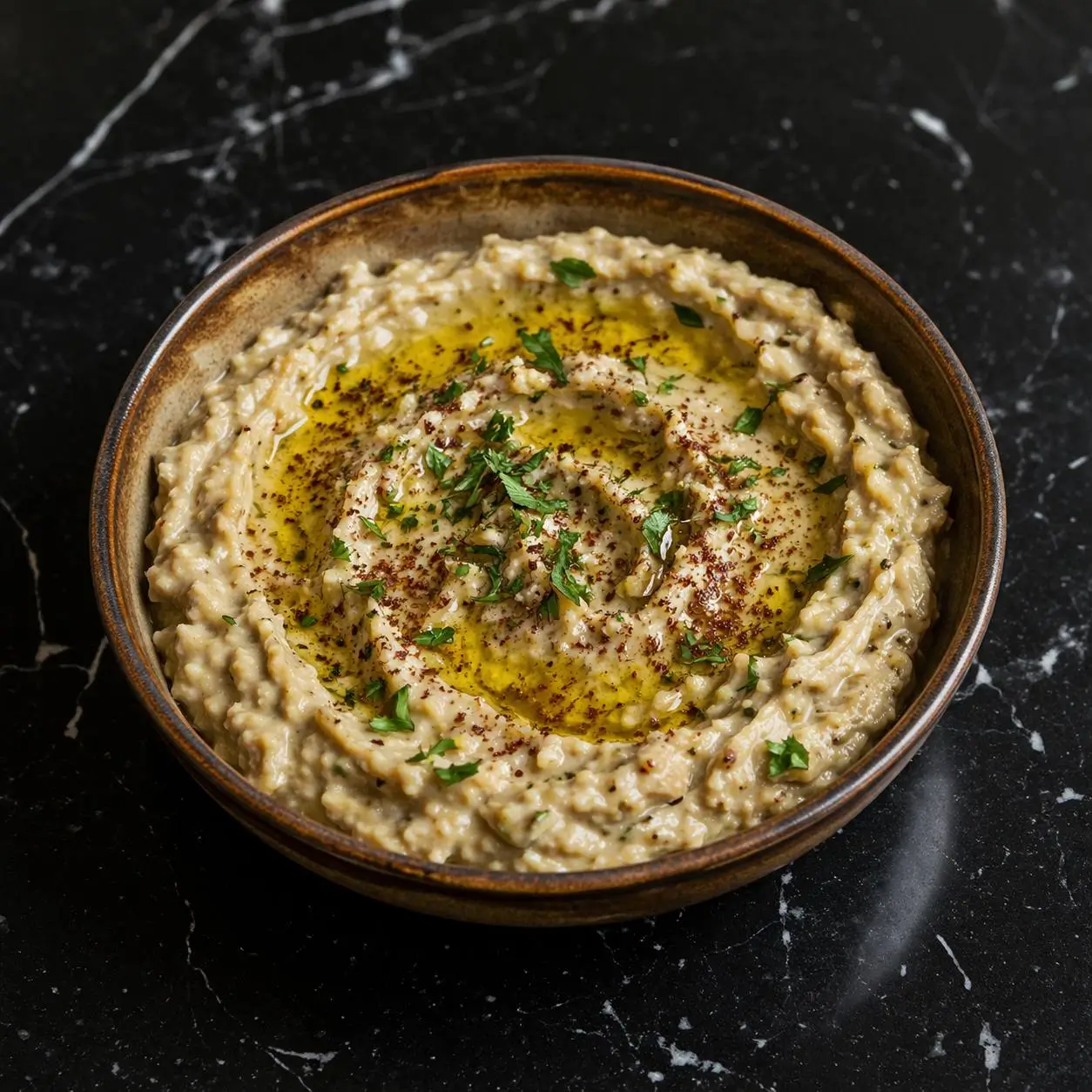
Lebanese baba ghanoush recipe starts with fire. Eggplants must be roasted directly over a flame (or on a dry grill pan) until the skin is black and pulls away from the flesh. Then peel, mash with a fork, mix with tahini, garlic, lemon, and olive oil. Comment: that smoky flavor is key. Don’t skip this step, even if you have to do it on a gas stove.
Manakish with Za’atar – Lebanese Breakfast Pizza
Manakish with za’atar recipe is a yeasted flatbread brushed with a mixture of za’atar and olive oil. Bake at 220°C (430°F) for 10 minutes. Simple? Yes. Genius? Absolutely. Human‑touch comment: we often top it with chopped tomatoes or olives. This is the best breakfast under the sun, and it’s vegan. For a gluten‑free version, use a good gluten‑free bread flour blend or a special GF flatbread – almond flour alone won’t give you that yeasted texture.
V. The Economics of Choice: Why Beirut Is a New Paradise for Vegans and Foodies
Is Beirut vegan‑friendly? I’ll answer this way: falafel and plant‑based dishes are just as easy to find in Lebanon’s capital as classic meats. Beirut has long been a magnet for chefs from across the Middle East who compete in plant‑based reinterpretations of classics. Why is Lebanon a paradise for vegetarians? Because here, vegetarianism needs no justification. In every restaurant, at least half the menu is naturally meat‑free. This is a key advantage of Lebanese vegetarian cuisine for travelers.
What’s more, what do vegetarians eat in Lebanon on a daily basis? It’s not just mezze. Also baked dishes with rice and thin vermicelli noodles (riz bi sha’riyeh), lentil soups (shorbat adas), or plant‑based kebab equivalents made from lentils and bulgur. And for those with a sweet tooth – desserts based on tahini and dates. Lebanese cuisine for vegetarians and vegans is so diverse that after a week you’ll forget meat ever existed. Really.
From a business perspective, Lebanese restaurants in Europe are one of the most stable niches. Why? Because their menus fit almost every diet: gluten‑free (just ask to replace bulgur with quinoa), low‑carb (more veggies), or keto (tahini and olive oil provide fats). That’s flexibility that even Italian cuisine lacks.
VI. Smart Travel: A Gastronomic Guide for the Discerning
Planning a trip to Lebanon? Great choice. But beware – don’t fall into tourist traps. Genuine Lebanese vegetarian street food can be found in neighborhoods like Mar Mikhael and Gemmayze. Look for places where hummus is served in clay bowls and there’s a line of locals waiting for falafel. Exploring Lebanese vegetarian cuisine on the ground is an adventure in itself.
What about a gluten‑free diet in Lebanon? It’s surprisingly easy. Most mezze is naturally gluten‑free: hummus, baba ghanoush, muhammara (roasted red pepper paste), pickled vegetables, salads. The only exceptions are dishes with bulgur and noodles. Just say “gluten‑free” and the waiter will immediately tell you what can be substituted. In Beirut, you’ll even find gluten‑free bakeries – it’s no longer a niche issue.
To answer the question directly: is Lebanese cuisine gluten‑free? – not entirely, but its plant‑based dishes very often are. Always ask about sauces (they sometimes contain wheat paste) and bread. Bulgur and vermicelli noodles are the only significant sources of gluten in traditional cooking. Beyond that, you can eat almost everything.
PRO tip from the editor: If you want to feel the real vibe, book a table at “Tawlet” in Beirut. It’s a place where grandmothers from different villages cook their family recipes.
VII. Wine Pairing: Lebanese Wines Meet Mezze
Few people associate Lebanon with wine, which is a shame. The Beqaa Valley has been a wine region since Phoenician times. Today, world‑class wines are produced there. For mezze, a light red wine from local varieties such as Cinsault or Obeidy works beautifully – they have acidity and herbal notes that highlight za’atar and sumac. For creamy pastes (hummus, baba ghanoush), consider a white wine from Merwah – it’s slightly nutty and complements tahini. If you’re feeling bolder, try Château Musar – red blends with long aging. Their complexity pairs wonderfully with grilled vegetables and pickles. For dessert, a sweet wine from Obeidy must, which has a date‑like sweetness. And here’s a fun note: some Lebanese people even add ice to wine in hot weather – it’s not an ancient tradition, just a practical habit, and there’s no shame in it.
Bogactwo roślinnych smaków oferuje również kuchnia chińska, która od wieków doskonali sztukę przyrządzania dań bezmięsnych. Opiera się ona na różnorodnych odmianach tofu, grzybach mun oraz świeżych warzywach z dodatkiem imbiru i soi, stanowiąc fascynujący kierunek kulinarnych inspiracji. Więcej informacji na temat wegetariańskiej kuchni Chin znajdziesz w naszym dedykowanym artykule.
VIII. Frequently Asked Questions (FAQ)
1. Is Lebanese cuisine gluten‑free? Not 100%, but most traditional vegetarian dishes (hummus, baba ghanoush, salads, pickled vegetables) are naturally gluten‑free. Watch out for dishes with bulgur, noodles, and some sauces. Always ask at the restaurant.
2. Is hummus gluten‑free? Yes, classic hummus made from chickpeas, tahini, lemon, and garlic contains no gluten. Just make sure no wheat flour has been added (rare) and that it’s served without bread.
3. Is Lebanese cuisine healthy? Generally yes – it’s based on legumes, healthy fats, vegetables, and herbs. However, it can be calorie‑dense because of olive oil and tahini, so if you’re watching your weight, control your portions.
4. What do people eat in Lebanon on a vegetarian diet every day? Breakfast is often manakish with za’atar or labneh (thick yogurt) with olive oil. Lunch – mezze (several pastes, salads, falafel). Dinner – lentil soup or roasted vegetables with rice.
5. Is it easy to be vegan in Lebanon? Very easy. Most mezze is vegan (tahini, olive oil, vegetables, legumes). The only things to watch out for are yogurt (labneh) and cheese (halloumi) – but there are plant‑based alternatives, and many dishes are naturally free of animal products.
6. Which Lebanese vegetarian dishes are most beginner‑friendly for home cooks? Hummus, falafel, fattoush salad (with pita bread and sumac), and roasted potatoes with coriander. None require exotic skills, and the results are spectacular. Start with hummus – it’s the gateway to Lebanese vegetarian cuisine.
IX. Conclusion: Why You Should Reach for Lebanese Plant‑Based Flavors
Lebanese vegetarian cuisine is not just a passing fad – it’s a time‑tested way of eating that proves plant‑based food can be full of depth, joy, and Mediterranean sunshine. No compromises, no pretending that “meat isn’t necessary” – because it was never the center of the plate to begin with. Try it yourself: make hummus, roast an eggplant over an open flame, sprinkle everything with sumac. And share it with your loved ones – because that’s what it’s all about. Enjoy!
X. Bibliography (selected sources)
Bsisu M., The Lebanese Kitchen, HarperCollins, 2012.
Helou A., Feast: Food of the Islamic World, Bloomsbury, 2018.
Mourad M., Mourad: New Moroccan, Artisan, 2011 (chapter on Levantine influences).
Roden C., The Book of Jewish Food, Penguin, 1999 (section on Lebanese‑Syrian cuisine).
Article “The Mezze Revolution” in Saveur magazine, issue 182, 2016.
UN Food and Agriculture report: “Pulse crops and sustainable diets in the Levant”, FAO, 2020.
XI. Disclaimer
This content is for informational purposes only and does not constitute medical, dietary, or legal advice. Before making significant changes to your diet, especially if you have chronic illnesses, allergies, or food intolerances, we recommend consulting a qualified specialist. The editorial team is not responsible for the consequences of following the recommendations contained in this article.