1. Philosophy Hidden in Flavor: 1,500 Years of Plant‑Based Tradition
2. Monastic Cuisine (Zhai Cai): How Buddhist Monks Invented Plant‑Based Meat Imitations
3. Regional Flavor Profiles: From Fiery Sichuan to Delicate Cantonese Dim Sum
4. Tofu, Seitan, and Wood Ear Mushrooms – The Foundation of the Chinese Vegan Pantry
5. Meat‑Free Street Food: How to Really Eat in China as a Vegetarian
6. Top 5 Legendary Recipes – A Chinese Feast in Your Own Kitchen
7. Plant‑Based Chinese Fine Dining: The Future of Gastronomy in the Middle Kingdom
8. FAQ – Common Questions About Chinese Plant‑Based Cuisine
9. Bibliography
10. Disclaimer
1. Philosophy Hidden in Flavor: Why Chinese Plant‑Based Cooking Is Not a “Trend” but a Tradition
The key lies in the concept of yin and yang – two opposing but complementary forces. In food, this means balancing “cooling” ingredients (most green vegetables, cucumber, watermelon) with “warming” ones (ginger, Sichuan pepper, garlic, chili). That’s why Chinese meat‑free dishes are never boring or bland – on the contrary, they’re full of contrasts designed to harmonize the flow of qi. Without this balance, traditional Chinese medicine says digestive problems and fatigue may follow. Modern nutrition increasingly confirms that a wide variety of vegetables is the foundation of good health. And if you’re asking what everyday Chinese people eat without meat – the answer is lots of vegetables, mushrooms, tofu, and seitan, served with rice or noodles, always with a thoughtfully made sauce. This isn’t a deprived diet, but an exceptionally rich one in texture and flavor.
What’s more, plant‑based Chinese cooking has always relied on the five fundamental tastes: sweet, sour, bitter, hot, and salty. It’s not about randomly mixing them – it’s about combining them so no single one dominates. Pickled vegetables (pào cài), for example, are sour and salty, but when served with a touch of sugar and hot chili, they become complex and deep. That’s why vegetarian dishes from China are not just “tofu salad”. They embody a philosophy where even a simple meal can restore inner balance.
2. Monastic Cuisine (Zhai Cai): How Buddhist Monks Invented Plant‑Based Meat Imitations
Plant‑based meat substitutes are often associated with Silicon Valley – Beyond Meat and the like. But Chinese Buddhist monks from the Tang dynasty (618–907 CE) – and even earlier, during the Southern and Northern Dynasties – developed techniques to make “duck” from seitan (wheat gluten) and “pork” from pressed tofu. They called it zhāi cài (斋菜) – literally “fasting cuisine” or “monastic food”. (The modern term “shanzhai” refers to knock‑offs and has nothing to do with this ancient tradition.
[The monks were masters of imitation, but their goal wasn’t deception; it was to provide a nutritious, protein‑rich meal while keeping Buddhist precepts. Historical records suggest that as early as the Song dynasty (10th–13th century), cities already had restaurants serving exclusively monastic dishes – long before vegetarianism emerged in Europe.
How did they do it? The secret was wheat gluten (seitan, miàn jīn) and fermented soy. Seitan cooked in a vegetable broth with soy sauce, shiitake mushrooms, and Sichuan pepper developed a chewy, fibrous texture and deep umami flavor. Tofu was marinated, smoked, or dried to achieve a firmer structure. Today, when Western restaurants market “fake meat”, it’s worth remembering that traditional vegetarian Chinese cuisine had been doing it for centuries – often better, using only natural ingredients without chemical additives.
Why does this matter for modern vegetarians and vegans? Monastic dishes show that many traditional vegetarian Chinese dishes can satisfy even those who miss meaty textures. They are lighter, and with simple modifications they can be adapted for gluten‑free diets (more on that later). So if you want to impress meat‑eating friends, reach for Buddhist recipes. They won’t tell the difference – and they’ll ask for seconds.
3. Regional Flavor Profiles: From Fiery Sichuan to Delicate Cantonese Dim Sum
One of the biggest misconceptions about Chinese vegetarian cuisine is that it’s uniform. Nothing could be further from the truth. A spicy, oily stew from Sichuan and a light, steamed dim sum from Canton are two different worlds. Add the sweeter dishes of Shanghai, the northern dumplings of Beijing, and the mushroom specialties of Yunnan. Below is a guide to the plant‑based flavors of China.
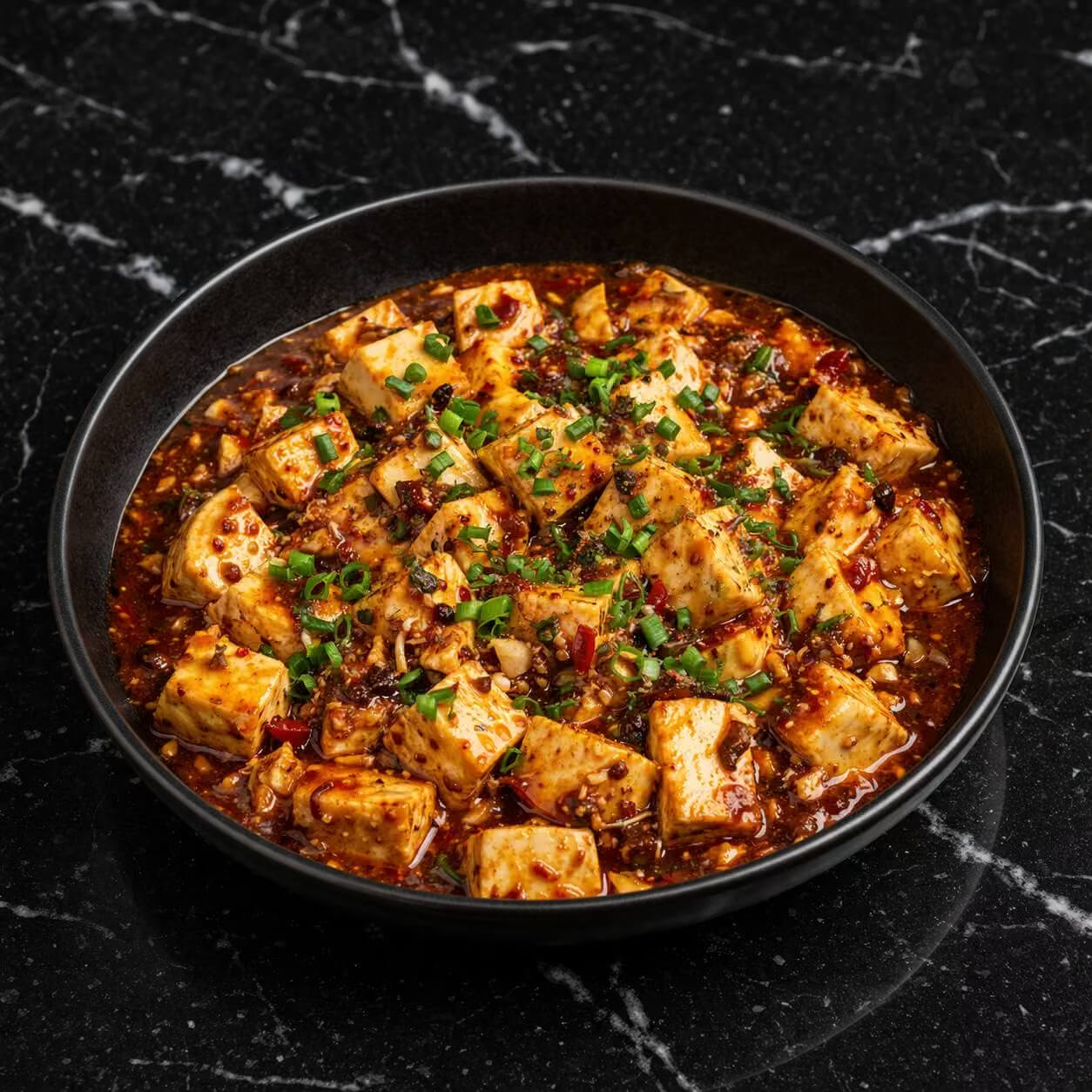
In the southwest, Sichuan province (Sìchuān) is ruled by Sichuan pepper (huājiāo) and dried chilies. That’s where you’ll find the famous vegetarian mápó dòufu (麻婆豆腐) – silken tofu in a fiery sauce of fermented broad bean paste (doubanjiang). After this dish, you’ll feel a pleasant tingling on your tongue and a light sweat on your forehead – that’s the effect of active compounds (sanshool) in Sichuan pepper, which stimulate touch receptors. In Shanghai, dishes are slightly sweeter, with more sugar, dark soy sauce, and Shaoxing rice wine. Local vegetables, like young water spinach (kōngxīn cài), are flash‑fried in a wok to retain crunchiness and bright green color.
In Beijing, you’ll encounter a more northern cuisine – with lots of wheat, so noodles, dumplings, and pancakes. Beijing is known for jiǎozi (饺子) filled with cabbage and mushrooms, served with rice vinegar and chili oil. In Yunnan province, thanks to an abundance of mushrooms (fresh porcini, shiitake, and rare wild varieties), traditional Chinese plant‑based cooking takes on a woodsy, earthy character. A note on Tibet: contrary to popular belief, traditional Tibetan cuisine is rich in meat (yak and lamb) due to the harsh climate and difficulty growing vegetables. For vegetarians, large Chinese cities are much better choices than high‑altitude regions. In short, every region offers unique plant‑based specialties – it’s worth discovering them consciously.
4. Tofu, Seitan, and Wood Ear Mushrooms – The Foundation of the Chinese Vegan Pantry
Before cooking, we need to understand the three pillars of vegetarian Chinese cuisine. First: tofu (dòufu). Not the firm, rubbery stuff common in European supermarkets. In China, tofu has dozens of faces – from silken (for soups and mapo tofu) to smoked, dried, and even fermented (the famous “stinky tofu”, chòu dòufu, whose smell can be a challenge). Tofu is not a “meat substitute” here – it’s a hero in its own right, providing protein and calcium. In monasteries, tofu skin (yuba) is also common – after soaking, it has a meaty, layered texture.
Second: seitan (miàn jīn), called “Buddhist meat” in Chinese. It’s made from wheat gluten – the dough is kneaded and rinsed until only sticky gluten remains, then simmered in a flavorful broth. Seitan has a dense, chewy bite and absorbs flavors wonderfully. Warning: it is not gluten‑free! People with celiac disease must avoid it. For them, a better choice is mu er (wood ear mushrooms) – they have a crunchy, gelatinous texture. Shiitake (xiānggū) are also excellent; after rehydration, they become meaty and aromatic. Enoki, oyster mushrooms, and many other varieties are widely used in Chinese cooking.
Finally: sauces and spices. In meat‑free Chinese cuisine, fermented pastes are key – doubanjiang, tiánmiànjiàng (sweet soybean paste), and black bean paste. They add deep umami. What about gluten‑free? Standard soy sauce (jiàngyóu) contains wheat, so it’s not safe. Tamari (wheat‑free soy sauce) exists but is rare in traditional Chinese settings. To be clear: gluten‑free Chinese dishes are possible but require careful modification – replace soy sauce with tamari or coconut aminos, wheat noodles with rice noodles, and seitan with tofu or mushrooms. So you cannot say Chinese cuisine is “often gluten‑free” – that would be false and potentially harmful. But with the right adjustments, you can enjoy its flavors without risk.
5. Meat‑Free Street Food: How to Really Eat in China as a Vegetarian
What do you do when you’re in China, hungry, and surrounded by meat stalls? Don’t panic. Vegetarian Chinese street food does exist, but it requires vigilance. Saying “it’s easy to be a vegetarian in China” would be an overstatement – many traditional dishes contain meat broths, fish sauce (yú lù), or lard. However, with a few rules, you can find delicious and safe options. And once you learn to avoid the pitfalls, you’ll eat better than most tourists.
First: baozi (包子), steamed buns. Ask for “sù bāozi” – vegetarian. They are often filled with napa cabbage, shiitake mushrooms, and sometimes mung bean vermicelli (fěntiáo). Another safe bet: jiǎozi or wontons steamed or boiled – just make sure the filling has no meat. A popular vegetarian version is dumplings with egg and chives (jiǔcài jīdàn) or with pumpkin. Warning: at street stalls, food is often fried in shared oil, so if you are vegan, go for boiled or steamed options.
What else? Grilled corn, baked sweet potatoes, and above all – fried tofu on a stick (dòufu gān), served with spicy or sweet‑and‑sour sauce. There is also “stinky tofu” (chòu dòufu) – but honestly, you need a strong stomach. The smell resembles ripe cheese, but the taste is mild and fascinating. For something light, look for spring rolls (chūn juǎn) with vegetables. Just ask about the dipping sauce – it often contains fish sauce. Practical tip: learn the phrase “wǒ chī sù, bù chī ròu, bù yào yú lù” (I eat vegetarian, no meat, no fish sauce). Avoid dishes labeled “luóbo gāo” (radish cake) – they frequently contain pork cracklings. So, answering is it easy to be a vegetarian in China: it’s not easy in the countryside, but in big cities – absolutely, as long as you stay aware.
6. Top 5 Legendary Recipes – A Chinese Feast in Your Own Kitchen
Theorizing is one thing, cooking is another. Here are five tried‑and‑true recipes for Chinese vegetarian dishes that capture the spirit of this cuisine. Each has been tested multiple times, and guests were consistently impressed. Original pinyin names are included for further inspiration.
Mápó dòufu (麻婆豆腐) – Vegetarian Sichuan‑Style Tofu
Take silken tofu (about 400g) and cut into cubes. Heat vegetable oil (peanut oil works well) in a wok, add a tablespoon of doubanjiang paste (ensure it’s meat‑free – some contain beef) and a teaspoon of Sichuan pepper. Fry briefly, add minced garlic and ginger.
Then add the tofu, pour in vegetable broth (about 200 ml) and simmer for 5 minutes. Finally, thicken with potato starch dissolved in water. Sprinkle with scallions. Do not skip the Sichuan pepper – it gives the dish its characteristic numbing sensation. Serve with jasmine rice. Gluten‑free version: use tamari and verify the doubanjiang is wheat‑free.
Yúxiāng qiézi (鱼香茄子) – Eggplant in “Fish‑Fragrant” Sauce (No Fish)
This is a classic of Sichuan cuisine. Cut two eggplants into strips, salt them and let sit for 20 minutes to remove bitterness. Rinse and pat dry. Deep‑fry (or pan‑fry with plenty of oil) until soft and golden brown. Meanwhile, make the sauce: mix a tablespoon of chili paste (or doubanjiang), a tablespoon of tamari, a teaspoon of sugar, a teaspoon of rice vinegar, a little water, and some starch. In a separate pan, sauté garlic, ginger, and the white parts of scallions. Add the eggplants and sauce, stir‑fry for a minute. The name “fish” refers to the spice mix traditionally used with fish – there is no fish. The result is delicious, sweet‑sour, and slightly spicy. Eggplants love fat, so don’t skimp on the oil.
Jiǎozi with Cabbage and Mushrooms (饺子) – Steamed Dumplings
For the filling: finely chopped napa cabbage (200g), rehydrated dried shiitake mushrooms (3-4 pieces), grated ginger, a tablespoon of sesame oil, salt. Dough: wheat flour and water (2:1 ratio). For a gluten‑free version, use rice flour plus potato starch (2:1) and a pinch of xanthan gum. Knead the dough, roll it out, cut into circles. Place filling on each, seal the edges. Steam for 10 minutes. Serve with a dip of rice vinegar, tamari, and chili. Do not overstuff, or the dumplings will burst. The first few may look crooked, but practice helps.
Chǎo miàn (炒面) – Stir‑Fried Noodles with Crunchy Vegetables
A quick wok dish for lazy evenings. Cook egg noodles (or rice noodles for gluten‑free). Heat oil in a wok, add thinly sliced carrot, bell pepper, small broccoli florets, and onion. Stir‑fry on high heat until the vegetables are crunchy but not raw. Add the cooked noodles, pour in a sauce of tamari, a little maple syrup, minced garlic, pepper, and a teaspoon of sesame oil. Toss vigorously for 2-3 minutes. Sprinkle with sesame seeds and chopped cilantro. The key is not to overcook the vegetables – they should be al dente.
Chǎofàn with Edamame and Ginger (炒饭) – Fried Rice
The basic dish every fan of plant‑based Chinese cooking should master. Use cold, cooked jasmine rice (leftover from the day before). Heat oil in a wok, sauté grated ginger and minced garlic, add frozen edamame (shelled) and grated carrot. Fry for a minute, add the rice, break it up with a spatula. Add tamari, a dash of sesame oil, and if you eat eggs – make a well in the rice, crack in an egg and stir until set. For a vegan version, skip the egg. Fry until the rice starts “jumping” in the wok – that signals it’s done. Serve with fresh cilantro. Never use freshly cooked, hot rice – it will be sticky. Cold rice from the fridge ensures separate, perfect grains.
7. Plant‑Based Chinese Fine Dining: The Future of Gastronomy in the Middle Kingdom
While tradition is powerful, contemporary Chinese vegetarian cuisine is experiencing a renaissance in Michelin‑starred restaurants. In Beijing, Shanghai, and Chengdu, places like “Fu He Hui” (Shanghai, one Michelin star and a Green Star) prove that plant‑based dishes can be fine dining. Chefs use local, seasonal vegetables, rare mushrooms, and long‑fermented sauces to create multi‑course tasting menus. Examples include “truffle jiaozi” with black olive sauce, and “mu er mushroom consommé” served in a gourd. This is not vegetarianism as deprivation – it’s a culinary explosion.
In Beijing, “King’s Joy” (Jingzhao) – two Michelin stars – serves “prawns” made from konjac and “salmon” from carrot. They convincingly mimic the texture and flavor of fish, while being light and healthier.
A tasting menu costs around 500‑800 RMB (250‑400 PLN), but it changes perceptions of vegetarianism. More hotels are introducing separate plant‑based menus, and chains like “Ding Tai Fung” offer vegetarian sections (e.g., their famous soup dumplings xiaolongbao with mushrooms and vegetables).
Why does this matter? The West often sees Chinese food as heavy, fatty, and meat‑centered. Yet Chinese cuisine for vegetarians and vegans has enormous potential that is only now being rediscovered. In a few years, China – not Europe or the US – may set the trends in global plant‑based gastronomy. The Chinese have known for centuries that a vegetable can be the star, not just a side dish. Add modern techniques, and you have a recipe for a culinary revolution.
While China masters the art of ‘fake meat’ and fine dining, its neighbor Indonesia offers a completely different, yet equally brilliant approach to plant-based protein, centered around the legendary tempeh. To understand the full spectrum of Asian vegetarianism and how these two worlds compare, explore our comprehensive Vegetarian Indonesian Cuisine: A Guide. Your roadmap to the best meat-free dishes of Bali and Java starts here.
8. FAQ – Common Questions About Chinese Plant‑Based Cuisine
Is Chinese cuisine vegetarian‑friendly?
Yes, with caution. Traditional restaurants may use meat broth, fish sauce, or lard. Always ask: “sù de?” (vegetarian?). In big cities and Buddhist restaurants, it’s fine. In rural areas, it varies, but awareness is growing. Chinese food is not automatically vegetarian, but it is highly adaptable.
Is Chinese cuisine gluten‑free?
Standard – no. Regular soy sauce contains wheat, and seitan is pure gluten. However, gluten‑free Chinese vegetarian dishes are possible with modifications: tamari instead of soy sauce, rice noodles, tofu instead of seitan. When traveling, bring your own gluten‑free condiments, as local restaurants rarely understand a gluten‑free diet.
What do Chinese people eat on a daily basis without meat?
Many people, especially among the older generation and Buddhists, eat mostly plant‑based. A typical day: a bowl of rice, stir‑fried vegetables (e.g., bok choy with garlic), a piece of tofu, pickled vegetables, and a dried mushroom soup. In cities, plant‑based fast food like baozi with red bean paste is also popular.
What are the key spices in meat‑free Chinese cooking?
Sichuan pepper, star anise, cassia cinnamon, cloves, ginger, garlic, chives, cilantro, and fermented pastes (soy, bean, chili). These provide the deep umami often associated with meat. Without them, plant‑based dishes would be flat.
Where in China is it best to be vegetarian?
In big cities (Beijing, Shanghai, Hong Kong, Chengdu) and in Buddhist regions, e.g., Sichuan province (many monastery restaurants) and around Mount Emei. The hardest are northwestern provinces (Xinjiang) and Tibet, where meat dominates. In Tibet, look for tsampa (roasted barley flour) and vegetable dishes – but they are rare.
What’s the easiest Chinese plant‑based recipe for beginners?
Fried rice with vegetables (the version above). You only need cold rice, frozen vegetables (carrot, peas, corn), tamari, and sesame oil, plus tofu cubes fried separately. The whole thing takes 15 minutes and tastes like good Chinese takeout. Garlic stir‑fried zucchini is another easy option – 5 minutes and done.
9. Bibliography (Selected Authoritative Sources)
- Anderson, E.N. – “The Food of China”, Yale University Press, 1988.
- Chang, K.C. (ed.) – “Food in Chinese Culture: Anthropological and Historical Perspectives”, Yale University Press, 1977.
- Dunlop, F. – “Land of Plenty: A Treasury of Authentic Sichuan Cooking”, W.W. Norton, 2003.
- Dunlop, F. – “The Food of Sichuan”, W.W. Norton, 2019.
- Kiple, K.F. & Ornelas, K.C. – “The Cambridge World History of Food”, Cambridge University Press, 2000.
- Liu, J. – “The Chinese Vegetarian: Ancient Recipes for Modern Tables”, China Intercontinental Press, 2015.
- Mintz, S. – “Tasting Food, Tasting Freedom: Excursions into Eating, Culture, and the Past”, Beacon Press, 1996.
- Watson, J.L. (ed.) – “Golden Arches East: McDonald’s in East Asia”, Stanford University Press, 2006.
- Michelin Guide Shanghai & Beijing reports (2019-2024 editions).
- Shaolin Monastery materials – “The Buddhist Vegetarian Kitchen” (internal publications, 2017).
10. Disclaimer
The content of this article is for informational purposes only and does not constitute medical, dietary, or legal advice. Before making significant changes to your diet, especially in the case of chronic illnesses, allergies, or food intolerances (including celiac disease), consult a qualified physician or dietitian. The author and publisher are not responsible for any health consequences resulting from the use of the information contained herein. All recipes and descriptions come from publicly available sources and are presented in good faith – however, actual ingredients, preparation methods, and allergens may vary. The reader is obliged to independently verify the composition of dishes and make modifications based on individual needs. For a gluten‑free diet, always check product labels, as many traditional Chinese ingredients (soy sauce, pastes, noodles) contain wheat.

Hello to every one, since I am genuinely keen of reading this website’s post to be updated on a regular basis. It carries pleasant material.