- Introduction
- Why Is India a Vegetarian Country?
- Thali – What a Perfect Vegetarian Meal Looks Like
- Popular Dishes in the Vegetarian Cuisine of India
- North vs. South Indian Cuisine – Key Differences
- Recipes – Simple Dishes to Make at Home
- Indian Cuisine Without Gluten – A Natural Solution
- Is Indian Food Healthy?
- The Environmental Impact of a Plant‑Based Diet
- Conclusion
- Bibliography
- Disclaimer
Introduction
India is one of those countries where the vegetarian cuisine of India isn’t a modern trend – it has been a way of life for centuries. Around 20–30% of the population regularly eats meat‑free meals, and in some states that share is even higher. At the heart of this tradition lies ahimsa – the principle of non‑violence toward living beings – along with countless fasts and rituals that influence what ends up on the plate every day. This article explores why Indian plant‑based cooking is so wonderfully diverse, which dishes you absolutely must try, and how to easily cook them at home – even if you are avoiding gluten.
Why Is India a Vegetarian Country?
While people in India do eat meat, vegetables and legumes play a major role in the daily lives of many communities. The main reason is religion. In Hinduism, Buddhism, and Jainism – especially in Jainism and certain Hindu traditions – great emphasis is placed on ahimsa, the principle of refraining from harming any living being. There are also numerous fasting days such as Ekadashi or Navratri, when only plant‑based foods are consumed.
The caste system, which over centuries reinforced distinct culinary customs, also contributed. Many communities have relied on what grows in the garden rather than on meat for generations. The result is a highly developed and diverse culinary system: the vegetarian cuisine of India is one of the most elaborate in the world, with each region offering its own spice techniques, local variations of beloved dishes, and hundreds of family recipes passed down through generations.
Thali – What a Perfect Vegetarian Meal Looks Like
Thali is a set of small bowls arranged on a round tray. Depending on the region and the eatery, the composition may vary, but the goal is always to provide a balanced, wholesome meal. A vegetarian thali typically includes:
- a carbohydrate source – basmati rice or flatbreads (roti, chapati),
- dal – a thick lentil or mung bean soup,
- one or two vegetable dishes (sabzi), often with potatoes, cauliflower, spinach,
- yogurt (dahi) or raita – a refreshing side,
- spicy pickle (achar) and sweet chutney.
According to Ayurveda, this combination delivers all six tastes: sweet, sour, salty, pungent, bitter, and astringent. That is why thali not only fills you up but also helps maintain steady energy. Thali is a clear example of how the vegetarian cuisine of India blends pleasure with purpose.
Popular Dishes in the Vegetarian Cuisine of India
Below are true classics – dishes that appear on tables across every corner of India. All are vegetarian (often with dairy), and their flavors showcase the incredible range of Indian spices.
Paneer Tikka Masala
Cubes of paneer cheese marinated in yogurt and spices, then baked and simmered in a creamy tomato‑nut sauce.
Very popular in the north, often served with naan or rice. The rich, slightly smoky sauce makes it hard to stop dipping bread into it.
Palak Paneer
A creamy sauce made from fresh spinach, ginger, garlic, and green chili, with pieces of paneer floating in it. Delicate yet deeply flavorful thanks to cumin and coriander. The first time you try it, you realize how much complexity a simple green vegetable can bring to a dish.
Chana Masala
Chickpeas simmered with tomatoes, onions, and garam masala. One of the most popular vegetarian dishes – ideal for a quick lunch with rice or flatbread (roti). It is satisfying yet light, and the quality of garam masala makes all the difference.
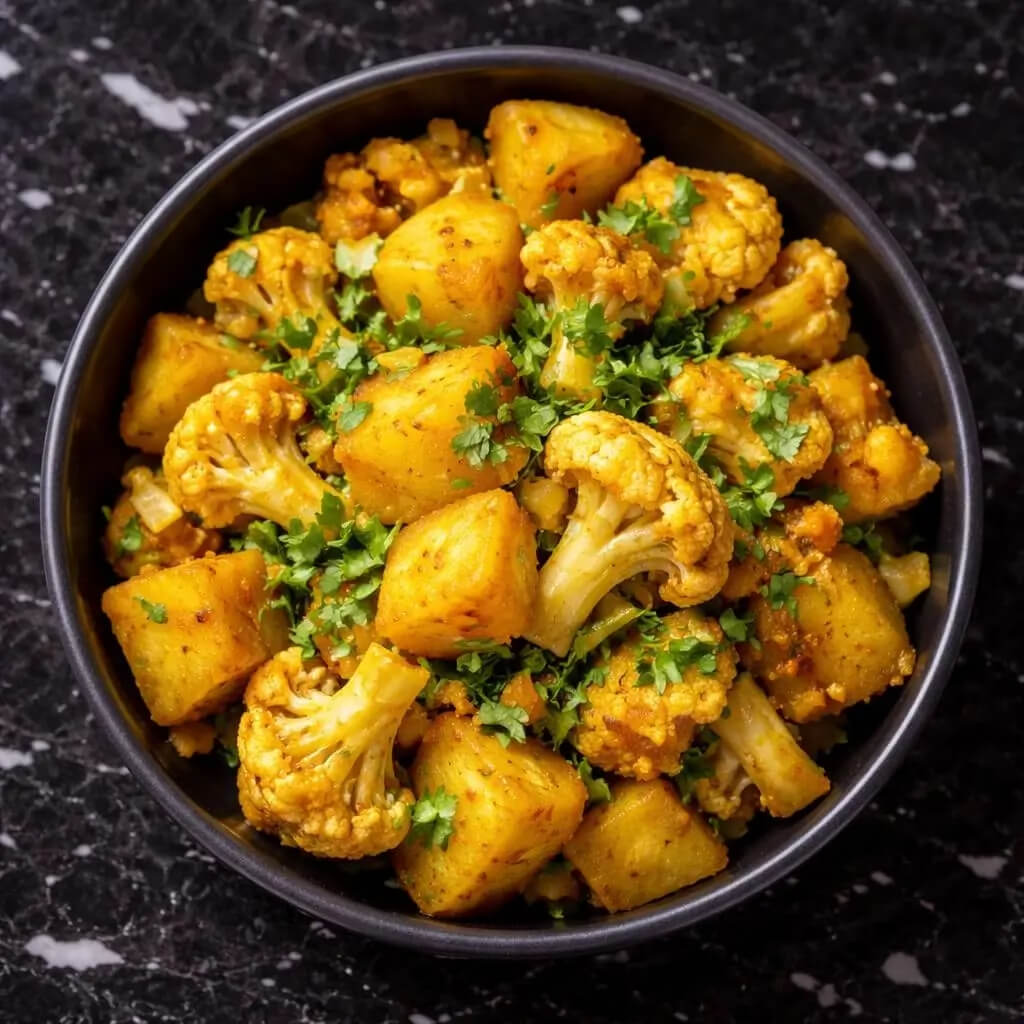
Aloo Gobi
A simple but wonderfully aromatic dish of potatoes and cauliflower, seasoned with turmeric, cumin, and coriander. It often appears in thali as a dry vegetable preparation. It comes together quickly and tastes like a home‑cooked meal from Punjab.
Masala Dosa
A thin, crispy crepe made from fermented rice and lentil batter, stuffed with a spicy mashed potato filling. This is the signature dish of South Indian cuisine – served with sambar (lentil soup) and coconut chutney. The contrast between the crunchy exterior and the soft filling is unforgettable.
Vegetable Biryani
The vegetarian version of a traditionally meat‑based dish – aromatic rice cooked with vegetables, saffron, and a whole array of spices such as cloves, cardamom, and cinnamon. Made using the dum method (slow steaming under a lid), it is often served with raita. This dish can transform plain rice into something truly special.
Samosas
Triangular pastries made from wheat dough, stuffed with potatoes, peas, and spices. Fried to a golden crisp – a snack that conquered the streets of the entire country. The best samosas combine a crisp shell with a spicy, fluffy filling.
North vs. South Indian Cuisine – Key Differences
India is vast, so even within vegetarian cooking, the differences between north and south are striking. They mainly stem from climate and locally available crops.
North India
Regions such as Punjab, Uttar Pradesh, and Rajasthan are known for generous use of wheat – hence the popularity of flatbreads (roti, naan) and thick, spiced sauces. Dishes often contain ghee (clarified butter), cream, and dairy. Northern vegetarian cuisine relies on legumes (chickpeas, beans) and root vegetables, with intense spice blends, often in powdered form.
South India
In Tamil Nadu, Kerala, and Karnataka, rice dominates – both as the base of meals (idli, dosa, steamed rice) and as flour for crepes. Coconut, coconut milk, and curry leaves add freshness. Southern dishes are generally lighter, spicier (thanks to pepper and dried chilies), and more often use mung lentils and tamarind for tang. This makes South Indian cuisine naturally friendly to a gluten‑free diet – many dishes are built on rice and legumes, offering a practical option for those avoiding wheat.
Recipes – Simple Dishes to Make at Home
Below are five tried‑and‑tested recipes that capture the spirit of Indian cooking. All are vegetarian, and most can easily be turned vegan or gluten‑free.
1. Chana Masala (Chickpeas in Aromatic Sauce)
Time: 30 minutes | Difficulty: easy
Ingredients:
1 can chickpeas (or 200 g dried, cooked), 1 onion, 2 garlic cloves, 1 cm fresh ginger, 2 tomatoes, 1 tsp garam masala, ½ tsp turmeric, 1 tsp cumin, salt, 2 tbsp oil, fresh cilantro.
Preparation:
- Sauté the onion in oil, add grated garlic and ginger.
- Add spices (cumin, turmeric), sauté briefly – let the aroma fill your kitchen.
- Add chopped tomatoes and cook until soft.
- Pour in a little water, add chickpeas, simmer for 10 minutes.
- Finally, stir in garam masala and garnish with cilantro. Serve with rice or rice flatbread.
2. Palak Paneer – Spinach with Tofu (Vegan Version)
Time: 35 minutes | Difficulty: medium
Ingredients:
400 g fresh spinach, 200 g firm tofu (instead of paneer), 1 onion, 2 garlic cloves, 1 tsp cumin, ½ tsp turmeric, 1 tbsp grated ginger, 1 tbsp oil, 2 tbsp coconut cream (optional), salt.
Preparation:
- Blanch the spinach, drain, and blend until smooth.
- In a pan, sauté onion, garlic, ginger, and spices.
- Add diced tofu, fry for 3 minutes.
- Pour in the spinach purée, season with salt, and simmer for 10 minutes.
- Stir in coconut cream for extra creaminess. Serve with rice or gluten‑free roti made from chickpea flour.
3. Masala Dosa – Crispy Crepes with Filling
Time: 15 minutes (with ready batter) + fermentation | Difficulty: medium
Ingredients (batter): 1 cup rice, ½ cup urad dal (skinned), water, salt. Filling: 3 potatoes, 1 onion, 1 tsp mustard seeds, 1 tsp turmeric, ½ tsp chili, 2 tbsp oil, curry leaves (optional).
Preparation:
- Soak rice and dal separately for 4–5 hours, then blend into a smooth batter and ferment for 8–12 hours.
- Fry thin crepes on a hot skillet – they should be golden and crispy at the edges.
- Filling: boil potatoes, dice. In oil, splutter mustard seeds and curry leaves, add onion, potatoes, turmeric, and chili. Sauté for 5 minutes.
- Fill the dosa and serve with coconut chutney and sambar (lentil soup).
4. Vegetable Biryani – Vegan Rice with Vegetables
Time: 45 minutes | Difficulty: medium
Ingredients: 1.5 cups basmati rice, 2 onions, 1 carrot, a handful of green peas, 1 cauliflower, 2 tomatoes, 2 tbsp oil, 1 cinnamon stick, 4 cloves, 4 cardamom pods, 1 tsp garam masala, saffron (optional), salt.
Preparation:
- Cook the rice until half done.
- In oil, fry cinnamon, cloves, cardamom, add onion, then vegetables, tomatoes, and spices.
- Layer rice and vegetables in a pot, sprinkle with garam masala and saffron soaked in milk.
- Cover and cook on low heat for 20 minutes. Serve with raita (yogurt with cucumber).
5. Aloo Gobi – Potatoes with Cauliflower
Time: 25 minutes | Difficulty: easy
Ingredients: 4 medium potatoes, 1 small cauliflower, 1 onion, 2 garlic cloves, 1 tsp turmeric, 1 tsp cumin, ½ tsp chili, salt, 2 tbsp oil, fresh cilantro.
Preparation:
- Dice the potatoes and break cauliflower into florets.
- Sauté onion in oil, add garlic and spices, then potatoes, fry for 5 minutes.
- Add cauliflower, salt, a splash of water, and simmer covered for 15–20 minutes until vegetables are tender.
- Garnish with cilantro. Serve with roti or rice.
Indian Cuisine Without Gluten – A Natural Solution
Thanks to the widespread use of rice, lentils, chickpeas, and chickpea flour (besan), many traditional Indian dishes are naturally gluten‑free. Naturally gluten‑free options include all dal (lentil soups), vegetable curries, dosa, idli, chana masala, salads, and most lentil‑based snacks. Even popular flatbreads can easily be replaced with rice or chickpea flour breads.
However, those on a strict gluten‑free diet should be cautious about cross‑contamination in restaurants and ready‑made spice blends, which sometimes contain wheat flour. Classic naan or puri are obviously off the menu.
At home, cooking gluten‑free Indian food is simple – just replace wheat‑based bread with rice, and use besan instead of wheat flour for thickening sauces.
Is Indian Food Healthy?
Indian plant‑based cuisine, built on whole legumes, fresh vegetables, and aromatic spices, has a lot to offer. Regularly eating lentils and chickpeas provides fiber, plant protein, and iron. Turmeric contains compounds with potential anti‑inflammatory properties, while ginger and cumin aid digestion. Many traditional dishes also include probiotics (yogurt, fermented dosa batter).
On the other hand, restaurant versions can be heavy on fat (ghee, cream) and salt, and are often fried. At home, however, it is easy to control the amount of fat – simply use less oil, swap ghee for coconut or rapeseed oil, and choose plain yogurt without added sugar. When prepared in moderation, Indian dishes fit beautifully into a balanced diet.
The Environmental Impact of a Plant‑Based Diet
The Indian way of eating, where legumes and vegetables form the base of daily meals, is often cited as an example of a more sustainable diet. Plant‑based food production generates significantly fewer greenhouse gas emissions than animal agriculture and uses less water. On a global scale, shifting toward a diet rich in pulses, rice, and vegetables could greatly reduce environmental pressure.
India, as one of the countries with the highest percentage of vegetarians, shows that a cuisine rooted in local produce is not only possible but also delicious. It is not about deprivation – it is about making the most of natural ingredients and centuries of culinary wisdom.
If you enjoyed exploring Indian flavors, you’ll love seeing how other cultures embrace plant-based cooking. Check out our piece on Israeli Vegetarian Cuisine: Why the World Has Fallen in Love with Tel Aviv’s Plant-Based Flavors.
Conclusion
Indian vegetarian cuisine is a true kaleidoscope of flavors, techniques, and food philosophy. It brings together the tradition of ahimsa, the art of balancing spices, and a deep care for meal harmony. Thanks to its enormous diversity, everyone – whether you avoid gluten or simply want to eat more vegetables – will find something to love. A little curiosity and a willingness to experiment in the kitchen are all you need to discover that the vegetarian cuisine of India remains one of the most diverse and satisfying culinary traditions in the world.
Bibliography
- Sen, C. (2014). Feast and Famine: A History of Food in India. Oxford University Press.
- Jaffrey, M. (2011). Madhur Jaffrey’s Ultimate Curry Bible. Ebury Press.
- Collingham, L. (2006). Curry: A Tale of Cooks and Conquerors. Oxford University Press.
- Dwivedi, S. (2020). The Vegetarian Tradition in India: History, Culture, Cuisine. Routledge.
- Articles from The Hindu, Times of India, and Food and Agriculture Organization (FAO) reports on plant‑based diets in India (2022–2024).
- Academic materials from the Journal of Ethnic Foods and Indian Journal of Traditional Knowledge.
Disclaimer
The above article is for informational purposes only and does not constitute medical, dietary, or legal advice. Before making significant changes to your diet, especially if you have celiac disease, food allergies, or other conditions, it is recommended to consult a qualified dietitian or physician. The editorial team has made every effort to ensure the information presented is reliable and current as of the time of publication, but assumes no responsibility for any consequences arising from its use.